GenghisKhan
Member
Current set up
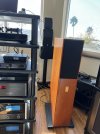
Aerial Acoustics Model 8 bi amp mode
estimated B-weighted sensitivity of 85dB/2.83V/m. According to Stereophile.
Krell HTS 7.1 preamp
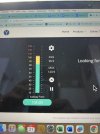
Mac Air, Apple Music
SMSL SU9 DAC
2 MC7270 amps bridged mono for mid/ highs Speaker plugs. Should be a minimum of 540 wpc at 0.02 THD. 1 MC7270 recapped and tested at George Meyers at 340wpc. 2nd MC7270 is new to my system, not yet tested but seems to operate correctly.
Yamaha Mx-D1 amp, connected balanced to Krell and connected to bass input on Speakers.
500Wpc into 4 and 8 ohms (24dBW, 27dBW, respectively) at 0.1% THD. Frequency response: 1Hz–100kHz, ±3dB; 20Hz–20kHz, ±0.5dB. THD at 10W/1kHz: <0.003%. Input sensitivity: 1.3V. Input impedance: 25k ohms. Damping factor: 200 (equivalent to an output impedance of 0.04 ohms), no frequency specified. Channel separation: 100dB. Dynamic range: 120dB or greater (IHF-A, low-pass filter at 20kHz). According to Stereophile. Just had it repaired by George Meyers.
So even with 85dB efficiency, I should have plenty of power to drive these speakers.
I got the power guard lights to flash on both MC7270 (simultaneously) at 30 volume setting on my Krell. Did not sound distorted.
With the MC7270 running bridged, am I exceeding 540wpc into the mid and highs?
That seems extremely unlikely.
Thanks in advance for sharing your knowledge.
Roy
Aerial Acoustics Model 8 bi amp mode
estimated B-weighted sensitivity of 85dB/2.83V/m. According to Stereophile.
Krell HTS 7.1 preamp
Mac Air, Apple Music
SMSL SU9 DAC
2 MC7270 amps bridged mono for mid/ highs Speaker plugs. Should be a minimum of 540 wpc at 0.02 THD. 1 MC7270 recapped and tested at George Meyers at 340wpc. 2nd MC7270 is new to my system, not yet tested but seems to operate correctly.
Yamaha Mx-D1 amp, connected balanced to Krell and connected to bass input on Speakers.
500Wpc into 4 and 8 ohms (24dBW, 27dBW, respectively) at 0.1% THD. Frequency response: 1Hz–100kHz, ±3dB; 20Hz–20kHz, ±0.5dB. THD at 10W/1kHz: <0.003%. Input sensitivity: 1.3V. Input impedance: 25k ohms. Damping factor: 200 (equivalent to an output impedance of 0.04 ohms), no frequency specified. Channel separation: 100dB. Dynamic range: 120dB or greater (IHF-A, low-pass filter at 20kHz). According to Stereophile. Just had it repaired by George Meyers.
So even with 85dB efficiency, I should have plenty of power to drive these speakers.
I got the power guard lights to flash on both MC7270 (simultaneously) at 30 volume setting on my Krell. Did not sound distorted.
With the MC7270 running bridged, am I exceeding 540wpc into the mid and highs?
That seems extremely unlikely.
Thanks in advance for sharing your knowledge.
Roy