Stack
Active Member
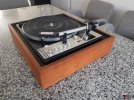
This is a post about a BSR 610 I recently thrifted, and how to me it seems to defy the normal rule of BSRs.
I saw this thing at the thrift store for $15, and it sat for two weeks before I bought it. At first glance it looks like any old "El Cheapo" BSR deck. Given that I already own much better decks, I walked by with hardly a second glance because I don't have any need for those in my life.

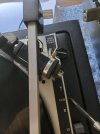
The third time passing it by, I actually took a good look at it, and that's when my curiosity piqued. first thing I saw was that unlike any other BSR I'd ever seen, this one had bespoke controls for tracking force and antiskate, not dissimilar to the ones on my Miracord:
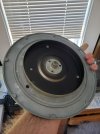
Once I actually had it open, the next thing I noticed was that it had a (relatively) heavy cast aluminum platter which was effectively silenced with a rubber mat fused down to it. This was something that smacked of at least some sort of effort to make a good sounding turntable, which is not what I'm used tonseeing from BSR. This was enough to get me to cough up the $15, because now I wanted to see if it was actually a capable performer, and something I could recommend as a decent budget turntable option.
The most amazing thing was that after plugging it in, it seemed to be mostly working. The platter wasn't frozen as is the default on BSRs, the automatic mechanisms were functioning, and everything turned nice and free. I'm not sure if it landed at the thrift store recently serviced or they used better lubricants on this model, but it only needed minimal work to get going to some capacity and then a bit more to get going well: cleaning the contacts on the cartridge sled and replacing the original RCA cables were enough to fix the dodgy left channel and play some beater records.
Further looking around and internet research showed that this table is outfitted with a 4 pole motor and has no issues with taking a moving magnet cartridge tracking down to 2 grams (1.5 by some accounts.) It's also outfitted with an interchangeable cartridge sled. Genuinely nice features that I never thought I'd see on a BSR.
When I first started doing tests on it, things weren't looking great from a performance standpoint. it had the signature BSR "plays 2% too fast" sickness, and wow and flutter tested at .4%, which is hardly acceptable. However, with a little sandpaper on the pulley, letting it run for a little while, burnishing the idler tire and a couple drops of light machine oil in the right spots, I had the speed to within half a percent (not noticeable to me) and wow and flutter down to between .1‐.2% depending on the speed (I found a contemporary review if the table and this was as good as it ever got.)
Still not class leading, but the wow was only really noticeable on sustained piano notes and harmonica for me. It otherwise sounded genuinely good: relatively quiet with low rumble and decent soundstage and stereo seperation.
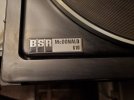
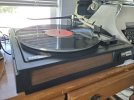
In a fully serviced state, I would say that the BSR 610 is solidly good. is it the best turntable ever? No, not even close. My Miracord runs circles around it in speed accuracy, wow and flutter percentages (typically .04% RMS) and general build quality. This is to say nothing of the specs and performance on a Technics SL1200 or other high end quartz locked direct drive. At the same time, I've had many, much worse tables in my life. If I didn't have the Miracord, I'd probably be very content with the quality of this BSR as my "changer/78 deck."
I'd still love to do away with the cheesy 1970s plastic base, but that's eminently doable. they made better bases for BSR mechanisms and they're also not a very difficult woodworking project. The overarm is also a bit annoying, but not so much where the table is unusable. Mine is also missing the changer spindle, but this thing runs the most common BSR changer mechanism, so if I wanted it I could get one for cheap (or free if I was patient.)
Overall I think that this specific model of BSR represents an amazing value for somebody looking for a decent table, or somebody morbidly curious about owning a record changer. It's crazy to me how cheap these go for given the relative quality put into them, but then again I passed it up twice at $15 since it looks like much cheaper decks, so maybe it's not so crazy?
Maybe the lesson here is that there are exceptions to every rule, and looking where nobody else is is how you can still find value in the increasingly saturated turntable market. There's still some good deals out there. If you're willing to be seen with the BSR badge in your home and giving a ling exanation about how this isn't like the other ones to every audio person who comes into your house, this is one.
I saw this thing at the thrift store for $15, and it sat for two weeks before I bought it. At first glance it looks like any old "El Cheapo" BSR deck. Given that I already own much better decks, I walked by with hardly a second glance because I don't have any need for those in my life.
The third time passing it by, I actually took a good look at it, and that's when my curiosity piqued. first thing I saw was that unlike any other BSR I'd ever seen, this one had bespoke controls for tracking force and antiskate, not dissimilar to the ones on my Miracord:
Once I actually had it open, the next thing I noticed was that it had a (relatively) heavy cast aluminum platter which was effectively silenced with a rubber mat fused down to it. This was something that smacked of at least some sort of effort to make a good sounding turntable, which is not what I'm used tonseeing from BSR. This was enough to get me to cough up the $15, because now I wanted to see if it was actually a capable performer, and something I could recommend as a decent budget turntable option.
The most amazing thing was that after plugging it in, it seemed to be mostly working. The platter wasn't frozen as is the default on BSRs, the automatic mechanisms were functioning, and everything turned nice and free. I'm not sure if it landed at the thrift store recently serviced or they used better lubricants on this model, but it only needed minimal work to get going to some capacity and then a bit more to get going well: cleaning the contacts on the cartridge sled and replacing the original RCA cables were enough to fix the dodgy left channel and play some beater records.
Further looking around and internet research showed that this table is outfitted with a 4 pole motor and has no issues with taking a moving magnet cartridge tracking down to 2 grams (1.5 by some accounts.) It's also outfitted with an interchangeable cartridge sled. Genuinely nice features that I never thought I'd see on a BSR.
When I first started doing tests on it, things weren't looking great from a performance standpoint. it had the signature BSR "plays 2% too fast" sickness, and wow and flutter tested at .4%, which is hardly acceptable. However, with a little sandpaper on the pulley, letting it run for a little while, burnishing the idler tire and a couple drops of light machine oil in the right spots, I had the speed to within half a percent (not noticeable to me) and wow and flutter down to between .1‐.2% depending on the speed (I found a contemporary review if the table and this was as good as it ever got.)
Still not class leading, but the wow was only really noticeable on sustained piano notes and harmonica for me. It otherwise sounded genuinely good: relatively quiet with low rumble and decent soundstage and stereo seperation.
In a fully serviced state, I would say that the BSR 610 is solidly good. is it the best turntable ever? No, not even close. My Miracord runs circles around it in speed accuracy, wow and flutter percentages (typically .04% RMS) and general build quality. This is to say nothing of the specs and performance on a Technics SL1200 or other high end quartz locked direct drive. At the same time, I've had many, much worse tables in my life. If I didn't have the Miracord, I'd probably be very content with the quality of this BSR as my "changer/78 deck."
I'd still love to do away with the cheesy 1970s plastic base, but that's eminently doable. they made better bases for BSR mechanisms and they're also not a very difficult woodworking project. The overarm is also a bit annoying, but not so much where the table is unusable. Mine is also missing the changer spindle, but this thing runs the most common BSR changer mechanism, so if I wanted it I could get one for cheap (or free if I was patient.)
Overall I think that this specific model of BSR represents an amazing value for somebody looking for a decent table, or somebody morbidly curious about owning a record changer. It's crazy to me how cheap these go for given the relative quality put into them, but then again I passed it up twice at $15 since it looks like much cheaper decks, so maybe it's not so crazy?
Maybe the lesson here is that there are exceptions to every rule, and looking where nobody else is is how you can still find value in the increasingly saturated turntable market. There's still some good deals out there. If you're willing to be seen with the BSR badge in your home and giving a ling exanation about how this isn't like the other ones to every audio person who comes into your house, this is one.