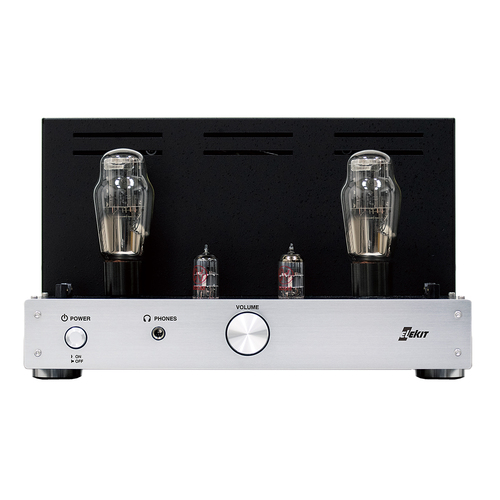
If you decide to go with the 2A3 another kit to consider is the Analog Ethos Legendarium.
@theflattire built one of them a while back and was quite pleased with it. He had previously built one of the Bottlehead amps that also ran 2A3s. Here's his build thread:
okay here we go! Analog Ethos Legendarium! The kit was double boxed, very nicely packed. Foam and bubbles all over the place. Parts kit in a separate bag along with trannies and chassis. Hammond and Edcor, no worries there. Box was about 10-15 lbs; heavy iron! Thick manual. Top plate...
audiokarma.org
Perhaps he will offer an update now that he's had the amp for a while.
The Legendarium is all point to point. I'm not a fan of circuit boards so I find that appealing. It's also available as an assembled amp, BTW. The build manual is very detailed and can be downloaded from their website:
https://www.analogethos.com/legendarium-kit
The design is almost exactly the same as the highly regarded Bugle 45 designed by Gordon Rankin of Wavelength Audio, which was published in Sound Practices magazine many years ago. My first DIY project was a Bugle and it's an excellent amp.
I've never used 2A3s specifically but I built a PP amp using 6B4Gs, which is the same tube but with 6.3v filaments. It uses Hashimoto OTs and sounds excellent. I've also played around a bit with the 6A5G, which is an indirectly heated version. I plan on re-visiting the 6A5G sometime.
I have no experience with 300Bs, mostly because I prefer to use less expensive tubes and often ones that are "under the radar". My most recent SE DHT build has about the same power output as a 300B but the tubes cost about $30.
https://www.audiokarma.org/forums/i...ckeyed-monkey-a-directly-coupled-set.1040847/
Cheapest 300Bs I've seen are some Chinese ones (Linlai) which are around $100. So not all 300Bs are crazy expensive (*by today's standards) but if you get tempted to upgrade the sound via tube rolling the rabbit hole is very deep.
*An interesting side note . . . Before they became "audiophool fashion items", the prices of DHTs tended to reflect the fact that triodes are actually a simpler design and easier to manufacture than something like a 6BQ5, EL34, 6L6 or 6V6GT. In late 1948 the average cost of a 2A3 was about 88 cents, which was just a bit less than a 6L6GA. That would be $11.12 in today's dollars.
I've never built from a kit, I've always done DIY builds, but I can understand the appeal. As I see it the biggest advantage is that the chassis is fabricated for you and the physical layout has already been developed. Those are the aspects that I find the most difficult and time consuming. Convenience costs money, though, so if those aspects don't intimidate you a DIY build will be less expensive.