• The move to the new server is done. There are some software and database maintenance updates in process. This has us passing the hat around to help out. We appreciate any donations. Seriously, even a dollar helps. The payment page may be found here - https://www.audiokarma.org/support.html

Building new speaker cabinets, need specifications

Laricc

Member
Hello,
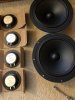
I recently got supplies to start up a DIY project to refurbish a pair of series II Bose 301’s. This project is more for my own interest in understanding speakers. I was going to rebuild the cabinets using MDF (.75 inches depth) , along with using new GT-25 tweeters and two 8 1/2 inch woofers I got from my first pair of speakers (B2031A Behringers). I got most of the dimensions saved on adobe inventor, but I became unsure if that would be the best bet after I got a second opinion for the dimensions. Any thoughts?

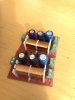
I also got a pair of crossovers I used for my behringers. (They had bad power amps, used a crossover to hook them up to my receiver.)

Thanks.
 

Attachments
  • 31C6D4C1-CFB6-48FC-A8DA-D699AF31025A.jpeg
    31C6D4C1-CFB6-48FC-A8DA-D699AF31025A.jpeg
    150.7 KB · Views: 41
  • 8D057732-BCBA-4675-B06F-1FABC755D06C.jpeg
    8D057732-BCBA-4675-B06F-1FABC755D06C.jpeg
    107.5 KB · Views: 41
  • CB5E7AB3-3D2A-44B5-8A84-B5E517B70BB3.jpeg
    CB5E7AB3-3D2A-44B5-8A84-B5E517B70BB3.jpeg
    73.1 KB · Views: 40
Last edited:
Register to hide this ad
The easiest place to start is advise you to buy a book. That's how I started out. Radio Shack Catalog number 62-2309. Building Speaker Enclosures by David Weems. Get the second edition with the red cover. Later editions removed a lot of the calculations, graphs and theory. ISBN 0-8306-0964-4
 
I'd recommend downloading some software that will allow you to design a box based on the woofers you're using. WinISD is what I usually use (although there are several others). It has many woofers already configured, or you can add your own based on the T/S parameters if they're not in there. The software allows you to design ported or sealed boxes and will tell you which will give you the best performance.
 
I'd recommend downloading some software that will allow you to design a box based on the woofers you're using. WinISD is what I usually use (although there are several others). It has many woofers already configured, or you can add your own based on the T/S parameters if they're not in there. The software allows you to design ported or sealed boxes and will tell you which will give you the best performance.

So far I haven't found any T/S parameters on the B2031A Woofer. Any good areas I could look for the parameter info?
 
What size was the Behringer box - that would be the easiest way to get the correct volume. What loading did it use - sealed, ported or whatever? Copy that. Woofers need to be matched to the enclosure volume and alignment, and Behringer probably knew that.
 
What size was the Behringer box - that would be the easiest way to get the correct volume. What loading did it use - sealed, ported or whatever? Copy that. Woofers need to be matched to the enclosure volume and alignment, and Behringer probably knew that.
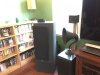
The box is a similar size to the 301, only being a tad bit bigger (and also not having the slanted top). both are ported. specs said the Behringer was scaled to (15-3/4 x 9-13/16 x 11-3/8 in).
 
I’m confused as to how are you refurbishing Bose 301’s with different woofers, crossovers and are considering different cabinets? If you are going to use that polyurethane adhesive be sure to heed the instructions about clamping. Insufficient clamp pressure will allow the glue to expand, turn to foam, and push the joints apart. Also the foam has next to no bond strength.
 
I’m confused as to how are you refurbishing Bose 301’s with different woofers, crossovers and are considering different cabinets? If you are going to use that polyurethane adhesive be sure to heed the instructions about clamping. Insufficient clamp pressure will allow the glue to expand, turn to foam, and push the joints apart. Also the foam has next to no bond strength.

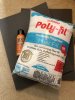
Adhesive wise for the cabinet I will be using a hot glue gun. the spray adhesive is more for the foam to stick if the adhesive that was on it doesn't hold up well. My main concern at this time is getting the specs right for the box.
 
Last edited:
I applaud doing it for fun. You'll learn something, and you'll probably end up with decent speakers, and if you don't, you can always try again. It is much better to start cheap and low risk and work upward.
That said, I don't think hot melt glue is a great idea - not a lot of time to adjust, and the glue itself is thick and requires pressure to get it to spread, and applying the pressure on the last panel will be a challenge. Wood glue or Liquid Nails would be easier.
 
I applaud doing it for fun. You'll learn something, and you'll probably end up with decent speakers, and if you don't, you can always try again. It is much better to start cheap and low risk and work upward.
That said, I don't think hot melt glue is a great idea - not a lot of time to adjust, and the glue itself is thick and requires pressure to get it to spread, and applying the pressure on the last panel will be a challenge. Wood glue or Liquid Nails would be easier.

Ah...wood glue was a no brainer, my bad! :confused:

Is there a specific reason why screws or nails are never really used for constructing the cabinet? The only conclusion I could come up with was because they don't form a seal.
 
I would use screws in conjunction with wood glue. If you're building a ported cabinet, a seal isn't critical, but a bead of glue along every joint will reduce vibration of the panels against each other.
 
Screws are sometimes used for the back panel and sometimes for the front, where they will be covered by the grill. Cabinets, even cheap ones, are usually designed with some regard for aesthetics. Screw heads aren't thought to be appealling, and covering them would add several steps to the process.
If you are building a cabinet on your kitchen table and you are using butt joints, screws or nails will help keep everything in alignment and compressed while the glue dries. But commercial cabinet makers don't do it that way - they use milled joints or rabbets, clamping jigs and sometimes vacuum or air pressure to force everything together. Cabinets don't actually have to be all that strong, so interlocking joints and glue are perfectly adequate - screws won't add any value, and may split the particle board.
I don't recommend hot melt glue for cabinets because it sets so quickly - you won't have time to get everything in place, and tight, before it hardens. And it won't have time to penetrate past the dust layer into the particle board, so the bond won't be strong.
I know this because I encountered two pairs of Cerwin Vega HEDs (in CV's defense, these were their low end models, distinguished mostly by the repulsive ooze emited by the decomposing vinyl cladding). They were actually only really held together by the tight fit of the interlocking milling and the continuous vinyl cladding which folded around the corners. There was a bead of hot melt glue on the inside seams, but this was only fitfully adhered because of dust. When I was removing something, maybe the crossover, I pushed outward against the front lip of the cabinet, probably the corner where the vinyl started and stopped. The entire cabinet suddenly completely collapsed, rather like the Deacon's one hoss shay. My curiosity piqued, I did the same to the other cabinet, with the same result. I believe I gave the other pair away.
 
You can always put the screws on the inside.

Hot glue is frequently used on cheaply made speakers, especially those sold with all-in-one type systems, but that's just to keep things in place. As mentioned above, any mass produced cabinets will be milled, which is where the majority of the strength of the box comes from.
 
I built a set of double advents many years ago. I used wood glue and plain old butt joints. I did, however, hold the whole thing together with Sheetrock screws into predrilled holes that left the heads below flush. I filled the holes with bondo and painted the cabinets flat n Bk lack as a primer. I then sprayed on two coats of black granite paint. The black paint is loaded with grey and white speckles. After all this time they still look and sound great!

2C69E9B5-D1EB-447A-B285-7462F4885B79.jpeg EC1A4207-AE24-4D12-B18F-5A793E42972E.jpeg
 
I had a speaker building club at a boarding school where I taught. We built something like 50 pairs of speakers, and all of them were made using butt joints, Liquid Nails, and sheetrock screws. It is perfectly effective - I'm not arguing against it, but the question was why don't we see screws used in most speakers, which clearly means commercial products. If you have a full blown cabinet shop, milling and gluing is way easier and faster, and looks better, too.
 
I had a speaker building club at a boarding school where I taught. We built something like 50 pairs of speakers, and all of them were made using butt joints, Liquid Nails, and sheetrock screws. It is perfectly effective - I'm not arguing against it, but the question was why don't we see screws used in most speakers, which clearly means commercial products. If you have a full blown cabinet shop, milling and gluing is way easier and faster, and looks better, too.

I think I got a better understanding now with that insight. Thanks!

But to recap, my best approach to build the cabinet would be to go off of the volume of the behringer cabinet and the woofer's alignment?

I also got access to a workshop to build the speakers.
 
Back
Top Bottom