• Please note that Audiokarma will be offline briefly for updates early on Monday morning, September 28th.

Calling all EV Experts.. HELP! Concerned About Redoped VMR Surrounds w/ PVA

i11e

AK Subscriber
Subscriber
Hi all, 9 plus year lurker, first time poster here.

I recently acquired a pair of Electro Voice Interface D's. I made the decision to apply new dope to my surrounds and am in fear that I overdid something. Long story short, when I first hooked them up, I found them to have somewhat "hand cupped around mouth" mids, with them also sounding too pronounced and somewhat disconnected from the woofer/tweeter. When looking into work I should do to them, I stumbled across several people describing them as "stiff", etc. and noticed that mine seemed pretty flexible and closer to plain fabric, maybe slightly doped at best. Further investigation brought me upon the excellent thread by @PeterSchut wherein he had this to say concerning doping:
An official EV recone specialist mentioned that it is wise to coat the surround of the VMR cloth with a special latex/rubber coating designed for foam or cloth surrounds. It smells and looks just like wood glue, but it is NOT. It dries clear.

As I had some differences in TS values between VMR L and VMR R i decided to coat the surrounds. Inspection of the units showed that one was coated the other wasn't. I did both and the TS parameters of VMR-L are now much closer to VMR-R

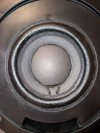
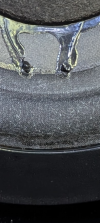
Based upon this recommendation, I went ahead and bought the PVA based MI-1291FG surround sealant. When applying it, I didn't think to water it down, and simply went straight to applying it. It was thick enough that it was relatively difficult to spread, I estimate needing to use >10-12 healthily sized drops of it per surround to get a somewhat even coating. See here for how it looked before fully curing:
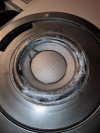
PXL_20260916_015216568.jpg

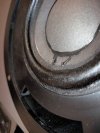
And the day after:
PXL_20260918_030304125.jpgPXL_20260918_030838951.jpg
Note: in my haste, I didn't fully apply coating to the very inside or outside of the surrounds. See those areas as reference for what my surrounds looked like beforehand.

At the same time as coating them, I also recapped them and bypassed the tweeter protection circuitry. In retrospect, I probably should have listened in between or started with just the recap. I did not change any capacitance values and am confident that I didn't accidentally alter the circuit in any way.

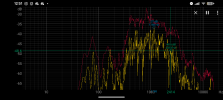
In any case, now that they've had the work done, I still don't find the sound of the mids to be right. They are missing some snap/presence and lower mid body to my ears. When measuring one playing pink noise with my phone microphone, I noticed a wide dip between about 2k and below the crossover point at 3k:
Screenshot_20260917-005116.png
The red line is peak and what is useful to be looking at here. I am aware that this isn't the best measurement, but it does corroborate what I'm hearing. I had the tweeter set to -9db for this measurement.

Also shown is a tight peak just below 1k that is audible to me as well. In addition, I am hearing what sounds like breaking up/minor distortion on some sustained tones, very close-mic'd piano, etc. The upper mids sound very lax and unergetic, and as a whole the mids still sound a bit disconnected and hollow. Though these (or maybe all of this...?) may have been there before I did any work. Is it possible I overdoped? Underdoped? Neither?

I have also since read some PVA horror stories, such as from the venerable RoyC:
I experimented with a number of the white surround "treatments". This group included the stuff sold by Simply Speakers, Orange County, M-Sound, and Global Adhesives (who labels it "white surround dampener"). These are all water soluble/PVA based, and as advertised, dry more flexibly than regular white glue. They are also advertised as being able to be used for a "wet look" on woofer cones. The problem with all of them is that they gradually stiffen. One 3a woofer I experimented on went from an fs of 16hz upon treatment to 32hz after one month!​

It is also my understanding that PVA can cause a surround become too stiff, and reflect energy back into the driver and cause breakup, though if the VMR surrounds are supposed to be as stiff as people say, I'd hope that wouldn't be some of my current issue.

Here are some videos demonstrating how they sounded before:
and after:
and something demonstrating surround "springiness" to the best of my ability:

These have been my dream speakers for a while, so I wouldn't like to give up on them just yet. If need be I am willing to source replacement surrounds, drivers, etc. or purchase something like a Dayton DATS.

Many Thanks,
Isaac
 
Register to hide this ad
Roy's stuff is excellent for klh and ar. It's much like you described, didn't take much but takes some effort to spread. Not much discussion on use with other brands. But it's not water based and very different from the pva options.

Pva glue is water soluble, and yours hasn't been cured for years. If you think there's too much, .ou may still be able to dilute and remove it. Get it damp and soft and blot with a towel or maybe try to brush off? I could see a stiff surround showing up at those higher frequencies.

That midrange is an absolute beast. Weighs like 12# or more. And vented. I don't know how hard it would be to source spares. Replacing the surrounds might not be a bad option, but it's not a foam job, and I would really question any inexpensive kit. These cloth surrounds don't commonly require replacement.

Love the old ev stuff. Keep us posted!
 
Hi all, 9 plus year lurker, first time poster here.

I recently acquired a pair of Electro Voice Interface D's. I made the decision to apply new dope to my surrounds and am in fear that I overdid something. Long story short, when I first hooked them up, I found them to have somewhat "hand cupped around mouth" mids, with them also sounding too pronounced and somewhat disconnected from the woofer/tweeter. When looking into work I should do to them, I stumbled across several people describing them as "stiff", etc. and noticed that mine seemed pretty flexible and closer to plain fabric, maybe slightly doped at best. Further investigation brought me upon the excellent thread by @PeterSchut wherein he had this to say concerning doping:


Based upon this recommendation, I went ahead and bought the PVA based MI-1291FG surround sealant. When applying it, I didn't think to water it down, and simply went straight to applying it. It was thick enough that it was relatively difficult to spread, I estimate needing to use >10-12 healthily sized drops of it per surround to get a somewhat even coating. See here for how it looked before fully curing:
View attachment 3838856

And the day after:
View attachment 3838858View attachment 3838857
Note: in my haste, I didn't fully apply coating to the very inside or outside of the surrounds. See those areas as reference for what my surrounds looked like beforehand.

At the same time as coating them, I also recapped them and bypassed the tweeter protection circuitry. In retrospect, I probably should have listened in between or started with just the recap. I did not change any capacitance values and am confident that I didn't accidentally alter the circuit in any way.

In any case, now that they've had the work done, I still don't find the sound of the mids to be right. They are missing some snap/presence and lower mid body to my ears. When measuring one playing pink noise with my phone microphone, I noticed a wide dip between about 2k and below the crossover point at 3k:
View attachment 3838863
The red line is peak and what is useful to be looking at here. I am aware that this isn't the best measurement, but it does corroborate what I'm hearing. I had the tweeter set to -9db for this measurement.

Also shown is a tight peak just below 1k that is audible to me as well. In addition, I am hearing what sounds like breaking up/minor distortion on some sustained tones, very close-mic'd piano, etc. The upper mids sound very lax and unergetic, and as a whole the mids still sound a bit disconnected and hollow. Though these (or maybe all of this...?) may have been there before I did any work. Is it possible I overdoped? Underdoped? Neither?

I have also since read some PVA horror stories, such as from the venerable RoyC:
I experimented with a number of the white surround "treatments". This group included the stuff sold by Simply Speakers, Orange County, M-Sound, and Global Adhesives (who labels it "white surround dampener"). These are all water soluble/PVA based, and as advertised, dry more flexibly than regular white glue. They are also advertised as being able to be used for a "wet look" on woofer cones. The problem with all of them is that they gradually stiffen. One 3a woofer I experimented on went from an fs of 16hz upon treatment to 32hz after one month!​

It is also my understanding that PVA can cause a surround become too stiff, and reflect energy back into the driver and cause breakup, though if the VMR surrounds are supposed to be as stiff as people say, I'd hope that wouldn't be some of my current issue.

Here are some videos demonstrating how they sounded before:
and after:
and something demonstrating surround "springiness" to the best of my ability:

These have been my dream speakers for a while, so I wouldn't like to give up on them just yet. If need be I am willing to source replacement surrounds, drivers, etc. or purchase something like a Dayton DATS.

Many Thanks,
Isaac
Maybe your caps need to break in? I'm not seeing what's wrong with your original surrounds here and I don't see the need to dope them. I have to couple VMR pairs in speakers I can check to compare. VMRs pop up on ebay, just need to make sure it's the same pro model with the heavier magnet compared to the Interface C with the "smaller" magnet.
 
Roy's stuff is excellent for klh and ar. It's much like you described, didn't take much but takes some effort to spread. Not much discussion on use with other brands. But it's not water based and very different from the pva options.

Pva glue is water soluble, and yours hasn't been cured for years. If you think there's too much, .ou may still be able to dilute and remove it. Get it damp and soft and blot with a towel or maybe try to brush off? I could see a stiff surround showing up at those higher frequencies.

That midrange is an absolute beast. Weighs like 12# or more. And vented. I don't know how hard it would be to source spares. Replacing the surrounds might not be a bad option, but it's not a foam job, and I would really question any inexpensive kit. These cloth surrounds don't commonly require replacement.

Love the old ev stuff. Keep us posted!
I'm not sure if Roy's stuff would have been more ideal for the job or not. I decided on the PVA because based on others' descriptions of their VMRs, it seemed closer to what EV may have used.

Sadly, I don't think PVA based sealant is water soluble. From what I have read, it seems like acetone is about it, and I imagine that would wreak havoc on the surrounds. I have found a replacement treated cloth surround from SimplySpeakers, but I have no idea how closely it resembles what EV intended in terms of stiffness, etc. I'm not even sure what level of stiffness EV intended the surround to be from the factory.

Maybe your caps need to break in? I'm not seeing what's wrong with your original surrounds here and I don't see the need to dope them. I have to couple VMR pairs in speakers I can check to compare. VMRs pop up on ebay, just need to make sure it's the same pro model with the heavier magnet compared to the Interface C with the "smaller" magnet.
I won't totally rule out cap break in but I've never had modern films make a driver behave like this, so I'm not sure. If you don't mind checking your VMR's I'd really really appreciate it, mine originally felt very close to normal fabric and it seemed like air was able to pass right through them. They didn't seem "very stiff" as I recall you describing them in another thread. That was what informed my decision to dope them, they sounded and looked underdamped to me. According to Peter's thread and build, it seems like the lighter magnet VMRs will drop in and measure similarly. They are what he ended up using in several of the speakers in his build at least, though in any case my preference would be to try to salvage the drivers I have if I can. Right now I'm just trying to figure out how heavily treated or stiff EV intended them to be from the factory.
Conclusion: you can use a pro VMR in place of the Interface VMR with little or no change to the filter. At least individually measured. How they interact with the woofer and tweeter will be tested next time.

Thank you both for your responses,
Isaac
 
Fully cured no, but yours might still be in the window of time... trying out this optimism thing.

Acetone or white vinegar for fully cured. Maybe denatured alcohol? None are awesome for the speaker... iso is safer but I don't think it'll do it.

Wishing you the best on this one.
 
Fully cured no, but yours might still be in the window of time... trying out this optimism thing.

Acetone or white vinegar for fully cured. Maybe denatured alcohol? None are awesome for the speaker... iso is safer but I don't think it'll do it.

Wishing you the best on this one.
loudnoises! It's not fully cured! Thank you and your optimism!

Before my evening shift, I decided to try ever so slightly wetting a microfiber cloth with warm water and going around the surrounds to see what would happen. to my amazement, the PVA started to whiten and even flake off a little bit in some parts. I don't know whether to blame the properties of the sealant, 90% relative humidity in my area lately, or what, but I was not expecting this outcome and I'm very glad. Your suggestion was seriously a lifesaver. I only had about 10 minutes before work, but I plan to dedicate an hour or so to it when I get home late tonight unless anyone has any objections. Hopefully the wetting I have done already will hold them over until then.
PXL_20260918_193633501.jpg
 
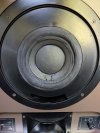
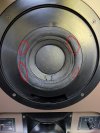
Hi all, mixed but somewhat bad news. After work last night, I got back to PVA removal. On the first surround I tackled, things went extremely smoothly and all of the PVA flaked right off with no more than a little light massaging. When I moved on to the other surround, however, the majority of the sealant proved to be a lot more stubborn and after 2 hours of really working at it, I had only removed about half of it. This morning I spent another two hours getting the rest out and the surround doesn't look very pretty. The process removed some of the dye from it, caused some deformations and generally roughed up the cloth.

The first surround:
1000017018.jpg

The second:
PXL_20260919_210400791.jpgPXL_20260919_210400791~2.jpgScreenshot_20260919-171110.png

I am not happy with how the second one turned out. Thankfully, the mids now sound more open and natural than they did, and a quick listen doesn't reveal any immediate issues. They are still quite forward in the 1k area though. When I am feeling more motivated, I will need to do some further sonic comparison of the mids to see how closely matched they are now.

I would call the first surround very visually comparable to how they both were when I received the speakers, and it still seems relatively untreated to me, ex. I am able to blow air through the surround if I put my lips to it, which I can't imagine was how EV intended the surround to be. Not entirely sure where to go from here.
 
Im glad it made you some progress, bummer it's a mixed result.

You could totally try the AR sealant, not that you want to just throw stuff at it.
 
Im glad it made you some progress, bummer it's a mixed result.

You could totally try the AR sealant, not that you want to just throw stuff at it.
I appreciate it, trying the AR sealant isn't off the table, but I think I need to get a better idea of how these are "supposed" to be before I attempt anything else.

I've reached out to someone who's reconed a lot of VMRs in the past and seems very well versed in them. Fingers crossed that he's able to get back to me with some pointers as to where to go from here.
 
Unfortunately, I don't think you're going to remedy that 1K peak (which is likely causing the "overly forward" sound observed) with surround treatment changes.

The surround treatment originally used by EV (a version of Airflex) on the VMR and most other EV drivers with fabric surrounds, is VERY close in properties, to the fabric surround coating/treatment sold by Simply Speakers, et. al- which are almost to a one, the "WD" PVA-water-based fabric surround treatment, sourced from MWA Speaker Parts. It should result in the correct stiffness, if a thin coat is used (enough to soak through and seal the fabric completely, but not "piled up" in a thick layer).

As delivered by MWA- I have no need to water down the 'WD" surround sealant. Simply brushing it on and spreading it out, until it's as thin of a coating as reasonably possible, works just fine.

OTOH- I am guessing that there is some sort of crossover and/or driver polarity issue, causing the response anomaly with the VMR cited in the OP. Those crossovers need to be compared to factory specs, to see if anything has been changed.

BTW: The application of the "WD" type surround treatment, is specific to the drivers that originally had it. Comparing this treatment and its usage, to that used in speakers such as the AR-3 woofers and such, is akin to the proverbial "apples vs. oranges" comparison. The "WD" treatment has its purpose, but very "soft" home audio woofer surrounds is not it. It's perfect for the VMR, though.

Regards,
Gordon.
 
Last edited:
Unfortunately, I don't think you're going to remedy that 1K peak (which is likely causing the "overly forward" sound observed) with surround treatment changes.

The surround treatment originally used by EV (a version of Airflex) on the VMR and most other EV drivers with fabric surrounds, is VERY close in properties, to the fabric surround coating/treatment sold by Simply Speakers, et. al- which are almost to a one, the "WD" PVA-water-based fabric surround treatment, sourced from MWA Speaker Parts. It should result in the correct stiffness, if a thin coat is used (enough to soak through and seal the fabric completely, but not "piled up" in a thick layer).

As delivered by MWA- I have no need to water down the 'WD" surround sealant. Simply brushing it on and spreading it out, until it's as thin of a coating as reasonably possible, works just fine.

OTOH- I am guessing that there is some sort of crossover and/or driver polarity issue, causing the response anomaly with the VMR cited in the OP. Those crossovers need to be compared to factory specs, to see if anything has been changed.

BTW: The application of the "WD" type surround treatment, is specific to the drivers that originally had it. Comparing this treatment and its usage, to that used in speakers such as the AR-3 woofers and such, is akin to the proverbial "apples vs. oranges" comparison. The "WD" treatment has its purpose, but very "soft" home audio woofer surrounds is not it. It's perfect for the VMR, though.

Regards,
Gordon.
Gordon,

Thank you very much for the detailed response. I'm going to reach out to MWA and try to order some of the "WD". The treatment I had been trying to use was from SimplySpeakers, and although it has a similar advertised purpose, it is much too thick and "piled on" as you described. I do not trust myself to thin it down to where it should be after my first experience applying treatment haha.

Do you think it would be wise to attempt to re-recoat the surround that got pretty beat up in my treatment removal process as detailed in post number 7, or would you recommend I source a new surround or two? If so, any recommendations would be sincerely appreciated.

I am not sure if tweeter polarity could have significantly impacted the measurement I posted. I was outside of its directivity range, and I had the high frequency level on the tweeter set to -9db when I made that measurement.

I will go over the crossovers again and make sure I didn't miss anything. It's difficult for me to be completely sure that the drivers are all in correct polarity because the stock foam behind them seems to have turned into some kind of glue, either that or a previous owner glued the drivers in. I have tried a razor blade to no avail. I fear I may need to resort to threading in an oversized screw and attempting to use it to pry the drivers out which I would rather not do. If you, or anyone else, had an additional suggestion in this area it would be very much appreciated as well.

Thank you again,
Isaac

Screenshot_20260919-235614.pngScreenshot_20260919-234749.png
 
Last edited:
MWA is a supplier to speaker repair businesses- you would need to find a speaker repair facility that uses their products, and order the WD coating from said facility. MWA does not sell to the public, directly. Fortunately, most pro-audio repair businesses in the USA get parts from MWA, so finding a suitable dealer should be pretty straight-forward.

The decision to re-coat or replace the surround, would be dependent on whether the surround has irregularities in stiffness ("hard spots" and such). If it feels of uniform stiffness throughout, then a light re-coat of the proper WD coating should take care of it.

As for polarity- the objective is to get the response as flat as possible. Since you can measure response, it may be better to just try different iterations of driver polarity, between the woofer, VMR and tweeter. I would start with the woofer itself- set it to proper polarity as indicated by the wiring. Then, add the VMR- try both polarity options, and see which one gives a better blend with the woofer. Then, add the tweeter and try both polarities, choosing the one that again, produces smoothest response.

If, after this, it's still unsatisfactory, it will be time to check the crossover for errors in component values, and/or connection errors.

Regards,
Gordon.
 
Small update, I was able to get in contact with an auction site seller who confirmed that they had the WD coating, which has been ordered. Hopefully the surrounds will be re-redoped this coming weekend. I will note that I'm going to test the treatment on a spare piece of fabric first, just to ensure it behaves as expected.

Somewhat off topic, I just stumbled upon a document I hadn't seen before online, an EV interface series price sheet from 1979:
interfacepricelist.jpg
That puts the D series II at $8108.09 adjusted for inflation. It's my understanding that the series 1 D was about $250 less a year or so prior, or $6,949.79 adjusted. I wish new TOTL speakers were still around that much... I know EV were one of the more "reasonable" manufacturers price-wise, but still, haha.
 
Last edited:
Small update, I was able to get in contact with an auction site seller who confirmed that they had the WD coating, which has been ordered. Hopefully the surrounds will be re-redoped this coming weekend. I will note that I'm going to test the treatment on a spare piece of fabric first, just to ensure it behaves as expected.

Somewhat off topic, I just stumbled upon a document I hadn't seen before online, an EV interface series price sheet from 1979:
View attachment 3840782
That puts the D series II at $8108.09 adjusted for inflation. It's my understanding that the series 1 D was about $250 less a year or so prior, or $6,949.79 adjusted. I wish new TOTL speakers were still around that much... I know EV were one of the more "reasonable" manufacturers price-wise, but still, haha.
I was finally able to check out my four VMRs. They all have the same relatively stiff surrounds, like an extremely starched fabric or coating. They do move inwards when pressed, just not very freely. Hope that helps!
 
Back
Top Bottom