• The move to the new server is done. There are some software and database maintenance updates in process. This has us passing the hat around to help out. We appreciate any donations. Seriously, even a dollar helps. The payment page may be found here - https://www.audiokarma.org/support.html

Can somebody please help?

S Sylva

Member
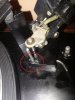
Looking at a blueprint of the turntable, I am seeing that this piece may be called a "Cueing arm?"

Anyway, it has crazy glue in it and so the needle will not go down and reach the record because the glued metal piece or "cueing arm" does not move down any lower.

Any advice?
 

Attachments

  • philips.jpg
    philips.jpg
    52.5 KB · Views: 99
Register to hide this ad
Looking at a blueprint of the turntable, I am seeing that this piece may be called a "Cueing arm?"

Anyway, it has crazy glue in it and so the needle will not go down and reach the record because the glued metal piece or "cueing arm" does not move down any lower.

Any advice?

Maybe you could use acetone/nail polish to hopefully dissolve the glue.
 
I really appreciate the quick response but I fixed the glue issue which was an attempt at fixing a different problem, initially. Now, the glue is removed and I'm back to the original problem which is that, hitting the "Auto" button (as demonstrated in the store where I purchased the turntable) is supposed to move the needle over to the record and then it lowers the needle and the music begins... but when I hit the "Auto" button (unlike the guy in the store) the needle moves to the right... away from the turntable... then drops overtop the play options. I am completely lost because (even though I've never used a turntable before) the mechanism is right out in the open and seems pretty easy to track what is going where. The plastic gear-thing has been successfully glued/repaired and fastened back into place, nothing else has glue and everything is essentially right back to step one.
 
It could be very helpful if you tell us what model of turntable that is. I expect it's a Philips based on your tag but they made a bunch of models.
 
Looks like a changer... brand?
Are you using the over arm?
Also a thought:
Sometimes you need to cycle a changer through the movements to “reset” it.

Ben
 
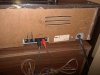
Hello... what I see on the front is "Philips Cassette - AM/FM Stereo Compact System" and the back says "Series No. 71058"
 

Attachments

  • phil1.jpg
    phil1.jpg
    91.5 KB · Views: 40
  • phil11.jpg
    phil11.jpg
    81.8 KB · Views: 41
Hello... what I see on the front is "Philips Cassette - AM/FM Stereo Compact System" and the back says "Series No. 71058"
Welcome to VE, S.Sylva.

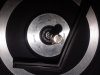
Your photo of the turntable indicates that it is a "BSR" auto-changer. Very common on 1970's consoles, I (unfortunately) had one on my first stereo record-player. Sorry to say, they are not good quality and are not always good for your records (and I speak from experience). You might consider upgrading if you are serious about developing a record collection and maintaining their quality (and I'm not being snobbish, there are many excellent entry-level new and vintage turntables which are way better than the BSR).

However, if you want to get your tt working correctly, look in the VE library. From memory, there are lots of BSR auto-changer turntables, but many are very similar. You may be able to find a service manual for your model (or one very similar) which will have info on how to correctly setup the auto function.
 
How long ago did you buy it? Maybe the superglue was put on as a quick fix to get it working again before they sold it to you, and now that fix has failed. If you haven't had it for very long, I'd bring it back and request that they either fix it again in a way that will last longer, or exchange it for a similar or better turntable if they have any others for sale.

Or if all else fails, you can remove the large gear under the platter that drives the automatic mechanism, and just operate it manually (put the tonearm down on the record by hand and pick it up when it's done playing).
 
I am a complete beginner but I watched many tutorials and asked my mother about it over a call, and every source is saying I can simply lay the needle on the record and hit play if the auto function is not working. This would be "manual" but it just isn't the case. When I manually put the needle on the record, it sounds like a train riding through a hail storm but just hours before the auto-function stopped working, every record played crisp and clear with no skipping. Now, it plays about 2 seconds on repeat and then repeats the next two seconds and so on, completely distorted.
 
Did you or the shop you bought it from apply the super glue?

As well was there any “refurbishing” done by the shop you bought it from?

Honestly sounds like (imo) typical “hardened grease” that most untouched BSR changers suffer from...
I have dealt with a few BSR units they ALL had hardened grease that required disassembly, cleaning off old grease and the application of new lithium grease.
Not hard to do but a bit tedious, will say I have yet to come across a BSR that didn’t work AFTER full cleaning and re-grease.

Ben
 
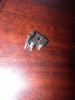
It was fine in the shop. Tested on multiple occasions. The problem occurred when this small bracket thing developed a crack in it while the arm was moving. I took the bracket off, glued it to prevent it from splitting completely into two pieces and replaced it back to exactly where it was but now the arm moves away from the disc instead of toward it and it's driving me crazy.

The good news is, I contacted the seller and he said to bring it in immediately to check it out but the bad news is, they'll probably blame me for damages once they see this crazy glue on the bracket thing...
 

Attachments

  • piece1.jpg
    piece1.jpg
    45.3 KB · Views: 26
  • piece2.jpg
    piece2.jpg
    49.5 KB · Views: 26
Logically, since it worked before glueing and is not working after, the culprit is how that piece was reinstalled. Changers like this are (to me) a Rube Goldberg nightmare and I avoid them like the plague. I never could understand the disassembly/reassembly order and procedure. I, in fact, marvel at those who can strip one down, clean and lubricate, and reassemble successfully.

Good luck

Shelly_D

P.S. I'm not trying to be snarky or anything, just saying these things mystify me.

There may have been another part in contact or meshing with the one you glued up that is now in a different position or orientation that is at fault. Or some part may have been holding a third something spring loaded in place, and with the removal of the repaired part, the second part no longer held the spring loaded one in place and now that third part is misaligned and can no longer do what it needs to. Changers are just chock full of mechanical contortions like that, which is what drives me to run from them screaming like a madman.

Shelly_D

 
Last edited:
Well, I appreciate the feedback.

Really hoping we can solve this today and begin working on the vinyl collection. It's a part of culture that needs to be preserved.
 
It looks like the piece you glued was the platform for the cuing mechanism and it should't affect tonearm movement if installed properly. Hardened grease is common in BSR's (and Garrards), but I don't think it would cause the issue your having within a couple of hours. One possibility is a spring underneath has popped off or detached when you transported it, very common to happen
if the unit is transported without the transit screws being tightened. I have encountered this problem in old RCA changers many times and makes them operate just like you describe. The spring
is underneath the deck/tonearm assembly. I haven't looked at a BSR in years so I don't know if it has a similar type spring.

You say that when playing the record manually that there is horrific noise, this may be caused by the turntable platter not being fully seated or the changer mech not reset or in part cycle, or something rubbing underneath the platter, again caused by transport without locking the mechanism. You would need to remove the turntable platter and examine underneath.
Completely distorted? Sounds like the stylus was damaged in transit or was shifted out of proper position or the glued cuing platform is not clear of the tonearm when lowered.

I just read your posts again, you say the problems started after you glued the piece that appears to be the cuing platform? Then it must be that the piece is not installed properly or the glue
has affected the thickness or lowering piston and not clearing the bottom of the tonearm when in play position. Do this test, lower the tonearm onto the record manually, is anything (like the
piece you glued) touching the tonearm? There should be a clear space between the bottom of the tonearm and the top of the cuing platform.

That is one of the better BSR's with a Magnetic cartridge and it won't harm your records if working and adjusted properly.
 
If the tonearm is the metal rod that the little bracket thing is on, then no... there was no space between the bracket and the bottom. The bracket was on and when the tonearm goes up the bracket just sits at the bottom, unmoved...

Anyway, the seller is trying to trade the whole machine out with a Fisher model that is more recent but it as an industrial look to it whereas the Philips looks very vintage.
If I was ONLY worried about functionality, I could just buy one of the modern (cheap) ones that surpass these vintage ones in every possible way (aside from aesthetically).

I like the Philips because it has character and adds more than just music to the apartment... it's beautiful!

Really hoping the seller can get it in tip-top shape while he's getting it repaired but he is already doubtful and just telling me to sacrifice looks for durability and that's a shame.
 
Back
Top Bottom