• Please note that Audiokarma will be offline briefly for updates early on Monday morning, September 28th.

Can Using the Preamp Section of an Integrated Amplifier Compete with a Preamp?

Preamplifiers destroy Preamp/Phono Out

  • Yes

    Votes: 4 40.0%
  • Not necessarily

    Votes: 6 60.0%

  • Total voters
    10
  • Poll closed .
A dedicated quality pre will be a huge improvement. A bit of anecdotal experience doing something similar.

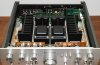
The Kenwood KA-7300 is one schveet integrated amp with a highly regarded pre stage, the power stage is no slouch either. The clean architectural layout of it's true dual mono design paying obvious homage to the Trio Supreme 600.
kenKA7300.jpg

6debaf45375b391120f0064318b834aa.jpg

Picked up a schveet Belles Model I amp, connected it to the pre section of the Kenny and the improvement was not subtle.
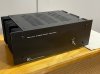
BellesOnePowerAmplifier01.jpg

Ran it this way for a number of yrs, then acquired an Amber Model 17 Full Function Preamp as a gift for my middle son. Connected in place of the Kenny just for eBay feedback testing purposes before giving it to my son.
Classic-HiFi-Amber-Model-17.jpg

The RCA jacks were all loose and required wiggling the interconnects to get it to work, once working even in it's condition blew away the Kenny as a preamp, I wasn't expecting or wanting that lol.

Couldn't give it to my son in this condition so I gave him another preamp I had here and sent the Amber to my tech. It's now the heart of my now eclectic group of equipment in the living RM relegating my matching Kenwood silver stack to the bedroom.
Screenshot_20220825-222734.png

The living room setup now doesn't look as schveet as it did but boy does it sound better, and isn't that what's important?
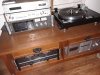
20220512_213751.jpg

20220512_214038.jpg

And it should, the Amber pre though only $150 now (what a huge bargain) was vastly more expensive new than the Kenny which also has a power amp included.
 
The specs on preamps both standalone and in receivers/integrated amps are usually pretty easily available. If you believe specs (I mostly do) you can directly compare performance of the receiver or integrated amp preamp with a given preamp separate. I suspect Luxman has outstanding preamps in all of its components.

I also think the gain setting on the amp can make up make most if not all of the difference in input voltages.
 
I run a Luxman R-114 as a preamp in my main system. When I first set up this system I was running the Luxman as the amp while I worked on getting my tube amp ready. When I finally got the tube amp done I used the R-114 as the pre because it was already there and would be easy to switch a couple of cables to put the tube amp in line. On first listen the system sounded damn nice. Big open soundstage, detailed bass, tight mids, and sweet high end. At the time I had a Kenwood Basic C1 and a C2, also a NAD 1600 and a Marantz 3200. Over time I tried all the preamps in the system but I always come back to the Luxman. To me the soundstage of the Luxman is wider, deeper and very stable, something the dedicated preamps never got right.
 
Last edited:
if your preamp has 2.0v output and your amp has an input sensitivity of 1.5v you run the risk of overdriving the amplifier and creating distortion and possible damage.

Neither situation is ideal but can be acceptable if you recognize the limitations and operate the equipmemt accordingly.

My preamp is capable of putting out 25V and I have NO problem driving the amplifier and there is not distortion or possible damage. This is because the preamp has the volume control that will lower its output. The situation you mention of low preamp output is right, not enough to drive the amp but this situation of way too much output for the amp, well that is what the volume control is for. Don't crank it up to clipping and it is all ok, all day long.

I must have a preamp that will produce more than an amp requires. This for the low volume times when I need more gain.

Most preamps are rated well below their maximum output level in order to get a reasonable idea of the performance characteristics of the preamp and these numbers might not be enough to drive an amp. The specs might mention max output as the spec sheet for my preamp does. Getting levels that work together is a good idea.
 
Speaking of which, it seems that one particular brand seems to be concerned about your clipping their preamps by providing output meters.

????
My first preamp had meters. But it did so much it was just another feature. I used em a lot for diagnostics. Sony TA-2000, May 1970.
 
So a preamp has to be looked at for electric compatibility with a power amp? Whether it’s part of an integrated unit or separate? I think because i am using a high power/quality preamp section from the same era and brand as my power amp I’m probably in the right neighborhood but how would I check? This thread took off a bit more than expected
 
No need to do anything complicated. As long as it's not shorted out your Luxman pre-out will make music through your Luxman amp no problem. In fact that's the exact scenario they had in mind when they installed the preamp-out jacks originally (i.e. "Please buy and use our amps with our receivers!").

BTW I forgot to mention your good fortune/my envy about having that highly prized gear.
 
Ok. Like exactly what?
Well it was my first stereo and I moved it a few times once before college then frequently while in college the first couple years and when something wasn't right, missing channel or whatever I got used to using the tools of that preamp. It had a mode switch with all the options and the meters and of course the swapping of input cables. Just a kid learning how to use a system and such.
You missed a good one yesterday. Would have been great hearing your preamp. Maybe next time. We heard why I didn't get an SAE cartridge even though I know how good they are.
 
I’ve had great luck using search parameters on Luxman, Thorens and Acoustic Research search platforms. (I also watch kenwood and accuphase). For some reason Preamplifiers are super rare. Probably because they’re usually married to power amplifiers and sold to top buyers on our favourite website worldwide.
 
For some reason Preamplifiers are super rare.
They really aren't if you know where to look.

I've used separate pre and power amps since I was a teen in the 70s. Then as now there are dozens of manufacturers who make them across all price points. The brand I've favored for decades offers three along with three phono preamplifiers.

With high gain digital playback gear, however, some systems don't require them. In my garage system, the DAC drives the power amp directly.
 
I’ve had great luck using search parameters on Luxman, Thorens and Acoustic Research search platforms. (I also watch kenwood and accuphase). For some reason Preamplifiers are super rare. Probably because they’re usually married to power amplifiers and sold to top buyers on our favourite website worldwide.

I have no issue finding more preamps than I can shake a stick at on eBay, not long ago nabbed a very schveet Amber Model 17 Full Function Preamp for the huge sum of $150:biggrin:
 
I had been using a modded Cyrus 2 as a pre, but have replaced it with a Luxman A-007, an integrated with pre-out jacks. What makes it sound really good is the Musical Fidelity tube buffer between pre and power amps.
 
So just a few I saw out of thousands lol
Hey where are the name brands with the high 'taxes' that most here know and love? The Pio/Mar/Sui names are recognized by most of the folks that looked at gear back in the day and they remember the names and want those products. Supply and demand makes them the taxed brands but there are plenty of other brands with preamps made from the 50 to the present that are excellent. Having never seen them in the store makes them less known. Most stores had a few brands but there were so many it took large cities to have enough dealers to have a large number of the brands represented. Some cities and towns never had dealers for many of the brands listed in the annual directories from the late 70s to the 90s over on www.worldradiohistory.com.
 
Last edited:
Back
Top Bottom