
• The move to the new server is done. There are some software and database maintenance updates in process. This has us passing the hat around to help out. We appreciate any donations. Seriously, even a dollar helps. The payment page may be found here - https://www.audiokarma.org/support.html

Carver TFM tech question: “Low Feedback”, input to output phase

odcics2

AK Subscriber
Subscriber
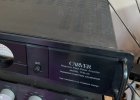
I noticed on a Carver TFM-25 amp for sale the words “Low Feedback”.
Is that design consistent with a TFM-35x?

Would a low input to output phase mean it’s low feedback?

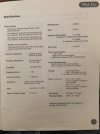
Pic of TFM-25 and specs for TFM-35x can be seen below.

Any insight/knowledge appreciated.
Thanks. IMG_7606.jpegIMG_7607.jpeg
 
Register to hide this ad
Input-to-output phase shift is different from a "low feedback" design. In fact, low feedback designs generally have more phase shift than higher feedback designs because feedback almost always extends the HF response of the amplifiers. The higher the HF response, the lower the phase shift will be (generally).
 
Anyone know if the two amps have similar topologies, both low feedback?
I think "low feedback" is a marketing claim and isn't specific enough to be meaningful. Lower than what? If the specification isn't listed in the printed materials I don't think you can rely on any particular meaning.
I've had a couple TFM amps, and they sounded very similar even though different power ratings----if that helps.
 
The other trick with feedback and phase, if you want a stable amp, there cannot be significant phase shift otherwise your amplifier becomes an oscillator.

Solid state amps tend to have a lot of feedback relative to tube amps that I usually fool with. Direct coupled amps have very little phase shift though, so this is possible to do without it being an oscillator. They also have a lot of gain so throwing a bunch away in a feedback loop is not an issue. Tube amps usually involve caps and transformers which really screw things up when it comes to phase accuracy. This limits how many stages and how much feedback can be applied and still maintain stability.


at some point the idea of negative feedback became the great evil in the hifi world. Prior to being the great evil it was the savior of everything. Nothing like silly extremes eh?
 
I've read that a none feedback amp, like an Ayre, works great with a time and phase coherent speaker, like a Vandersteen.
 
low/no feedback amps really need a speaker with a flat impedance curve more than anything. They cannot compensate for dips in impedance and that will affect frequency response at the speaker even if it measures flat on a dummy load. The other thing feedback does is lower the output impedance of an amp so the speaker has less effect on the output voltage.
 
Back
Top Bottom