• The move to the new server is done. There are some software and database maintenance updates in process. This has us passing the hat around to help out. We appreciate any donations. Seriously, even a dollar helps. The payment page may be found here - https://www.audiokarma.org/support.html

Choice of capacitor

nemohm

New Member
Hello,

Planning to replace Hanlan 100uF, 100V,some 25 years old capacitors in the woofer part of crossovers.

Some of the options are:

-/+20%

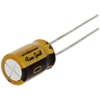
Nichicon Fine Gold 100uF 100V
1705988750328.png


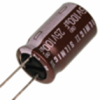
Elna RFS 100uF 100V

1705988777620.png


-/+5%

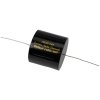
Mundorf ECAP100-100 100uF 100V

1705988829094.png


Nichikon is half the price of Elna and Mundorf. What would you suggest?

Any other options ?

Thx
 
Register to hide this ad
Whatever cap you choose has to be NON POLARIZED. That would eliminate the Nichikon and the Elna. They're both good caps but not suitable for loudspeaker crossovers. So take the Mundorf.
 
The Cross-Cap is a way too much for my projects... Thx

Does "NP" on the body mean non-polarized?
 

Attachments

  • 1706020366998.png
    1706020366998.png
    204.9 KB · Views: 5
The Cross-Cap is a way too much for my projects... Thx

Does "NP" on the body mean non-polarized?

Yes, "NP means non-polarized".

Since you're Cdn and displaying a cap from the Parts Connexion website, pay them their "Capacitor Matching-Fee" so you get relatively decent matchs for the 2 caps.

Also, pay the $0.77Cdn extra for the following 5% Jantzen .

Jantzen eleCap 100uF, 100V

Sonically, I feel it would be a good idea to parallel something like the following cap onto that 100uF Jantzen

Obbligato 1.5uF Film+Foil

FYI: That's only a 1.5% increase in capacitance ( so you know ) and will have negligible effects on the proper workings of the network.

:)
 
Last edited:
EarlK, Thank you,
Does it have to be 1.5uF and copper? ( Or due to the fact Obligato is on sale).
Existing Hanlan 100uF capacitors are radial, placing axial capacitors would be cumbersome, due to tho the board's and enclosures size.
What are the risks to parallel the existing Hanlans ( I have 6 pcs to replace)?
(I have JB JFX 1.0u and 1.5u and Panasonic ECW-FG70105J, 1.0u-------Would any of them work?
 
EarlK, Thank you,
Does it have to be 1.5uF and copper? ( Or due to the fact Obligato is on sale).
Existing Hanlan 100uF capacitors are radial, placing axial capacitors would be cumbersome, due to tho the board's and enclosures size.
What are the risks to parallel the existing Hanlans ( I have 6 pcs to replace)?
(I have JB JFX 1.0u and 1.5u and Panasonic ECW-FG70105J, 1.0u-------Would any of them work?
Hi nemohm,

Here's a radial model for you to try out.

> the "Muse" series from Nichicon, 100uF, Bi-Polar

Here's the manufacturer's ( pdf ) tech-sheet for that series of BiPolars ( erroneously called Non-Polar by those who don't "get" how an electrolytic is designed )

Nichicon "Muse" Series ( pdf )

Put those 100uF Bi-Polars in >> listen to them for a couple of weeks >> then add in either of those JB JBX sizes as a film-type bypass >> listen for another couple of weeks >> and see if ( first ) you can hear a difference & ( second ) was the "Full-Monty" an improvement ( or not ). Keep ( employ ) whatever scenario best floats your boat .

I can set you up with some "expectation bias" now.

Adding a bypass can indeed have a deleterious effect on the sonics due-to ( it seems ) twin charge//discharge cycle speeds of the 2 caps beating-against each other to compete for your ears attention ( iow; one hears the lack of sync ).

This is most apparent ( IME ) when everything ( or most every cap ) within the playback circuit is comprised of similar high-speed MKP capacitor types ( = Metalized PolyPropylene ).

Once one is able to "hear"the different capacitor types and following on, can then "hear" this effect >> it's impossible to "unhear" . It's quite unpleasant and very annoying > I believe many people lay the blame for this annoyance in many different ( ultimately wrong ) areas ( like; bad recording, uncontrolled component resonances, etc. )

The effect ( when in the HF section ) can make a very decent recording of ( say ) a classical oboe ( or clarinet ) turn it into an awful sounding, "kazoo-like", clown instrument.


As F1nut has said ( implied ) it's not pretty and adding a different dielectric bypass type ( such as Polystyrene won't create a better outcome ).

The major "Paradox" to this effect > is it won't appear ( IME ) when the source components aren't littered with " the latest greatest " fast dielectrics ( such as Polystyrene & Polypropylene > maybe Teflon, though I have no direct experience with that type ).

I ( we ) don't know what the rest of your system is comprised of >> so it's impossible to say if the "bad" effect of using bypass caps will overwhelm the positives.


:)
 
Currently I do tests with Sony STR-GX69ES, stereo mode, switching A/B speakers, same channel; Denon AVR1713 is connected to KEF Cube2 subwoofer, and speakers for internet music streaming; (plan to utilize Monster splitter/switch, too many cables though)
Onkyo A-SV810Pro is hooked to Infinity Kappa7i ( currently in the basement, as per wife's orders)
Besides The infinity speakers and a subwoofer (fond of them since mid 80'), Dahlquist (DQ QX6A, Profiles PDQ-REF1T, Profiles PSL 6.1A) one Philips pair with ribbon tweeter, few Energy, Sinclairs .
Kenwood and NAD Cd players.
Profiles PSL 6.1A are 2 pairs, started upgrades on pair A and keep pair B in original state for comparisons. Planning to rewire internals and get the crossovers outside the boxes in order to do the changes.
Everything is second hand...
Got few wires such as DALI CONNECT SC F222C -PE insulation, some others with silver (strands or plating), XLPE.... ( a day before I read the "wire" article by R.Russell)
Did some dampening/deadening with bitumen sheets, playing with felt, polyester, etc. All speakers are ported, not an easy task to do internal jobs due to the size of enclosures. (I like them ~14" tall).
---------------------------------------------
From the post above:
It looks to me bypassing might work when the capacitors are with close ESRs, correct?
The notion the faster capacitor facilitates the big, slow capacitor to discharge (faster?) is quite conditional.
Eh, the time will tell.
Meanwhile have to order some Mundorf lycs, and Audyn (Q4, Qtext4, QS4, MKP Plus), have to decide yet...
 
Why go with an electrolytic capacitor when there are so many nice polypropylene, foil in oil, Russian paper in oil, etc. to choose from?

I believe that this is the speaker model in question.

Profile PSL6.1a.png

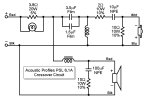
And this is the crossover ( for the above ).

Profiles PSL 6.1A network 20151001_102743.jpg

I believe the intent here is somewhat a bit of an ear-training exercise ( on a budget ) >> so immediately throwing a ton of lipstick onto a pig might really defeat the purpose of the exercise.

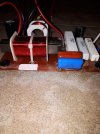
PC board layout 20240108_192433.jpg

The Blue+Brown film caps apparently add up to 5uF >>they are most likely Mylars >> so any monolithic 5uF MKP capacitor is going to be an ear-opener ( though likely not a "keeper" until at least a rating of "8" is soldered in there ( ideally a "10" from the Tony Gee scale ).

That 10uF e-lytic cap is also part of the tweeter circuit >> so it really needs to become a film ( at least for educational purposes and ear-training ).

Profiles PSL 6.1a network side-shot 20240106_161913.jpg

Wiring up at least a single channel of something like Obbligato's brand "new" Silver or Copper Series should be educational ( as well as pretty affordable ).

:)

PS; Reference Thread ( located over at diyAudio )
 
Last edited:
What gets me is you can see some decent speakers that weren't cheap to begin with that used general purpose electrolytic caps used in the crossovers. I get there was a time when film caps were more expensive compared to electrolytics, but those days are pretty much gone. You find good film caps for cheap.
 
If you like the speakers and plan to keep them spend the money and go film. I recapped my klipsch kg4’s and the crossover network barely fit back in the speaker because they are 10x the size but the sound different was noticeable. Remember the speaker sees AC voltage so bipolar is always a plus.
 
Recapping with JB JFX ( 10.0u bypassed with 0.022u, 4.7u bypassed with 0.022u ), as bypassed/cascaded Hanlan (JFX 1.0u+104MPW 0.1u) was done few months back.
CDE 940C and IC 223MPW

Pondering if bypassing R2 in HP filter with 0.1u would return any benefits?! Any other resistors to bypass? The 3.8R by the lamp?

Today, after the warnings about bypassing lyts, listened few hours, found no obvious issues. Will listen to the upgraded boxes and the original ones back to back, and report here.
1706066830651.png
Perhaps JFX is not the "9" rated capacitor for the job. Emailed Tony Gee about the newer Audyns, no tests done, no impressions. Was thinking about Mundorf MEO, too bulky. Obligato Oil for 10.u is 40x87mm. The only solution would be to move the crossover outside the box.... Should not be a problem with my new silver wires.LOL
Thank you for all notes and suggestions, appreciated indeed.
 
Last edited:
I'm wondering what is the effect on the sound when mismatch brand/model of capacitors:
Does the weakest link define the sonic picture?
In HP filter (as above) two capacitors in series. Which capacitor has the final role for the sound?
The one who is closer (10.0u) to the driver?
Would the first capacitor on the signal path define/throttle the signal going to the second/final capacitor?
If the first capacitor is of lesser quality/rating group, would the second high-end capacitor be of no use?
 
Last edited:
Hello,

Planning to replace Hanlan 100uF, 100V,some 25 years old capacitors in the woofer part of crossovers.

Some of the options are:

-/+20%

Nichicon Fine Gold 100uF 100V
View attachment 3096722


Elna RFS 100uF 100V

View attachment 3096723


-/+5%

Mundorf ECAP100-100 100uF 100V

View attachment 3096724


Nichikon is half the price of Elna and Mundorf. What would you suggest?

Any other options ?

Thx

You may want to look at the caps on the tweeter circuit as well.
 
Back
Top Bottom