• The move to the new server is done. There are some software and database maintenance updates in process. This has us passing the hat around to help out. We appreciate any donations. Seriously, even a dollar helps. The payment page may be found here - https://www.audiokarma.org/support.html

Comparison between higher end vintage audio vs higher end modern audio

Stevescivic

Active Member
I am sure this has probably been asked at some point but can folks chime in here about their experiences with vintage vs modern audio?

I like using my vintage receivers with modern speakers and modern music sources. Many of my vintage units are fully restored with all new capacitors and upgraded transistors to replace known problematic ones. The end result are blissful sounding system(s) that I really like a lot.

I was chatting with a friend of mine that has box box store mid tier modern equipment and he says he likes my vintage system more. My sustemmcompared to his isn’t a level playing field as I am running considerably more power and better speakers than what he’s got but he said the difference was quite stark and he is disappointed in how his modestly priced system was outperformed by a 43 year old receiver.

Our conversation got me wondering if the folks here have done side by side tests of old (and fully restored gear) vs. new receivers or amps using the same source and speakers.

With what limited access I have to new gear I will share the following observations.

1. Vintage gear seems sound a tad warmer overall but less accurate. Dynamic range is great and bass notes hit deep and low; tweeters are not fatiguing to the ears even during extended listening sessions

2. Modern equivalents (note I said equivalent as it would be unfair to compare a 270 wpc vintage receiver with a mid tier modern unit) sound more sterile with less “substance to them”. Bass isn’t as lush and rich sounding but isnoverall, more accurate sounding. Higher frequencies I find can be fatiguing at louder volume levels during extended listening sessions.

3. Stereo separation on both old and new are good but the soundstage on vintage units seems bigger and better defined.


Anyone care to share their observations and opinions?
 
Register to hide this ad
For me it comes down to $$$'s. I can't afford to buy new. Went to local hi-fi show, had a good listen to the latest yamaha
offering (and others), certainly looked/sounded nice but the speakers were 20k AUD and about another 10k(???) for the
pre-power amps... Even the A-Sxxx series are expensive. In the US you can pickup a nice Sansui, yamaha, kenwood, marantz,,,
for peanuts, I've ready many posts where such items are found in dumpsters and GW stores...
 
Can't really answer your question, but I've wondered the same thing. I've really, really been enjoying streaming Tidal HiFi (and recently Qobuz Hi Res) files for about a year just using an MacBook Air and Schiit Bifrost Uber DAC I picked up locally on Craig's List through my '70s vintage SS system > Infinity Quantum 2 speakers. I happy combination of new and old for me. Stopped by the last remaining independent hifi shop in Dallas several months ago just to listen to something new and supposedly "high end". Left feeling very underwhelmed by speakers in the $5-15,000 range vs the $500 I have in my Quantum 2s. Was wishing I could hear them side by side. To me, it's still mostly about the speakers and then the source.
 
Depends on what vintage you're talking about really. Depends on which modern as well.
I like the sound of 80's gear more than 70's and find the it to be quite similar between good 80's stuff and good modern gear.
That said, if you're trying to compare something like an Audio Research amp from the 80's to a Best Buy grade AV receiver you can be lead to believe modern is lousy. If you compare like to like (as in comparable price when new and the older gear is in good condition or restored) you're likely to find a better comparison between generations of gear.
 
The conundrum that I see is that it is usually quite difficult for a prospective buyer to be able to own a fully restored vintage unit home AND a modern unit of comparable class to bring home to try on their setup. There is plenty of online debate between the two camps with no clear winner. Sharing some of my random thoughts for the day.

1. Vintage gear - Often these old units REALLY need a full rebuild for them to be able to properly compete against modern equipment. Electrolytics don't perform as good today as when they did 43 years ago. Transistor improvements have improved performance and lower noise floors. Case in point that Pioneer had some notoriously bad transistors that were recommended to be replaced if one wanted to do a proper rebuild job.

2. Comparisons of vintage gear can is often grossly skewed. Here is an example below:
https://www.iavscanada.com/receiver-shoot-out-vintage-vs-high-tech/

They compared a 270 wpc vintage receiver against less powered units that came in roughly around 120-130wpc. Vintage or not the Pioneer SX-1980 used in this blind test had DOUBLE the power. Not a fair comparison power wise and if you consider inflation into the equation that they should've been comparing the SX-1980 with something much pricier like a McIntosh unit.

I will give that reviewer credit however, that they DID clearly show frequency response and power output of each receiver tested and did state that there is no clear answer to vintage or modern. I'm probably being overly critical of the site but the point I"m trying to make here is that they should be comparing a much higher end piece of gear against the top of the line Pioneer SX-1980.

3. Comparisons of vintage vs. modern gear are often conducted in different environments using different speakers. Not sure about the folks here on AK but I don't personally know too many people that get an opportunity to test a fully rebuilt vintage unit against a modern day equivalent in their home while "shopping" for a receiver.

4. Cost to rebuild vintage properly isn't cheap. Acquiring a nice example and then rebuilding it takes a tremendous amount of time and money to bring it back up to as good or better than factory spec. I have 1st hand experience paying someone AND/OR doing all the work myself (with the help of fellow AKers).

5. Modern has a lot of bells and whistles and good bang for buck. For $1500 CAD I can buy a very nice modern receiver complete with warranty and can be assured that it would perform half decently. Try doing that with a vintage receiver like a Pioneer SX-1050 - as vintage prices continue to rise a buyer will likely not be able to buy a good higher end old unit and expect it to work flawlessly like it did when new. Chances are they'll need a rebuild very soon.

That being said, since I have a half decent collection of minty vintage units with some of them being fully rebuilt back to manufacturer spec that I have no choice but to go and convince my spouse to let me buy a modern high end unit to compare against :)
 
Last edited:
Correct me if I'm wrong but that Yamaha sold for $1300 in 2009. I assume a used one cost less today. And a plug and play 1980 cost $4000? If the test were run today with a new $4000 receiver against the 1980 it might have some credibility.
Now the Sony and Yamaha was a more reasonable test that might be purchased for similar money today. And produced predictable results.
 
If you want to compare apples to apples, you need to take inflation into account. According to an online inflation calculator, $100 in 1973 is worth $554 today. So if you want to compare something like the popular Marantz 2270 (originally $550) to a modern equivalent, you need to target a modern receiver in the $2500-3000 range. There aren’t a lot of modern stereo receivers that would be of interest to audiophiles, and the ones that are out there might cost four times that or more. But if you could find a modern $2500 receiver, it would be an interesting comparison with a properly rebuilt 2270.
 
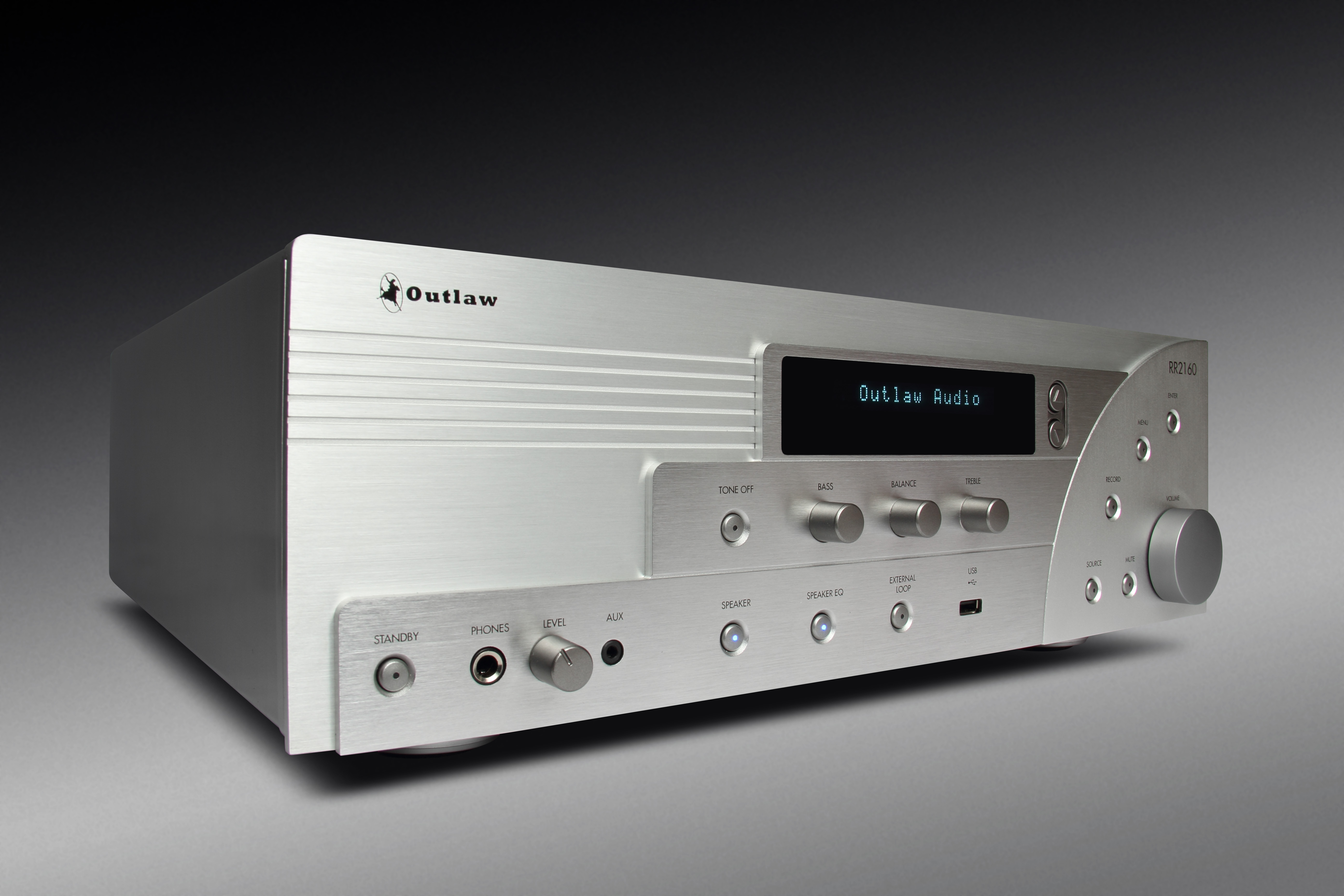
these days its more integrated amps since fm is not as much interest. the yamaha integrateds would be a good comparison. this is the only modern receiver I can think of (except for the extremley low end yammy, sony and sherwood)
RR2160frontangle.jpg
 
Honestly ... it's not that hard. I only recently started doing the Vintage Receiver thing because ... now I like the look of them! But they are old and two of the three need work. My JVC Sr 200 and my Sansui 7070 have "issues??" But they still power up and look cool. My Rotel RX 603 still works just fine??

Anyway the non Monster Vintage Receivers aren't that expensive and a fully restored lower wattage Vintage Receiver can be had for between 500 and 600 or so?? I think I've seen that for the uh weird looking JVC's Sr xxx's these guys.:
https://www.hifiengine.com/manual_library/jvc/jr-s201.shtml

But then the complaint will be I cant hook up my sub (if he has a sub with high level inputs he can) and then I can't hook up my new Led TV and again if he gets a Optical to RCA convert (they are cheap) he can. And then it will be I can't hook up my center channel or my rear surrounds??

And then, it's uh oh?? Now can it still be done well ... yeah sorta, but now you'd have to kick the Receiver up a slight knock to one with preamp out! My Rotel 603 has those to name one. But now you'd need a DD Processor and uh a separate multi channel amp!! So you know at that point one is well into crazy town!

Or you know ... screw all of that! Speakers are ultimately the "Voice of the system!" If he wants a vintage sound ... then he should get "Vintage Speakers!" :)

I have a lot of modern gear amps, pre amps and processors etc etc. But I got tired of the hassle factor! Nowadays I use one of my Yammy AVR's and currently my Mach One's and RS LX 5's. I rotate vintage speakers the larger ones but the LX 5's and the powered sub stay, always!

It works fine for me, and I hunt down speakers to find something else that's cool! But if he does not like the way his system sounds, change the speakers to something "Vintage." That should be simple enough ... course if he wants to timber match 5 or more speakers ... then let size be his guide. But hey there is always "Phantom Mode" for the front two, that works out fine in most cases. :)
 
So much has changed in the last 50 years that comparing vintage high end with modern comes down to what asthetics you like and what your ears say,as for build quality the improved technologies make high end new gear so different it's not even in the same league with vintage ,take the basic volume control on both era gear ,pots collect dust & cause distortion ,need maintaining to stay free of static ,meanwhile modern gear has eleminated the use of pots for volume ,balance ,source selection etc ,modern caps are better quality as are modern transformers ,resistors etc ,modern has an entirely different sound ,even within a brand with a house sound .

Same goes for modern speakers ,the computer modeling programs have gotten so accurate that many of the problems historically discovered once a prototype has been made ,then measured inside a reverberant room or anechoic Chamber ,those issues are corrected before a cabinet is ever designed ,no more need for thick felt surrounding tweeters and mids to correct time delay issues ,right down to materials used to create driver's ,I recently had 1 of my 3 pairs of XRT-22s rebuilt using McIntosh current 12" woofer materials ,after break in the difference in coherence was huge enough that I had a 2nd pair rebuilt from baskets up .

On the other hand I have 50 year old Klipsch ShortHorns , McIntosh Mc-60s & C-20 preamp that I wouldn't modernize for any amount of money ,the rig sounds just perfect with 50 year old tech ,I guess it boils down to what each of us percieve to sound best ,there is no right or wrong ,only happy listeners ,while technological superior new gear dosent automatically translate to " better " sound .
 
I do not think era's can be compared in such broad strokes. A lot depends on how well the systems suit personal preference. If the listener likes mellower, less forward sound, an older system will most likely suit. If the listener likes transparency and clarity, a modern set up will most likely suit. I say most likely because there are many exceptions to these generalizations, so much so that saying old is mellow and new is transparent is risky. If we look at old vs. new in purely objective terms, near perfect sound reproduction as measured on the 'scope has been around since the late Seventies. If two amps reproduce the same traces and have similar power output and headroom, they will sound similar in which case age does not matter. Let's layer in the most complex and contentious aspect of audio, bias. There is no question (in my mind at least) that your vintage system looks charming compared to your friend's BPC. Even if the two sound the same, it is likely listeners gravitate towards the system that has it all. They expect a system that is visually appealing will sound better. Confirmation bias is also in play. It is entirely possible that looks, status, and brand reinforces the ownership experience which acts as confirmation bias that the correct decision was made to buy. In this context, the visually stunning system will sound better than BPC, even to guest listeners who have become vicarious owners. This is not to say that bias is bad, on the contrary. Bias goes to the core of personal preference and is a powerful selling tool.
 
All of this has a common cause. Enjoy any and all eras of whatever you like or love. I have many types of music gear from early 60's forward. As a lover of gear aesthetics I'm always on the lookout. A lifetime of collecting both vintage and modern Hi Fi, vintage and modern guitars as well as truckloads of PA equipment has proven one thing to me. There are iconic pieces from every era, and in almost every line of "real" equipment. The intrinsic value of true vintage equipment and the streamlined but cheaply replaceable parts of modern gear all lead down the same road. Thoroughbred designs provide great listening experiences, Less optimal designs will suit 99 percent of the market. The difference between eras in my opinion is that golden era designers built a 100% of everything for the ears of the 1 percent, a perfect example is a mid 70's Marantz 2215 receiver that shares the design quality of the 2270. Today the ratio has reversed, with 99% of gear constructed with build quality equal to throwaway junk for 99% of the listeners and only 1 % of gear produced for a targeted base of critical listeners...and the music business has followed suit with 99 percent of new FM radio music as " product" and no respect whatsoever for music lovers. That's my take, and if you want to argue the merits of 90 percent of modern music releases knock yourself out. Unfortunately gear manufacturers are building the majority of gear based on the horses for courses theory. If a $100.00 receiver satisfies the likes of the listeners that dont care about the difference in artistic quality between Ariana Grande and Vladimir Horowitz and most actually shun the latter, than they are happy buying what they deserve. Cheap Junk. It's just amusing that these days with so many supposed technology upgrades that only the higher end provides what used to be considered standard build quality at any level.
 
I came really close to pulling the trigger on a new Yamaha A-S2100. This video is a very thorough comparison of vintage vs. modern, worth the time to watch IMHO


In the end, vintage is more cost-effective than modern for me. Plus it's just cooler. :-)
 
Last edited:
All of this has a common cause. Enjoy any and all eras of whatever you like or love. I have many types of music gear from early 60's forward. As a lover of gear aesthetics I'm always on the lookout. A lifetime of collecting both vintage and modern Hi Fi, vintage and modern guitars as well as truckloads of PA equipment has proven one thing to me. There are iconic pieces from every era, and in almost every line of "real" equipment. The intrinsic value of true vintage equipment and the streamlined but cheaply replaceable parts of modern gear all lead down the same road. Thoroughbred designs provide great listening experiences, Less optimal designs will suit 99 percent of the market. The difference between eras in my opinion is that golden era designers built a 100% of everything for the ears of the 1 percent, a perfect example is a mid 70's Marantz 2215 receiver that shares the design quality of the 2270. Today the ratio has reversed, with 99% of gear constructed with build quality equal to throwaway junk for 99% of the listeners and only 1 % of gear produced for a targeted base of critical listeners...and the music business has followed suit with 99 percent of new FM radio music as " product" and no respect whatsoever for music lovers. That's my take, and if you want to argue the merits of 90 percent of modern music releases knock yourself out. Unfortunately gear manufacturers are building the majority of gear based on the horses for courses theory. If a $100.00 receiver satisfies the likes of the listeners that dont care about the difference in artistic quality between Ariana Grande and Vladimir Horowitz and most actually shun the latter, than they are happy buying what they deserve. Cheap Junk. It's just amusing that these days with so many supposed technology upgrades that only the higher end provides what used to be considered standard build quality at any level.

Sort of a detour but in line with the notion of surface taking a front seat to substance. Your music take is spot on. It wasn't too long ago when vocalist were pitch and timing perfect. Listen to any Seventies genre from rock to disco, vocalists were pitch perfect. There was no hiding behind the mixer. With today's processing, anyone can be made to sound pitch perfect. So, we get vocalists who are show people first and singers second. There are comparisons of very big pop stars singing in natural voice and then in studio. The difference is startling. The theory and suspicion is that Auto-Tune processing is a star enabler.
 
Sort of a detour but in line with the notion of surface taking a front seat to substance. Your music take is spot on. It wasn't too long ago when vocalist were pitch and timing perfect. Listen to any Seventies genre from rock to disco, vocalists were pitch perfect. There was no hiding behind the mixer. With today's processing, anyone can be made to sound pitch perfect. So, we get vocalists who are show people first and singers second. There are comparisons of very big pop stars singing in natural voice and then in studio. The difference is startling. The theory and suspicion is that Auto-Tune processing is a star enabler.

Not to mention the loudness wars, where the engineers think all new music should have the same dynamics as TV commercials. :-)
 
I am sure this has probably been asked at some point but can folks chime in here about their experiences with vintage vs modern audio?

I like using my vintage receivers with modern speakers and modern music sources. Many of my vintage units are fully restored with all new capacitors and upgraded transistors to replace known problematic ones. The end result are blissful sounding system(s) that I really like a lot.

I was chatting with a friend of mine that has box box store mid tier modern equipment and he says he likes my vintage system more. My sustemmcompared to his isn’t a level playing field as I am running considerably more power and better speakers than what he’s got but he said the difference was quite stark and he is disappointed in how his modestly priced system was outperformed by a 43 year old receiver.

Our conversation got me wondering if the folks here have done side by side tests of old (and fully restored gear) vs. new receivers or amps using the same source and speakers.

With what limited access I have to new gear I will share the following observations.

1. Vintage gear seems sound a tad warmer overall but less accurate. Dynamic range is great and bass notes hit deep and low; tweeters are not fatiguing to the ears even during extended listening sessions

2. Modern equivalents (note I said equivalent as it would be unfair to compare a 270 wpc vintage receiver with a mid tier modern unit) sound more sterile with less “substance to them”. Bass isn’t as lush and rich sounding but isnoverall, more accurate sounding. Higher frequencies I find can be fatiguing at louder volume levels during extended listening sessions.

3. Stereo separation on both old and new are good but the soundstage on vintage units seems bigger and better defined.


Anyone care to share their observations and opinions?
Assuming high end means "no holds barred", it would imply that newer stuff can take full advantage of the latest technological improvements and, therefore, just like a 2019 Porsche is clearly superior to a 1978 Porsche, the same can be said for modern vs vintage electronics.

That is, unless cost cutting is nailing high end stuff as well, in which case all bets are off.

Or we're living in Atlas Shrugged.:D
 
Last edited:
On the original poster's questions #1 and #2:

Vintage audio amps, the pre and main amp bits, are based on different circuit designs and components.

Fully complementary and quasi-complementary Class AB designs sound different from chip amps and Class D designs.

Older designs often use older feedback designs.

Older transistors have slower slew rates, good or bad, which can also contribute to sound character.

The popular cap-coupled output designs of the 60s and 70s (which are commonly "warmer" sounding) gave way to the less expensive directly-coupled designs which are more "neutral" or "accurate". Sometimes this can also be tiring.

The parts used to sense temperature and change the bias (I.e. Varistors) aren't used any more, so self-adjusting is a little different.

Newer designs don't need or don't allow for any adjustments, whereas older designs would be a little different from each other by slightly difference trimpot settings.

Vintage solid state gear uses discrete transistors, less-efficient and different-dielectric caps, and different composition resistors. Good or bad, old ones will sound different from new ones because they are made up of different stuff.

Tolerances in caps, resistors, coils were far wider than today, so each unit would be unique sounding versus identical to one another.

Im no expert nor a tech nor have an E.E., but those observations above are things I can easily see when looking inside units and reviewing schematics.
 
Modern designs also often use IC based opamps instead of transistors. More accurate, more neutral, more perfect to original material, but not necessarily better sounding. They are quieter, though.

A farther stretch would be the power supply designs. Lots of earlier designs were half wave rectifiers with crude diodes, then fullwave designs, then bridge rectifier designs. This does affect how much smoothing the subsequent filters need to do and, potentially, deliver choppier power to the audio circuits. Ive never detected an audible difference, but it could be a contributing factor to slightly different operation of the resistors, caps and transistors.

Similarly, diodes and rectifiers are "faster" these days. Some are also designed to reduce the ringing that is possible when a diode clamps down and switches off or closed. There are some research and marketing claims on this making for cleaner and less noisy power. Right or wrong, this is a real difference in the power supply and might, MIGHT contribute one more tiny factor to the difference in sound character.

An older than old units use more and more Germanium transistors and diodes. They do the same function as modern (1970s and newer) Silicon devices, but their operating curves and characteristics are different, so totally plausible to contribute to a difference in sound character.

My $0.02
 
I came really close to pulling the trigger on a new Yamaha A-S2100. This video is a very thorough comparison of vintage vs. modern, worth the time to watch IMHO


In the end, vintage is more cost-effective than modern for me. Plus it's just cooler. :)
Oh man that one hurt! I blew up my CA 2010 years ago! Shorted wire with a rigged 12 volt car crossover ... my bad. :(

But it was, a "right on point" clip! And the best from today can hang with the best from back then! And sure the new Yammy, did see to have a clearly better "Headphone amp??" And if one chooses to use headphones the size of "Grapefruits??? I guess that makes the newer unit better??

Interesting that, he made note of the Yamaha sound?? I've had Yamaha gear in some form or another forever, so I take it as a given, I make mention of it because, that's what "they" say. But I will say that modernish, Yamaha AVR's do seem to like Vintage Speakers??

I discovered this by accident when I swapped out a Pioneer DSX V411 AVR for a Yamaha RXV 530, to use with my Sansui, Sp1200's, that I kinda like! I made the change, uh cuz I could. I was not really expecting anything to be different?? But while I was happy enough with the Sansui, Pioneer Combo, I was stunned with the same speakers with the Yamaha!! And the phrase that comes to mind is "Smooth??" I was stunned!

But the bad news ... is now the Pioneer is driving Boston Acoustic VR M50's, and that combo ... does not seem to work so well??? Truly shrill shrinking highs, the pain the pain! This combo does not seem to like "Saxophones" as found here??

That particular Pioneer AVR and those particular, BA speakers were uh ... brutal!! So now sigh ... the Mach One's are out of retirement and into the living room and the Sansui's to the bedroom following the Pioneer.

The BA's are Bi amp-able, so I will find a combo that works for them as they are gorgeous looking speakers! And the Yammy and the Mach One's. LOL ... no problem! Same track and I let them (puppies) rip!! Pretty cool and uh, what was the topic here?? :)
 
Back
Top Bottom