


ChefE
Active Member
Hello AK.
I love music. I love my gear. I want to keep loving it but some run more hot than others. Vintage gear and later such as my QB recapped Sansui QRX-777 reciever (sometimes lights wane in brightness), all original Sansui G-7700 receiver (now has a hummm), Yamaha RX-1600 A/V receiver, Sony STR-GX909ES receiver, and Sherwood AM-8500G 1120watt amplifier tend to operate a little above normal temperature. Most of the different system rigs are placed in typical vintage vertical audio cabinets with the glass front doors. These become convection ovens. A fan blowing on the G-7700 produces better sound.
The fans I have are cheap standard household fans; a desktop 6" to 10" and a tall rotating HEPA floor-standing fan.
BUT…….….
The fans created ground loop issues, EMF issues, and caused illumination fluctuations in some components lamps.
AND……….
To make matters worse, the main living room wall is the perfect place and size for my audio collection, but the adjacent side is the outlet for toasters, etc, the refrigerator, and all light switches—with dimmers! Speakers emitted a pronounced "hummmm or zzzzzzzzzzzz" and my plasma TV had a barely noticeable (Im the only one who noticed it) high pitched ZZZZZZZZ and trace visual graininess. When I relocated the A/V stuff to the other side of the room, the problem was gone. Although I had to spread my gear out and use all the electrical outlets on that particular circuit, so they don't obstruct the 100 inch wide windows in each wall. I currently only have basic surge protectors or power strips and they are on the carpet.
Questions:
1.) I need a small fan inside the home audio equipments' old school cabinets. I have only seen tiny computer based fans. What model or brand or whatever sort of cooling fan should be used?
What are some tips or advice to help circulation for those pieces that aren't in the open?
2.) What can be done to remedy A/V equipment issues placed near refrigerators or lamps with dimmers or ceiling lights with dimmers or ceiling fans?
3.) What are the do's and don'ts of plugging in power cords?
4.) Would a power conditioner help? I don't know anything about them.
If anyone has anything to share, please do.
Thank you for your time and knowledge.
Much appreciated,
Chef Eric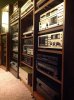
I love music. I love my gear. I want to keep loving it but some run more hot than others. Vintage gear and later such as my QB recapped Sansui QRX-777 reciever (sometimes lights wane in brightness), all original Sansui G-7700 receiver (now has a hummm), Yamaha RX-1600 A/V receiver, Sony STR-GX909ES receiver, and Sherwood AM-8500G 1120watt amplifier tend to operate a little above normal temperature. Most of the different system rigs are placed in typical vintage vertical audio cabinets with the glass front doors. These become convection ovens. A fan blowing on the G-7700 produces better sound.
The fans I have are cheap standard household fans; a desktop 6" to 10" and a tall rotating HEPA floor-standing fan.
BUT…….….
The fans created ground loop issues, EMF issues, and caused illumination fluctuations in some components lamps.
AND……….
To make matters worse, the main living room wall is the perfect place and size for my audio collection, but the adjacent side is the outlet for toasters, etc, the refrigerator, and all light switches—with dimmers! Speakers emitted a pronounced "hummmm or zzzzzzzzzzzz" and my plasma TV had a barely noticeable (Im the only one who noticed it) high pitched ZZZZZZZZ and trace visual graininess. When I relocated the A/V stuff to the other side of the room, the problem was gone. Although I had to spread my gear out and use all the electrical outlets on that particular circuit, so they don't obstruct the 100 inch wide windows in each wall. I currently only have basic surge protectors or power strips and they are on the carpet.
Questions:
1.) I need a small fan inside the home audio equipments' old school cabinets. I have only seen tiny computer based fans. What model or brand or whatever sort of cooling fan should be used?
What are some tips or advice to help circulation for those pieces that aren't in the open?
2.) What can be done to remedy A/V equipment issues placed near refrigerators or lamps with dimmers or ceiling lights with dimmers or ceiling fans?
3.) What are the do's and don'ts of plugging in power cords?
4.) Would a power conditioner help? I don't know anything about them.
If anyone has anything to share, please do.
Thank you for your time and knowledge.
Much appreciated,
Chef Eric


