


radiotvnut
Super Member
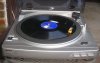
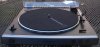
A while back, I picked up this cheap Aiwa two-speed (33 and 45) belt-driven turntable and I decided to convert it to 3-speed, so I could have 78 rpm. This particular one uses a fixed-mount variant of the Audio Technica AT3600L cartridge and there is a 3-mil. 78 rpm stylus for that cartridge, but I'd suggest using the one from LP Gear, instead of the Pfanstiehl generic because the Pfanstiehl generic was "bottoming out" at 3.5 grams of tracking pressure (the tracking pressure is not adjustable on these turntables).
After removing the bottom cover, I discovered that the motor is the same type that is used in most Crosley/Victrola models. The speed regulation circuitry is completely enclosed inside of the motor and on the bottom of the motor, there are two holes marked L and H. These holes are for accessing trim pots for speed adjustment, with L being for 33 1/3 rpm and H being for 45 rpm. The way these motors work is when you switch the speed to 45 rpm, the 45 rpm trim pot inside the motor is placed in parallel with the 33 rpm pot, which increases the speed. On Crosley models that have 78 rpm speed, there is a 3rd pot on a circuit board that is away from the motor and this pot controls 78 rpm. When set to 33 rpm, the speed is controlled by the 33 rpm adjust pot. When set to 45 rpm, the 45 rpm pot is placed in parallel with the 33 rpm pot and speeds up the motor. When switched to 78 rpm, the pot for adjusting 78 rpm is placed in parallel with the 33 rpm pot (offering an even lower resistance than the 33 and 45 rpm pots in parallel) and gives us 78 rpm.
I did the same modification on an early '90's cheap-o Radio Shack turntable and on a later model Audio Technica AT-LP60. On the Audio Technica, I also added an outboard variable pitch control (when I find what I did with the schematic for that particular circuit, I'll post it).
For the avid 78 rpm record collector, this might not be the best set-up. However, for someone who wants to listen to and/or transfer 78's on a budget, one of these modified cheaper turntables will work out fine and won't break the bank. The biggest thing is to make sure there is a 78 rpm stylus available for the cartridge that your turntable uses.
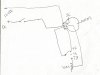
After removing the bottom cover, I discovered that the motor is the same type that is used in most Crosley/Victrola models. The speed regulation circuitry is completely enclosed inside of the motor and on the bottom of the motor, there are two holes marked L and H. These holes are for accessing trim pots for speed adjustment, with L being for 33 1/3 rpm and H being for 45 rpm. The way these motors work is when you switch the speed to 45 rpm, the 45 rpm trim pot inside the motor is placed in parallel with the 33 rpm pot, which increases the speed. On Crosley models that have 78 rpm speed, there is a 3rd pot on a circuit board that is away from the motor and this pot controls 78 rpm. When set to 33 rpm, the speed is controlled by the 33 rpm adjust pot. When set to 45 rpm, the 45 rpm pot is placed in parallel with the 33 rpm pot and speeds up the motor. When switched to 78 rpm, the pot for adjusting 78 rpm is placed in parallel with the 33 rpm pot (offering an even lower resistance than the 33 and 45 rpm pots in parallel) and gives us 78 rpm.
I did the same modification on an early '90's cheap-o Radio Shack turntable and on a later model Audio Technica AT-LP60. On the Audio Technica, I also added an outboard variable pitch control (when I find what I did with the schematic for that particular circuit, I'll post it).
For the avid 78 rpm record collector, this might not be the best set-up. However, for someone who wants to listen to and/or transfer 78's on a budget, one of these modified cheaper turntables will work out fine and won't break the bank. The biggest thing is to make sure there is a 78 rpm stylus available for the cartridge that your turntable uses.
