• The move to the new server is done. There are some software and database maintenance updates in process. This has us passing the hat around to help out. We appreciate any donations. Seriously, even a dollar helps. The payment page may be found here - https://www.audiokarma.org/support.html

Cornwall II Crossover Recap

MATT0404

AK Subscriber
Subscriber
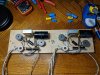
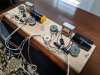
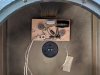
Recapped my cherry lacquer Cornwall II's (1987) today. Went with Dayton Precision 1% caps except for the 68uF on the woofers, that one got a Dayton 5% polypropylene cap. The recap was a pretty straight forward remove and replace job. Original film caps were very close to spec. One of the 68uF electrolytic caps was up to 72.4uF, the other was 69.7uF, but both were within their 10% tolerance.

Post recap sound is a bit cleaner, bordering on bright. Bass has a bit more presence. I'll give the new caps some time to settle in but, all in all, quite happy with the results. Maybe Ti tweeter diaphragms next??? :naughty:Here's to another 30+ years! :beerchug::music:

IMG_20190706_181953.jpg IMG_20190706_100305.jpg IMG_20190706_150529.jpg IMG_20190706_150712.jpg IMG_20190706_150734.jpg IMG_20190706_151059.jpg
 
Register to hide this ad
Great job! I do have a technical question. Can you test the capacitors in circuit? I have been told that most relatively modern film caps tend not to drift much. So, if the existing caps are generally within spec, why change them? 40+ years of playing drums, shooting guns, lead guitarists with the amps turned to eleven, I doubt I could hear much of a difference anyway. Thanks
 
I would stay away from the Ti upgrades but that's just me. I still can hear to 17.5 Khz so I don't need over accented tweeters. While in college in the 60's my room mate had Cornwalls in his former Garage that had been converted to a man cave. Those Cornwalls could peal paint being driven by a MC 2105 Mac amp. I really liked them. They weren't my Bozak Symphonies, but the Cornwalls did a fantastic job at all the Parties we had. Corm walls had better highs above 12 KHZ and the bass was strong but it wasn't as accurate like Symphonies bi-amped. Yes the Cornwall could play 6 db louder, but that wasn't an issue for me. Cornwalls will always be my Favorite Klipsch speaker. Chorus and Forte didn't come close. Corner horns voiced with a room equalizer could be fabulous, but they didn't compare to my try-amped Grands with supplemental super tweeters.
 
Great job! I do have a technical question. Can you test the capacitors in circuit? I have been told that most relatively modern film caps tend not to drift much. So, if the existing caps are generally within spec, why change them? 40+ years of playing drums, shooting guns, lead guitarists with the amps turned to eleven, I doubt I could hear much of a difference anyway. Thanks
I don't believe you can test the caps in the circuit. I measured them once they were removed and, as you mentioned, the film caps didn't drift much. I found this also to be true in my Chorus II's. The electrolytic caps drifted a bit, but the film caps were well within tolerance. So, why change them? I think of it as preventive maintenance. And I like to tinker. :)

I would stay away from the Ti upgrades but that's just me. I still can hear to 17.5 Khz so I don't need over accented tweeters. While in college in the 60's my room mate had Cornwalls in his former Garage that had been converted to a man cave. Those Cornwalls could peal paint being driven by a MC 2105 Mac amp. I really liked them. They weren't my Bozak Symphonies, but the Cornwalls did a fantastic job at all the Parties we had. Corm walls had better highs above 12 KHZ and the bass was strong but it wasn't as accurate like Symphonies bi-amped. Yes the Cornwall could play 6 db louder, but that wasn't an issue for me. Cornwalls will always be my Favorite Klipsch speaker. Chorus and Forte didn't come close. Corner horns voiced with a room equalizer could be fabulous, but they didn't compare to my try-amped Grands with supplemental super tweeters.
I've had Symphonies before. Great speakers for sure!
 
Thanks for the information, I appreciate it. I am just opposed to swapping out original components if they don’t need to be replaced. I do get the tinkering part. I have a friend that can’t leave any of his boat load of vintage tube guitar amps alone.
 
Because different capacitors can have different sound signatures even when they measure the same as the others. :)
Agree...and I'm beginning to think the Dayton Precision caps are a bit too bright (for my ears) on the tweeters. It's only been around 25 hours or so, so I'll give them a little more time to settle in.
 
Agree...and I'm beginning to think the Dayton Precision caps are a bit too bright (for my ears) on the tweeters. It's only been around 25 hours or so, so I'll give them a little more time to settle in.
That brightness is one of their characteristics, I don't think they'll settle down much if any. My preference is Sonicaps, They're what Bob Crites uses. :)
 
Solen caps can tend to be on the bright side, too, like the above mentioned Dayton caps. I've used Solen a great many times over the last 25+ years but primarily on dome & cone style speakers and not horns. I did use Solen caps a few times as replacements when I was selling something, though. On the Klipsch inspired Belle clones I build in late 2017, I made all new crossovers and used Audyn Plus caps and have been very pleased with them. I also tried some of those new old stock Russian PIO MGBO caps from an e b a y seller that also sounded quite nice and do work well with horns. There's a point of diminishing returns for me as I have tinnitus and I just won't hear and, potentially, appreciate the use of high dollar capacitors. I also don't use bypass caps as I have never heard enough of a difference to justify their use either measured or sound wise. Others' mileage may vary.
 
Great job! I do have a technical question. Can you test the capacitors in circuit? I have been told that most relatively modern film caps tend not to drift much. So, if the existing caps are generally within spec, why change them? 40+ years of playing drums, shooting guns, lead guitarists with the amps turned to eleven, I doubt I could hear much of a difference anyway. Thanks

You cannot test caps in place and get accurate results. It is best to lift at least one lead before testing.

When measuring caps, the equivalent series resistance (ESR) needs to be measured, along with the capacitance value. The ESR will affect the attenuation of the driver, that is, the sound level. The ESR also varies with frequency. Capacitance value variations will affect the crossover frequency.

All caps have some ESR, with electrolytic caps having the greatest amount and also being the worst for having ESR increase as the caps age. The brightness of some caps is often due to the caps having a significantly lower ESR than what was in there previously.

Modern (as in the last 20 years) film caps are generally well built and have little issues with changing ESR. Some older film caps may deteriorate due to moisture intrusion into the housing. Generally, though, film caps do drift much due to age. Some of the older mica caps may see ESR changes over time. Many people can hear the difference when recapping older film caps with new.

For speakers with old film caps, I recap one speaker and A/B test it against the speaker with original caps. If I hear or can measure a difference, I recap the other. Otherwise I consider it a job done.
 
Solen caps can tend to be on the bright side, too, like the above mentioned Dayton caps. I've used Solen a great many times over the last 25+ years but primarily on dome & cone style speakers and not horns. I did use Solen caps a few times as replacements when I was selling something, though. On the Klipsch inspired Belle clones I build in late 2017, I made all new crossovers and used Audyn Plus caps and have been very pleased with them. I also tried some of those new old stock Russian PIO MGBO caps from an e b a y seller that also sounded quite nice and do work well with horns. There's a point of diminishing returns for me as I have tinnitus and I just won't hear and, potentially, appreciate the use of high dollar capacitors. I also don't use bypass caps as I have never heard enough of a difference to justify their use either measured or sound wise. Others' mileage may vary.
Good input. Thanks. I may try either the Audyn or Russian PIO's.

You cannot test caps in place and get accurate results. It is best to lift at least one lead before testing.

When measuring caps, the equivalent series resistance (ESR) needs to be measured, along with the capacitance value. The ESR will affect the attenuation of the driver, that is, the sound level. The ESR also varies with frequency. Capacitance value variations will affect the crossover frequency.

All caps have some ESR, with electrolytic caps having the greatest amount and also being the worst for having ESR increase as the caps age. The brightness of some caps is often due to the caps having a significantly lower ESR than what was in there previously.

Modern (as in the last 20 years) film caps are generally well built and have little issues with changing ESR. Some older film caps may deteriorate due to moisture intrusion into the housing. Generally, though, film caps do drift much due to age. Some of the older mica caps may see ESR changes over time. Many people can hear the difference when recapping older film caps with new.

For speakers with old film caps, I recap one speaker and A/B test it against the speaker with original caps. If I hear or can measure a difference, I recap the other. Otherwise I consider it a job done.
Great info regarding ESR! I don't have the equipment to measure ESR, but might be worth the investment.

My intent was not to hi-jack the thread, sorry. I do appreciate the information RTally.
No worries. All relevant to the discussion in my opinion.
 
Great info regarding ESR! I don't have the equipment to measure ESR, but might be worth the investment.

I don't bother with measuring caps. Once you go to the trouble of pulling them out of the circuit, you might just as well install a new one. Spending $10 to $40 in caps is no big deal. I do not have any speakers that are worth enough or good enough to spend much more on caps.
 
Back
Top Bottom