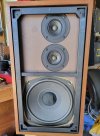
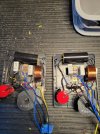
I'm genuinely curious. Of course there is fixing problems, surrounds or capacitors. But sometimes I see where someone has changed out tweeters or woofers or other bigger changes. Is it still the speaker the mfg intended? Or would it be better to move onto something else rather than changing an original speaker? Of course we all want the best sound. Maybe those changes will make the speaker sound better, but then is the speaker worth what an untouched speaker would be worth? Is it still a Quad or a Dahlquist or whatever if the main parts have been changed out. Talking about the collectible high dollar speakers, mostly. I guess it gets into what makes those great speakers, great.


You are using an out of date browser. It may not display this or other websites correctly.
You should upgrade or use an alternative browser.
You should upgrade or use an alternative browser.
Curious when a speaker has had so many upgrades that it's no longer what came from the mfg.?
- Thread starter crojack
- Start date
Register to hide this ad

Whatever works for the owner. If they want to change out all the drivers to get a certain sound that's their option.
If it were me I wouldn't care in the least what others thought, they were changed for my benefit. They would be more valuable to me.
The parts replaced could always be saved so they could be put back to original.
If it were me I wouldn't care in the least what others thought, they were changed for my benefit. They would be more valuable to me.
The parts replaced could always be saved so they could be put back to original.

knotscott
Super Member
Once you change a driver or make modifications that significantly change the crossover behavior, it's really no longer the same speaker. That can be fine if you like it better, but it is significantly different, and any changes should be noted if you sell the speakers. My son recently bought some EPI speakers and the woofers had been replaced with some generic Radio Shack woofers, so not even an upgrade....unfortunately that was never mentioned to him, but should have been.
I've upgraded and made minor mods to many speakers over the years, but most were fairly pedestrian mid-fi level speakers. I would think twice before modifying a really well designed and/or expensive speaker like a Vandersteen, Magico, Merlin, etc. Most of the changes I've made were upgrades to caps, wires, connections ,etc., but have also made tweaks to tweeter output, cabinet bracing, etc. to some that I felt needed it. Replacing electrolytics with decent poly caps has been worth it every time IMHO, even if the old caps were in spec....they're just clearer, but it can change ESR which is another variable to be mindful of.
The vast majority of big name speakers are from large corporations and are built for 20-25% of the MSRP, meaning a $1000 pair of speakers costs $200-$250 to build, which is not much considering what a good cabinet, good crossover parts, and drivers cost. Many corners are cut to meet that price point, and many less than ideal parts are used....I have no issue making upgrades to crossover parts and basic cabinet damping and/or bracing. It's wise to be mindful that the sound will be different, and might not always be preferred....ie: a significant portion of the output can be from cabinet resonance, which can be perceived as warm sounding even though it's a coloration. It's a matter of preference regardless if it's technically better.
I've upgraded and made minor mods to many speakers over the years, but most were fairly pedestrian mid-fi level speakers. I would think twice before modifying a really well designed and/or expensive speaker like a Vandersteen, Magico, Merlin, etc. Most of the changes I've made were upgrades to caps, wires, connections ,etc., but have also made tweaks to tweeter output, cabinet bracing, etc. to some that I felt needed it. Replacing electrolytics with decent poly caps has been worth it every time IMHO, even if the old caps were in spec....they're just clearer, but it can change ESR which is another variable to be mindful of.
The vast majority of big name speakers are from large corporations and are built for 20-25% of the MSRP, meaning a $1000 pair of speakers costs $200-$250 to build, which is not much considering what a good cabinet, good crossover parts, and drivers cost. Many corners are cut to meet that price point, and many less than ideal parts are used....I have no issue making upgrades to crossover parts and basic cabinet damping and/or bracing. It's wise to be mindful that the sound will be different, and might not always be preferred....ie: a significant portion of the output can be from cabinet resonance, which can be perceived as warm sounding even though it's a coloration. It's a matter of preference regardless if it's technically better.
Last edited:

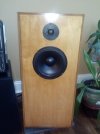
I know I’ve posted these before, but since you asked:
Started as Snell E II’s.
Had custom cabinets made from Baltic Birch to exact same dimensions.
Changed drivers to the Audio Note silver voice coil drivers.
Had AK member @GordonW rebuild crossovers exactly to originals but with much higher quality parts.
How do they sound?
I’d put them up against anything in the 5,000 dollar range.
Started as Snell E II’s.
Had custom cabinets made from Baltic Birch to exact same dimensions.
Changed drivers to the Audio Note silver voice coil drivers.
Had AK member @GordonW rebuild crossovers exactly to originals but with much higher quality parts.
How do they sound?
I’d put them up against anything in the 5,000 dollar range.
Attachments


whoaru99
Epic Member
Certainly may be a valid price point comparison after the mods. I'll take your word.Started as Snell E II’s.
I’d put them up against anything in the 5,000 dollar range.
I think the meat of the the OP's question though is after all the mods are they still Snell E II?
Same question about my Klipsch Cornwall, less modified than your Snells. They have original cabinets, original woofers, but the mid drivers, tweeter assys, and crossovers are different. Are they still "Klipsch Cornwall"? Arguably not really.
Modified Cornwalls, Klipsch-Crites Cornwalls, just Cornwalls? Maybe "big speakers" lol.
Last edited:
Mine are definitely not Snell now. You could call them a do it yourself Audio Note.Certainly may be a valid price point comparison after the mods. I'll take your word.
I think the meat of the the OP's question though is after all the mods are they still Snell E II?
Same question about my Klipsch Cornwall, less modified than your Snells. They have original cabinets, original woofers, but the mid drivers, tweeter assys, and crossovers are different. Are they still "Klipsch Cornwall"? Arguably not really.
Modified Cornwalls, Klipsch-Crites Cornwalls, just Cornwalls? Maybe "big speakers" lol.

There is a whole thread on AK showing very questionable speaker mods and repairs...
But of course I cannot find it!
But of course I cannot find it!

It gets tricky if you ask the same question about my Metregon. Like a dozen load options were available at one point or another. All were called the Metregon. Because at least in JBL’s eyes, you’re listening to the gimmick of the cabinet. But would it still be the 205 or 001 or S72 or S82 if I change something? Well clearly no since it would be different.
Ah, but what if you’re doing something the manufacturer intended in an initial design but never brought to production? Hmm.
As for resale, depends on the culture of the people who like to buy that type of speaker. In the Klipsch world, it’s almost expected that Khorns have been modified. If it’s done to a high standard, that typically doesn’t hurt things. And if you did a bunch of things that were reversible (like I plan for my Paragon) and no one’s any the wiser, then what would it matter?
Ah, but what if you’re doing something the manufacturer intended in an initial design but never brought to production? Hmm.
As for resale, depends on the culture of the people who like to buy that type of speaker. In the Klipsch world, it’s almost expected that Khorns have been modified. If it’s done to a high standard, that typically doesn’t hurt things. And if you did a bunch of things that were reversible (like I plan for my Paragon) and no one’s any the wiser, then what would it matter?

Some in column A, others in column B I guess.
For a lot of classic speakers, take the JBL L100 Century / L100A, regardless of whether modifications can make it sound more accurate many people buy them for the original sound that they remember, not razor-sharp accuracy in today’s music. They are a bit of an anomaly however as much music was mixed and monitored on their 4310/4311 version so their original sound is what was intended when that music was mixed. If you want a truly flat response you have a lot of work to do and these are probably not the best place to start. Modify an original L100 Century and you’ll seriously reduce its value (unless it is completely reversible).
For a Heresy which from what I understand wasn’t originally designed to be a full-range music speaker, somewhat the opposite. Modifications are preferred over the original, and even the TOTL Klipsch speakers from that era benefit from Crites mods new diaphragms and crossovers, even in some cases upgraded drivers.
It seems that most JBL speakers are harmed by modifications, most Klipsch are not. There are mods for Magnepan, Quad, pretty much any electrostat that are considered improvements, but OTOH they don’t age well and need rebuilds by now so it’s more than just replacing a surround or an electrolytic capacitor and needs to be done regardless.
So the answer to the OP’s value question is: It depends on the speaker.
To the is it still the same speaker question: It depends on who you ask.
For a lot of classic speakers, take the JBL L100 Century / L100A, regardless of whether modifications can make it sound more accurate many people buy them for the original sound that they remember, not razor-sharp accuracy in today’s music. They are a bit of an anomaly however as much music was mixed and monitored on their 4310/4311 version so their original sound is what was intended when that music was mixed. If you want a truly flat response you have a lot of work to do and these are probably not the best place to start. Modify an original L100 Century and you’ll seriously reduce its value (unless it is completely reversible).
For a Heresy which from what I understand wasn’t originally designed to be a full-range music speaker, somewhat the opposite. Modifications are preferred over the original, and even the TOTL Klipsch speakers from that era benefit from Crites mods new diaphragms and crossovers, even in some cases upgraded drivers.
It seems that most JBL speakers are harmed by modifications, most Klipsch are not. There are mods for Magnepan, Quad, pretty much any electrostat that are considered improvements, but OTOH they don’t age well and need rebuilds by now so it’s more than just replacing a surround or an electrolytic capacitor and needs to be done regardless.
So the answer to the OP’s value question is: It depends on the speaker.
To the is it still the same speaker question: It depends on who you ask.

Lavane
Lunatic Member
Link belowThere is a whole thread on AK showing very questionable speaker mods and repairs...
But of course I cannot find it!

How about a thread showing speakers with questionable "upgrades"? They can be either from eBay, Craigslist, or pictures you've taken in your travels. No links to the web sites mentioned, just save the pictures and post 'em here. Let's see if we can make a hall of shame.
Here is a pair of Mission speakers, upgraded with an additional Realistic tweeter and a JBL woofer, which itself looks like it's been upgraded with several coats of truck bed liner. Since the Realistic tweeter is now in the hole where the reflex port was, the "port" has been moved to the back, courtesy of a hole saw...
Here is a pair of Mission speakers, upgraded with an additional Realistic tweeter and a JBL woofer, which itself looks like it's been upgraded with several coats of truck bed liner. Since the Realistic tweeter is now in the hole where the reflex port was, the "port" has been moved to the back, courtesy of a hole saw...


Lavane
Lunatic Member
I have a couple pairs of speakers that have had changes made to them.
Are they still the same as the manufacturer intended to begin with?, no.
One pair are Polk Monitor 10's that I replaced the factory Mylar dome tweeters with a later tweeter Polk sold as a replacement for that original.
It's a definite upgrade and does sounds better.
The second pair are Realistic Nova 7B's. I added a coil to the woofer to force it to roll off where it should instead of it running full range as originally designed.
Again, a change for the better.
But the changes to both pairs did turn them into something else, even if just slightly so.
Are they still the same as the manufacturer intended to begin with?, no.
One pair are Polk Monitor 10's that I replaced the factory Mylar dome tweeters with a later tweeter Polk sold as a replacement for that original.
It's a definite upgrade and does sounds better.
The second pair are Realistic Nova 7B's. I added a coil to the woofer to force it to roll off where it should instead of it running full range as originally designed.
Again, a change for the better.
But the changes to both pairs did turn them into something else, even if just slightly so.
whoaru99
Epic Member
In the case of the Monitor 10 I'd still consider them Monitor 10 if the OEM changed tweeter and those were retrofitted. Not the original Monitor 10, but maybe Monitor 10v2 or whatever.
Definitive Tech did that with their BP10. The original BP10 had cloth dome tweeter, later models had aluminum dome and were BP10B.
Definitive Tech did that with their BP10. The original BP10 had cloth dome tweeter, later models had aluminum dome and were BP10B.
Any change and it's no longer manufacturers spec, but who cares it's you that listens to it. Basically there are changes you can make to almost guarantee better sound quality fairly inexpensively. Resistors gonna resist, but better quality ones do so with less noise. Better capacitors can be non inductive. Better inductors less distortion. Even removing ferrous components from the binding posts reduce distortion.
Reducing distortion and noise is always a win. Don't be scared, you can almost rely on the poor quality of the original components to ensure any change is an improvement.
Reducing distortion and noise is always a win. Don't be scared, you can almost rely on the poor quality of the original components to ensure any change is an improvement.
knotscott
Super Member
Bingo...that's a sad but true statement. When every dollar matters in building the original, it's not hard to improve upon the cheapest part money will buy....and you typically still maintain the original intended crossover functions.Any change and it's no longer manufacturers spec, but who cares it's you that listens to it. Basically there are changes you can make to almost guarantee better sound quality fairly inexpensively. Resistors gonna resist, but better quality ones do so with less noise. Better capacitors can be non inductive. Better inductors less distortion. Even removing ferrous components from the binding posts reduce distortion.
Reducing distortion and noise is always a win. Don't be scared, you can almost rely on the poor quality of the original components to ensure any change is an improvement.
Thanks all. I know the answer is many and as varied as people and speakers are. But was hoping for some good discussion. What drove me to ask is looking for some new speakers. I currently have original Advents that I love and are original. But I've been looking to change things up a bit and I see speakers for sale, sometimes for a lot of money, that have been modified. Maybe they sound better, maybe not, but they aren't the original and to me they have less value for the money. I guess in a perfect world there would be a reference untouched set to compare the modified version with to see which sounds better, but that really doesn't happen when buying old speakers off the internet.
A lot of knuckleheads think they can recoup the money they spent on mods. Happens with cars all the time!Thanks all. I know the answer is many and as varied as people and speakers are. But was hoping for some good discussion. What drove me to ask is looking for some new speakers. I currently have original Advents that I love and are original. But I've been looking to change things up a bit and I see speakers for sale, sometimes for a lot of money, that have been modified. Maybe they sound better, maybe not, but they aren't the original and to me they have less value for the money. I guess in a perfect world there would be a reference untouched set to compare the modified version with to see which sounds better, but that really doesn't happen when buying old speakers off the internet.
whoaru99
Epic Member
... I see speakers for sale, sometimes for a lot of money, that have been modified.
But was hoping for some good discussion.
It's a fluid situation. Depends on what the buyer/market audience values and the provenance or perhaps "street cred" of the modifications.
What "good discussion about it" do you feel is not happening?
Last edited:
I think you have it right, never pay for someone else's mods, they may have messed it up and want shot, that's actually more likely. Personally I do my own mods, I don't expect anyone else to live with them.Thanks all. I know the answer is many and as varied as people and speakers are. But was hoping for some good discussion. What drove me to ask is looking for some new speakers. I currently have original Advents that I love and are original. But I've been looking to change things up a bit and I see speakers for sale, sometimes for a lot of money, that have been modified. Maybe they sound better, maybe not, but they aren't the original and to me they have less value for the money. I guess in a perfect world there would be a reference untouched set to compare the modified version with to see which sounds better, but that really doesn't happen when buying old speakers off the internet.
knotscott
Super Member
Thanks all. I know the answer is many and as varied as people and speakers are. But was hoping for some good discussion. What drove me to ask is looking for some new speakers. I currently have original Advents that I love and are original. But I've been looking to change things up a bit and I see speakers for sale, sometimes for a lot of money, that have been modified. Maybe they sound better, maybe not, but they aren't the original and to me they have less value for the money. I guess in a perfect world there would be a reference untouched set to compare the modified version with to see which sounds better, but that really doesn't happen when buying old speakers off the internet.
One of the issues with any vintage hi fi gear is that many of the old components, especially capacitors, can drift in value over time. With speakers in particular, woofer surrounds can stiffen or completely disintegrate and need to be replaced. Tweeters with ferrofluid can dry up and cause significant performance problems and/or total failure. Potentiometers can go bad over time. Sometimes coatings on the drivers deteriorate over time which changes performance characteristics, along with a myriad of other common issues. so maintenance is required to even keep them original. In many cases, original components are no longer available, so you need to source a non-original replacement. There's not a set of rules, criteria, or agreed upon guidelines for doing this sort of basic maintenance that I know of. There are credible businesses who can do maintenance to vintage speakers, but how close to original the replacement parts are is often an unknown, and upgrades (aka "better") is subjective. I know what I like, but can begin to guess how others feel about it.
Lavane
Lunatic Member
For the Polk Monitor series, Polk had stopped producing the SL-2xxx series mylar dome tweeters, so came up with the RDO194, etc tweeters to replace them. Honestly, the RDO series tweeters sound better than the SL series mylar's. I have a pair of Polk 5jr's with the SL-2000 mylar tweeters, but the cost to replace them with the RDO-194's just isn't worth it IMHO for those speakers.In the case of the Monitor 10 I'd still consider them Monitor 10 if the OEM changed tweeter and those were retrofitted. Not the original Monitor 10, but maybe Monitor 10v2 or whatever.
Definitive Tech did that with their BP10. The original BP10 had cloth dome tweeter, later models had aluminum dome and were BP10B.
I have another pair of Monitor 10's that are in kind of beat up shape with the mylar domes. So I was able to do an A/B test between them and the other pair with the RDO's.
The Realistic Nova 7B's were a surprise with the added coil to the woofer.
In stock form running the woofers full range they had that bloated lower midrange. With the coils added the bass sounds tighter and better controled.
The midrange is more detailed as well. They're still speakers with a laser like focused sweet spot for listening to them though. Just a little too forward or back, up or down, or side to side and you loose soundstage and channel separation. Maybe due to having the two identical midrange/tweeters vertically aligned?