

You are using an out of date browser. It may not display this or other websites correctly.
You should upgrade or use an alternative browser.
You should upgrade or use an alternative browser.
Damping -- is it something average analog users need to worry about?
Register to hide this ad

Blue Shadow
Waiting for Vintage Gear from this century
I don't know what you mean by damping. Damping the table, arm, cartridge, shelving/support for the TT or what?
I know different platter mats can be very turntable specific. I heard glass mat, platter matter (thick rubber), stock mat and Herbies way excellent on my table. Stock blurred the sound, thick rubber was bass heavy to muddiness and the Marcof GlassMat had a crisp high frequency sound. The Herbies was smooth top to bottom and sounded the most natural. A properly damped record.
I know different platter mats can be very turntable specific. I heard glass mat, platter matter (thick rubber), stock mat and Herbies way excellent on my table. Stock blurred the sound, thick rubber was bass heavy to muddiness and the Marcof GlassMat had a crisp high frequency sound. The Herbies was smooth top to bottom and sounded the most natural. A properly damped record.

Damping of tonearm and cartridge.I don't know what you mean by damping. Damping the table, arm, cartridge, shelving/support for the TT or what?
Thanks.

Tiver
Enjoy the music
"Damping" is pretty much anything that dissipates unwanted vibrations. Resonances can get out of hand and overemphasize certain frequencies.
Should the average analog user be concerned? If there is a noticeable unwanted effect that is being transmitted through one's system, I would imagine a solution would be nice. On another level, if it ain't broke, don't fix it.
Sometimes we don't know if something can be improved so we just try and make improvements. At times the change can be quite dramatic. Other times it's just an exercise in potential improvement.
Should the average analog user be concerned? If there is a noticeable unwanted effect that is being transmitted through one's system, I would imagine a solution would be nice. On another level, if it ain't broke, don't fix it.
Sometimes we don't know if something can be improved so we just try and make improvements. At times the change can be quite dramatic. Other times it's just an exercise in potential improvement.

markd51
Nyuk Nyuk
If you speak of tonearm damping, and your tonearm has provision for such, sure such could be tried if you have the correct damping oil on hand , no harm or foul by trying such.
As far as the viscosity, and what came with my 2 Audioquest Arms, was a tiny vial with an oil that wasn't too much unlike common vegetable oil was all.
I have 2 tonearms that have provision for such, tried on the one once many years ago, noticed zero difference in playback, and then simply decided to empty the damping trough-well with Q-Tips. Never had playback issues with either Arm, and either arms have had MC Cartridges within the $750-$3000 range on them.
I'd say if you're running a fairly conventional Arm and Cartridge, not to sweat such.
As far as the viscosity, and what came with my 2 Audioquest Arms, was a tiny vial with an oil that wasn't too much unlike common vegetable oil was all.
I have 2 tonearms that have provision for such, tried on the one once many years ago, noticed zero difference in playback, and then simply decided to empty the damping trough-well with Q-Tips. Never had playback issues with either Arm, and either arms have had MC Cartridges within the $750-$3000 range on them.
I'd say if you're running a fairly conventional Arm and Cartridge, not to sweat such.

Multiplex
Appease my earhole.
If you are getting good results with your tonearm/cartridge combo, you probably don't need to worry about it. If your resonant frequency is way off, that might be a different story...
Where it can really help is when you are trying to use an extremely high compliance cartridge on an arm with effective mass that is too high. It can also help an underdamped cartridge, like a Grado, which can experience excess resonances with almost any arm. If your arm is properly set at the recommended VTF, but is still experiencing "dance," skipping, or sounding too bloated/thin, resonances are likely to blame. Fluid damping might be just what the doctor ordered.
If you are not experiencing any matching issues, and your resonant frequency is already around the 9-11Hz range, damping may not only be unnecessary, but detrimental. It's definitely possible to overdamp the system, and worsen performance.
Where it can really help is when you are trying to use an extremely high compliance cartridge on an arm with effective mass that is too high. It can also help an underdamped cartridge, like a Grado, which can experience excess resonances with almost any arm. If your arm is properly set at the recommended VTF, but is still experiencing "dance," skipping, or sounding too bloated/thin, resonances are likely to blame. Fluid damping might be just what the doctor ordered.
If you are not experiencing any matching issues, and your resonant frequency is already around the 9-11Hz range, damping may not only be unnecessary, but detrimental. It's definitely possible to overdamp the system, and worsen performance.
How do you know a tonearm needs damping?If you speak of tonearm damping, and your tonearm has provision for such, sure such could be tried if you have the correct damping oil on hand , no harm or foul by trying such.
Oil damping tonearm is the same as dynamic damping tonearm?
Probably this issue is something beyond me and I'd better not worry much unless something goes wrong.If you are getting good results with your tonearm/cartridge combo, you probably don't need to worry about it.
I think average AK turntable users should worry about VTF, overhang, compliance, and azimuth, even though vast majority of casual users don't.
Thanks for all.
Multiplex
Appease my earhole.
Probably true.. But, I think there are all types. Even here. Some probably don't bother too much with this stuff, and are good with the old, 'get it in the ballpark set-it-and-forget-it' routine. In some ways that's enviable. They don't fuss. They just sit down, enjoy the music, and tolerate whatever flaws they encounter along the way. Others, (like myself,) probably obsess way too much about little imperfections.I think average AK turntable users should worry about VTF, overhang, compliance, and azimuth, even though vast majority of casual users don't.
Thanks for all.
Probably, the best place to be is right in the middle. Learn the basics, identify obvious problems, and find solutions for them. Trying to get the most bang for your buck from your gear is not a bad thing. Searching for problems to justify solutions (or to sate a case of upgrade-itis,) can be frustrating and costly. Mostly, the hobby should be about enjoying the music.
That being said... If you really want to delve into perfecting your setup, one of the most important tools is a good test record. Hi-Fi News is widely used, and there are a few others floating around by Shure and the like. (Buying new is probably best. If a test record has been worn by many plays with mistracking cartridges, it won't be of much use.) These records can help determine if the setup parameters you mentioned are correct. Many of them also have a tonearm resonance test. This can help determine whether or not your arm and cartridge are well matched, and if damping might be warranted for your setup. I'd recommend getting one and learning how to utilize each test track.
Right. I'd rather be them, not others. Will not worry about much until I have to.They don't fuss. They just sit down, enjoy the music, and tolerate whatever flaws they encounter along the way. Others, (like myself,) probably obsess way too much about little imperfections.
markd51
Nyuk Nyuk
Probably true.. But, I think there are all types. Even here. Some probably don't bother too much with this stuff, and are good with the old, 'get it in the ballpark set-it-and-forget-it' routine. In some ways that's enviable. They don't fuss. They just sit down, enjoy the music, and tolerate whatever flaws they encounter along the way. Others, (like myself,) probably obsess way too much about little imperfections.
Probably, the best place to be is right in the middle. Learn the basics, identify obvious problems, and find solutions for them. Trying to get the most bang for your buck from your gear is not a bad thing. Searching for problems to justify solutions (or to sate a case of upgrade-itis,) can be frustrating and costly. Mostly, the hobby should be about enjoying the music.
That being said... If you really want to delve into perfecting your setup, one of the most important tools is a good test record. Hi-Fi News is widely used, and there are a few others floating around by Shure and the like. (Buying new is probably best. If a test record has been worn by many plays with mistracking cartridges, it won't be of much use.) These records can help determine if the setup parameters you mentioned are correct. Many of them also have a tonearm resonance test. This can help determine whether or not your arm and cartridge are well matched, and if damping might be warranted for your setup. I'd recommend getting one and learning how to utilize each test track.
I set up two $3000 list MC Cartridges I bought, and never once pulled, or relied on any of my test records, and God knows how many I have 3, or 4? Yeah, the hifi news, a couple cardas, shure, and probably another.
I more relied on proper set up with VTA, VTF, alignment, anti-skate, and I was pretty much there right on the head with both. Only one I set up a little too light with VTF and then dialed in another .4g and was holy!

T68
Super Member
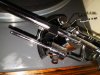
Being a bit of a tinkerer and owning the modder's heaven: Lenco L75, I am fiddling around with a viscous damper for the stock tonearm. The paddle-in-trough type.
It works fine and the deck sounds really good, but since I did multiple changes (new cartridge etc) at the same time I have not evaluated any changes in sound quality yet.
But once I have listened to it installed for a while I will remove it and try to hear if there's any difference.
Filling with thick silicone oil
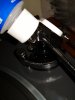
Mounting:
3D prints
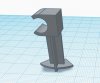
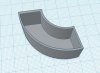
It works fine and the deck sounds really good, but since I did multiple changes (new cartridge etc) at the same time I have not evaluated any changes in sound quality yet.
But once I have listened to it installed for a while I will remove it and try to hear if there's any difference.
Filling with thick silicone oil
Mounting:
3D prints