• The move to the new server is done. There are some software and database maintenance updates in process. This has us passing the hat around to help out. We appreciate any donations. Seriously, even a dollar helps. The payment page may be found here - https://www.audiokarma.org/support.html

DBX Signal processing removal?

GuyInOK918

New Member
When recording a tape digitally to a pc, is it possible to remove (restore original signal) DBX from the signal with software in the pc, or is it necessary to use a deck with DBX built in?

 
Register to hide this ad
There would be no way to distinguish the DBX component of the audio from the rest of it. It's about analog signal manipulation, not about DBX code embedded in the tape. There's no digital info for the computer to work with. Restoring the "original" sound would be a matter of guesswork, fiddling around with EQ, signal level, and maybe adding noise.

If you played the tape through a deck with no DBX, or with DBX deactivated, it would sound like crap, but still not "original".
 
Last edited:
Not aware of any digital solution, but it can be done via hardware. I recently ripped all my dbx encoded material to FLAC using a dbx 21 decoder that I picked up cheap off that auction site.

dbx21.jpg
 
Basically, no. DBX "signal" is just another component of the analogue signal on the tape. You need analogue DBX equipment to properly decode it.
 
Unless someone has come up with a (good) "DBX" plugin for some software program... (Only posting this in case I get proven wrong on my last post!)
 
Decoding should be possible with software, as it's just frequency-influenced dynamic range processing. Couple of different schemes, depending on target market. Wiki tells all. Whether intellectual property rights permit it to be done commercially is a different question.

Chip
 
thanks, I'll just go with buying an old yamaha with dbx built in.

Now the $M question--is the DBX encoded material Type I or Type II--I use two DBX 224 Type II encoders/decoders for my R2R and cassettes (and the handful of DBX encoded albums that I own). What DBX noise reduction does is lay down the track with a "hot" high and mid-range to increase the S/N ratio and avoid tape hiss--decoding brings it back down to flat. DBX was very picky about who they would "whore out" their technology to (not like Dolby, which is similar only not as good), so get a decent DBX decoder for DBX encoded materials.
 
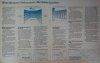
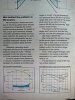
Okay so here's what dbx 224X type II noise reduction REALLY does according to dbx literature acquired back in the day the unit was made.

IMG_20160327_1319160_rewind_kindlephoto-30688559.jpg IMG_20160327_1315346_rewind_kindlephoto-30461871.jpg IMG_20160327_1344557_rewind_kindlephoto-32305264.jpg
 
Last edited:
What it REALLY does is clean up playback to the point where it rivals (or excels) hi-res digital ... it'd been a while since I'd listened to any of the dbx discs (my 224 rolled belly up some time ago) and I picked up the dbx 21 just to rip the discs to FLAC for the HTPC. Basically blown away by the dynamic range and pure black background. Not bad for 50 year old technology! :thumbsup:
 
No software decoders, you'll need hardware. If cassette, DBX Type II will be the system used, and for most consumer open reel machines (Teac X 1000, X 2000, and Akai GX 747 are known DBX Type I offenders, II should have been used here)
 
No software decoders, you'll need hardware. If cassette, DBX Type II will be the system used, and for most consumer open reel machines (Teac X 1000, X 2000, and Akai GX 747 are known DBX Type I offenders, II should have been used here)

I hear ya. I have two TEAC X1000r's and they have on-board DBX Type I, but I use external DBX 224 (Type II) units for both of them. Like I said in my previous post, DBX just basically refused to "whore out" their technology like Dolby did--guess there just wasn't enough cash in the briefcase when the deals went down.
 
DBX had one major problem with their system for most of the world. Decoder was required to play the tapes. And DBX had higher standards for their licensees on built in installations, they had to meet higher criteria for performance. Which meant DBX equipped decks were going to be higher priced. Dolby learned their lesson on tightening up licensee standards with Dolby C, too many Dolby C decks had mistracking issues from new. Dolby S they got strict on that issue.
 
What DBX noise reduction does is lay down the track with a "hot" high and mid-range to increase the S/N ratio and avoid tape hiss--decoding brings it back down to flat..

That is not at all accurate. DBX I and II are both single-banded compander systems. They do no frequency dependant processing.
What you describe is how Dolby B works.

There is no technical reason why a computer cannot decode a dbx encoded signal. Noone so far has written a codec to do it.
The unusual thing about dbx is that is uses the RMS level of the signal to determine the compression reference point. No ordinary compressors or expanders used for recording or live gigs use that RMS level detection. But someone proficient with signal processing programming could do it if they were motivated.
 
AssUming of course you had access to the original standard, which was at least as secret as the Colonel's secret herbs and spices and the formula for Coke. Some of the tweaks incorporated in the system were time based as well - just to complicate the lives of any potential counterfeiters. This sort of stuff happened many times in an assortment of chips with either proprietary numbers or those with the factory markings ground off. Hope your programming guru can trace internal signal processing on an IC ...

Dolby learned their lesson on tightening up licensee standards with Dolby C, too many Dolby C decks had mistracking issues from new. Dolby S they got strict on that issue.

So THAT's what the "S" stands for! <G>
 
AssUming of course you had access to the original standard, which was at least as secret as the Colonel's secret herbs and spices and the formula for Coke. Some of the tweaks incorporated in the system were time based as well - just to complicate the lives of any potential counterfeiters. This sort of stuff happened many times in an assortment of chips with either proprietary numbers or those with the factory markings ground off. Hope your programming guru can trace internal signal processing on an IC ...

The dbx circuits used in Teac recorders are easy to find - Teac gave then away. Many were based on discrete transistor circuits, so they could be cloned or analysed.
 
Back
Top Bottom