• The move to the new server is done. There are some software and database maintenance updates in process. This has us passing the hat around to help out. We appreciate any donations. Seriously, even a dollar helps. The payment page may be found here - https://www.audiokarma.org/support.html

Denon DL103 homebrew mods

Register to hide this ad
I would guess the perceived benefits were more likely due to adding effective mass to the system rather than the act of epoxying a plate to the existing body.

Brass is fairly dense, so I would guess the mod added a few grams to the headshell, which the DL-103 is known to respond well to with mid to low mass tonearms...like the RB250.

I noticed a big change when I swapped my DL-103 into a heavier Jelco headshell and fabricated a spacer/weight to get the VTA correct on my SL-1200. Too many variables changed at once to pin it down to the most impactful component, but I did notice an improvement to sound stage and imaging afterwards. The cartridge/spacer/headshell combo came in around 25g, which is much heavier than with the Technics factory shell shell and no spacer.
 
Last edited:
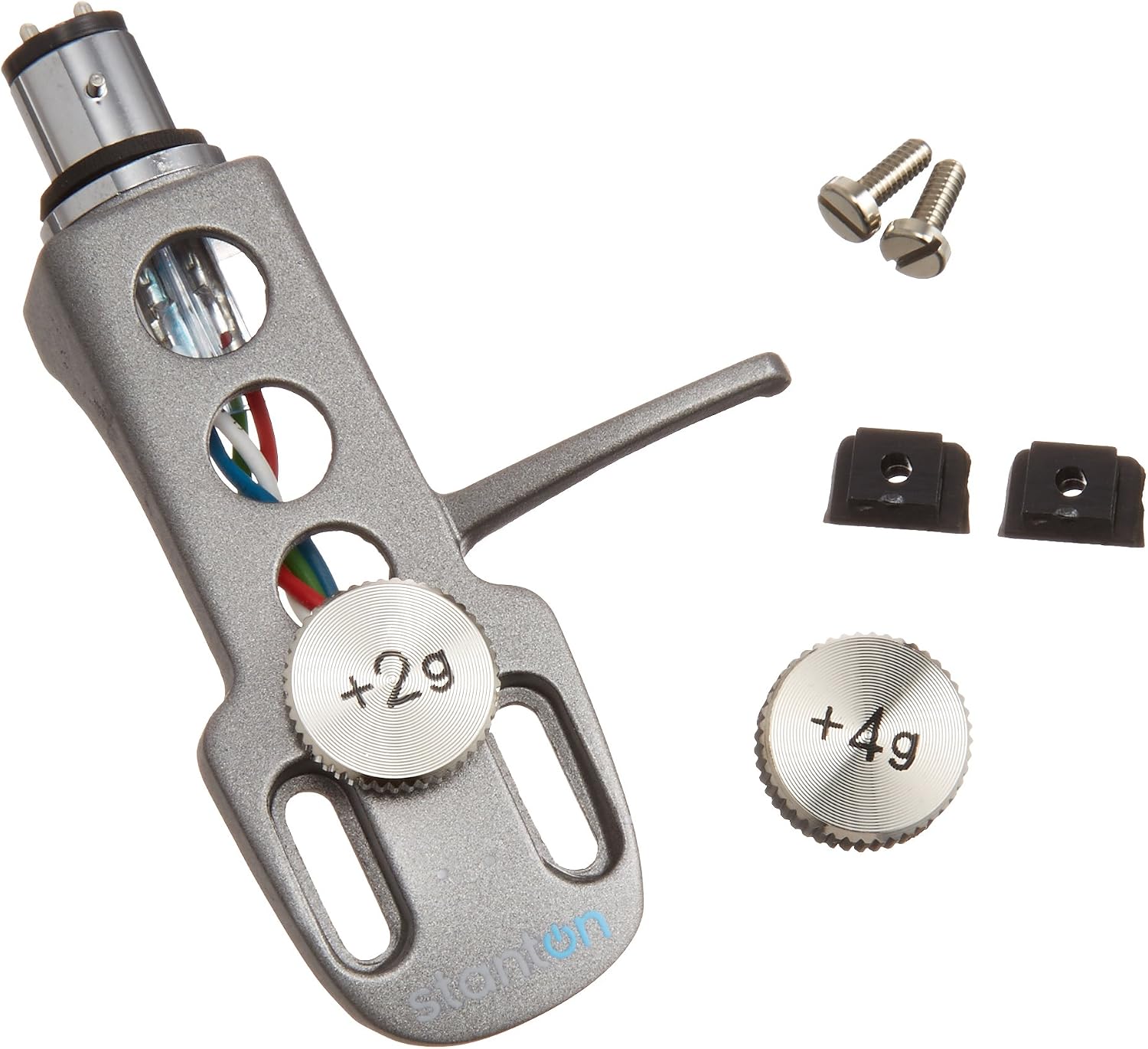
Why would one epoxy the brass plate to the cart? I have lead plates here that simply sandwich between the cart and headshell, and Stanton headshells with a threaded hole for screwing added mass to the headshell for cart tuning.

I'd try it w/o the glue...

81LGRZdvfcL._AC_SL1500_.jpg
 
I am not sure how well this would work for me as my turntable arm is a Sony Carbon Fibre with a fairly decent heavy headshell anyway. I am wondering what is actually achieved by changing or removing the DL103 cartridge cover in the first place other than a change to its weight?
I don't understand why paying £100 or more on a new outer shell would make such a difference. Can anyone please explain this please?
 
I am wondering what is actually achieved by changing or removing the DL103 cartridge cover in the first place other than a change to its weight?
I don't understand why paying £100 or more on a new outer shell would make such a difference. Can anyone please explain this please?

I don't know if anyone has ever done the experiments to really be able to explain it with data. I've never seen it, at least. One thing for sure is that they look classy.

I've heard explanations covering everything from resonance control to shielding. Who knows. One thing I highly doubt is that the "name brand" versions of these wood and aluminum DL-103 bodies have any special advantages over the much cheaper ones found on ebay.
Thanks,
I think your thoughts are similar to mine on this which is why I was interested in the Brass plate idea. I may experiment with a plate of some kind (without the Glue) to see if there are any discernable effects.
GDNW
 
Hello,
I know the French L'Audiophile published an article in the eighties about making and replacing the original housing of the Dl103 by one made by casting lead. At that time loads of people were using that cartridge in France. The article of course written in French Greetings, Eduard
 
Hello,
I know the French L'Audiophile published an article in the eighties about making and replacing the original housing of the Dl103 by one made by casting lead. At that time loads of people were using that cartridge in France. The article of course written in French Greetings, Eduard
Damn, ac y mae iaith arall yn Gymraeg
 
I've been gluing coins atop cartridges for quite a few years now. Last fall I bought my first 3d printer so that habit has morphed into including custom shaped bodies. The adhesive of choice for the metal topper is epoxy as noted in the link. What it does is, it promotes the transfer of vibration energy from the plastic body to the shell/arm fully and completely. Yes, higher mass is a contributor to the changed sound, but an unglued metal topper will not effect a complete transfer as will a glued joint. With the energy thus fully transferred, the body is now continuously drained of 'echoes' bouncing around and within the body, which results in the stunning increase not only in presence and dynamics - particularly in the bass - but also in a quieter background audible as reduced surface noise, greater hall ambiance and longer instrument decay trails. It is easily the cheapest way to improve any cartridge bodied in plastic.

But don't forget the epoxy. And don't worry about it not being reversible or damaging in some way. The epoxy won't form an impervious bond that can't be broken with a gentle pry of a sharp edge.

My latest creation, an AT95 with threaded PLA body, complete with a 5¢ piece for a topper and Frankenstein's elliptical needle. It may not be pretty to look at, but it sure is to listen to.

IMG_20200620_215031.jpg
 
Last edited:
Back
Top Bottom