• The move to the new server is done. There are some software and database maintenance updates in process. This has us passing the hat around to help out. We appreciate any donations. Seriously, even a dollar helps. The payment page may be found here - https://www.audiokarma.org/support.html

DIN PLUG?

bimasta

Addicted Member
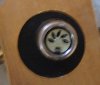
Is this a standard 5-Pin DIN 180° socket? It's in the base of a tonearm (Odyssey RPG2). I need the matching male plug, as I have to make a new cable.

Most tonearms now use a smaller, special DIN designed for tonearms, but the Odyssey uses this one, and a normal tonearm cable doesn't make a good connection. The pins are smaller, spacing a bit different, and contact is intermittent. So if this photo is the standard 180° DIN, making a cable will be easy. If not, I have to rethink everything.

Can you help ID it? Sorry for the poor focus, but I think it's clear enough to see what it is.

Thanks in advance!
Bimasta
IMG_2903.JPG
 
Register to hide this ad
Is this a standard 5-Pin DIN 180° socket? It's in the base of a tonearm (Odyssey RPG2). I need the matching male plug, as I have to make a new cable.

Most tonearms now use a smaller, special DIN designed for tonearms, but the Odyssey uses this one, and a normal tonearm cable doesn't make a good connection. The pins are smaller, spacing a bit different, and contact is intermittent. So if this photo is the standard 180° DIN, making a cable will be easy. If not, I have to rethink everything.

Can you help ID it? Sorry for the poor focus, but I think it's clear enough to see what it is.

Thanks in advance!
Bimasta

View attachment 1571372
Take a look at the Wikipedia page about DIN connectors. it explains it quite well, including the pin numbering and what conductor goes to which channel.
 
Some tonearm connectors look very much like a DIN connector - but they aren't. DIN plugs are so cheap that I suggest you get one and see if it fits. To me that looks like a DIN socket rather than the "nearly DIN" ones sometimes used, but I can't be certain.
 
The "nearly DIN" plugs used in tonearms are gold plated. Normal DIN plugs aren't.
Does that matter for use in a tonearm? Does gold-plate improve signal transfer?
Or is it mainly to resist corrosion?

If I use a non-gold plug, will that reduce performance, of a low-ouput MC (say .15mV)?
 
Last edited:
Take a look at the Wikipedia page about DIN connectors. it explains it quite well, including the pin numbering and what conductor goes to which channel.
Thank you, very helpful in this specific case and learning more about DIN in general.
 
bimasta: Hard to tell without a size reference, but at least it looks like a usual DIN 5-pin 180°. Well, and gold plating doesn't really have a benefit in conductivity over silver plating (good DIN connectors often are/were silver-plated, but there are/were gold-plated variants, too...), but while silver-plated contacts may tarnish (or sulfidise, to be exact) over time, gold-plated contacts won't.

Greetings from Munich!

Manfred / lini
 
Thanks Manfred. I found a plug in my bag of tricks. It's 7-pin 240°, but after ten seconds with a Dremel it's now 5-pin 180°. I saw the gleaming silver. I've read in a few places that the tarnish (sorry: sulfidisation) of silver is just as conductive as silver, unlike copper. SME used silver pins on their old cables; they darkened in time, but SME never said they needed to be cleaned. Maybe it just looks bad.

Gold however always looks good — and valuable! Even if the thin plating is only worth .02¢, it can add $200 to the "perceived" value. And there are questions about plating of electronic parts in general, that combining layers of different metals can have deleterious effects, even if each metal is fine separately. But all that is beyond my own knowledge...
 
bimasta: I also remember having read one source, that claimed, that the Ag2S layer wouldn't reduce conductivity - however, the other German and English sources I had found, when I was looking for info on that topic, would rather claim, that it would raise the contact resistance quite a bit, which I'd deem a lot more plausible, especially as silver sulfide is a semiconductor, iirc. So my conclusion was, that silver-plated contacts would only make sense in pretty regularly used switches, that are designed that way, that the switching action will wipe the contacts clean again - whereas especially for rather rarely dis- and reconnected connectors silver-plated contacts seemed not such a great idea.

And yes, contact plating isn't such a simple topic, but combinations of several different layers don't necessarily have to be detrimental - sometimes it's rather the opposite. For example, gold plating most usually seems to be applied on a nickel layer to prevent the current from letting the gold atoms diffuse into the base material.

Greetings from Munich!

Manfred / lini
 
Thanks Manfred, always educational. I agree that the idea the tarnish doesn't have any effect seems counter-intuitve (but so does quantum mechanics, hmm). The designer of the Odyssey tonearm wrote me he chose that connection because it was self-wiping; that must mean dis- and re-connecting from time to time. The current "special" tonearm DINs weren't made back then (early '80s), and standard DINs didn't have a gold option.

But my Ittok was early '80s and had that small gold DIN. So I don't know. Did Linn make it? Hard to believe. Anyone know of other arms from that era with such a plug?
 
Last edited:
One of the reasons DIN plugs were popular (honest, they were everywhere once...!) was that because the socket was constructed to ensure they self-cleaned every time you removed the plug, so fancy plating was not necessary.
 
One of the reasons DIN plugs were popular (honest, they were everywhere once...!) was that because the socket was constructed to ensure they self-cleaned every time you removed the plug, so fancy plating was not necessary.
Another reason for their popularity is they make the ground contact first, so no nasty noise-blasts you get with RCAs which make the "live" contact first. You can "hot-swap" cables with DINs; with RCAs you should turn the system off before touching a cable.

They also connect both L & R channels and ground at the same time, not in three steps as with RCAs. And they're smaller: two sources (say Phono and Server) take the same space on an amp's back-panel as a pair of RCAs. So they're easier and more convenient than RCAs in a few ways. That can mean more sources, or smaller components.

With DIN plugs, there'd be half the chaos:

432d03beb2da6126ddfc4efe8f8df6fb.jpg

"DIN plugs were popular (honest, they were everywhere once...!)" — The US audio industry was committed to RCAs since early days. Other major audio countries (UK, Japan, now China) need exports to the US, so that means RCA plugs. They used to make two versions for the two markets, but that cost more, so the US won the "plug war", with an inferior plug.
 
All that I know is that with half my gear being Din, the other half RCA, wether it be line level or speaker cable I have ended up with a heap of adaptors to jump from one to the other.
All Din would be so much easier.
 
As the RCA plug confessed to Kipling:

Yes, DIN! DIN! DIN!
By the livin’ Gawd that made you,
You’re a better plug than I am, DIN DIN DIN!
 
Last edited:
I'm surprised that in the early days of audio that they didn't design and standardize a better-designed connector than the RCA. All it would take is for the ground to make contact before the +ve signal.
 
Personally I never liked DIN connectors for analogue audio purposes all that much, foremost because these don't allow for easily applying the channel swapping method for diagnotic purposes, but also because the plugs and couplings limit one's choice of cable types (especially in case of the tape connections with inputs and outputs combined into one port).

Greetings from Munich!

Manfred / lini
 
I'm surprised that in the early days of audio that they didn't design and standardize a better-designed connector than the RCA. All it would take is for the ground to make contact before the +ve signal.
BNC connectors would have been ideal and were invented in 1951, less than ten years after the RCA connector but still well before they became ubiquitous. The industry could have easily adopted them, but the RCA connector was undoubtedly cheaper, so that's what we've got.
 
Right. But IMO, BNCs might have been too expensive for low-budget mass-market gear, where the big profits are. And maybe too difficult to use.
 
Right. But IMO, BNCs might have been too expensive for low-budget mass-market gear, where the big profits are. And maybe too difficult to use.
Agreed. However, BNC's may have been able to be adapted into a cheaper consumer style plug (eg. non-locking) compatible with the BNC socket, and the version we are familiar with now could have remained the "professional" plug with the locking device. Overall, it is a better choice than RCA's.
 
Agreed. However, BNC's may have been able to be adapted into a cheaper consumer style plug (eg. non-locking) compatible with the BNC socket, and the version we are familiar with now could have remained the "professional" plug with the locking device. Overall, it is a better choice than RCA's.
Ah, right. Like the cable TV/internet plugs: the pros use screw-on for reliability, but there are push-ons for the rest of us.
 
Back
Top Bottom