• The move to the new server is done. There are some software and database maintenance updates in process. This has us passing the hat around to help out. We appreciate any donations. Seriously, even a dollar helps. The payment page may be found here - https://www.audiokarma.org/support.html

Directly heated rectifiers

MartyGee666

New Member
Heyo,

I'm working with 5U4 rectifier tube, and I'm getting close to 100v AC on the rectifier heaters. With no tubes I'm getting 3.5v on the power and pre-amp tubes, but the rectifier, is way out of spec from the 5v I believe I should be getting.

Is there something I'm missing, it being a directly heated rectifier? Below is the schematic that I'm following.


https://diyaudioprojects.com/Tubes/KT88/
 
Register to hide this ad
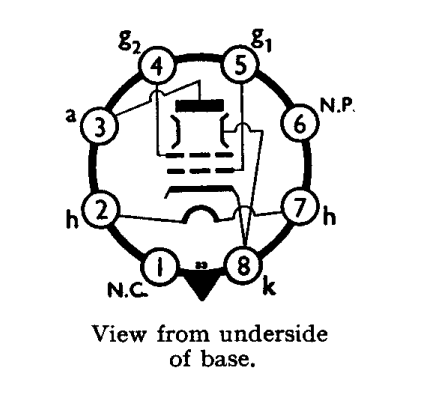
What are you measuring? Measuring across pins 8 and 2 of the 5U4 you should read 5VAC or thereabouts. 100VAC and the 5U4 would be dead as a doornail, the filaments completely blown.

Take all the tubes out, turn on the power and measure the AC voltage across pins 8 and 2 of the 5U4, and across pins 2 and 7 of the KT88. You should get 5VAC on the 5U4 sockets and 6.3VAC on the KT88 socket. Might be higher due to over-voltage but you should get something close.
 
AC voltage on pins 2 & 8 of the 5U4 rectifier should be 5 volts.

With directly heated tube rectifiers, you get the high voltage off of one leg of the 5V of the rectifier tube.
 
Thanks for the help, after measuring across pin 8 and 2, I did get the 5 volts I was expecting. Other voltages were looking good without tubes. Plates read 433v, stages 1,2,3 of the power smoothing were 434v,434v,423v.

My power transformer is slightly underpowered. When powered with tubes, I was reading 363V after the choke, when 400v is what is called for. With all tubes in, I got a very weak and distorted signal, almost as if I were only listening to the pre-amp. The cathode read 44v

After being on for some time I got a little smoke then a pop underneath one of the power tubes. Opps! I probably fried this power tube:(
 
You may not have fried the tube. It sounds like you have the cathode bypass capacitors wired backwards. Check the polarity. One of them might have blown. Wrong polarity would cause some of the symptoms you describe.
 
The cathode capacitor, 220uf 50v, has the positive going to pin 8 and the negative is tied to ground. I'm not seeing any burn marks on either the tube socket or a component, nor did the tube red-plate. The fuse didnt blow either. Something tells me I could fire this up again and get the same voltages. what gives?!?

The cathodes were showing close to 70v when I first powered it up, then settled into the low to mid forties. Is there a chance that the 50v cap could have exceeded its tolerance? It appears fine, no burn marks.
 
Last edited:
40v low on the plates won't be enough to cause gross distortion like that. Either way if you're at 44v, I'd suggest at least a 63v capacitor for reliability, especially if its an AB amp. Those will draw more current as the output increases and its quite likely to get beyond 50v.
 
It was nearly quiet unless turned all the way up, and when i could hear it, it was distorted. The pop was rather frightening and I'd want to double check my work before powering it back up.
 
Something's off. Check your grid connections on the output tubes, make sure they are not loose. Check the cathodes for a short to ground. You need to overrate the bypass caps, as gadget suggests. Try removing the bypass caps and see if the amp powers up normally. Right now it's drawing excessive current.

Also, do you have the output transformer primaries wired correctly? Are the screen and plate taps reversed? Did you install switches at the screen grids, per the schematic, and are they operating correctly? And open screen connection would be a problem. Just trying to cover the bases.
 
That's correct. But check the input grid, Pin 5, for any loose connections or bad solder joints. Measure the resistance from Pin 5 to ground and make sure it corresponds with the schematic. Did you use a switch on the screen per the schematic? If so, make sure the switch isn't faulty and you have a secure connection to Pin4. What mode are you running the KT88's in? Triode, screen tap or pentode?
 
So i blew the cathode capacitor. There were a few mistakes upon a second inspection. The biggest being the grid resistor was on the wrong side of the coupling cap. Opps!

To be clear, I'm not adding a switch for ultra linear, I'm hard wiring ultra linear. A second modification, is that I'm using KT66s. Lastly, the schematic shows one channel of the stereo, I'm using one power transformer to power both left and right of the stereo with a ECC99 pre-amp tube, split, to push each side separately. The split in the power section is happening right after the second 10uf cap, with separate 2ohm 47k resistors going to the top of each side of the pre-amp plates.

https://diyaudioprojects.com/Tubes/KT88/

Thanks for all the advice, I'm going to make a few changes and power it back up soon! Keep me in your thoughts and prayers :king:
 
Okay, well that would explain a lot. ;-) No worries, we all do it. I recently built my 15th Williamson amp, testing was wild, output tubes running all over the place. Turns out I wired one output tube grid circuit to the wrong pin. A real "duuuuh!" moment. It happens. :) Keep us posted!
 
You might want to look up the "Kegger/Blueglow" version of this amp. A lot of refinement has been done on this basic design since it was first published in 2003.
 
Thanks for the recommendation! The simplicity of Kegger/Blueglow is exactly what I've been trying to find. Its kind of incredible how versatile that design is. :rflmao:


Ive got a few questions about this KT66 design. When I power up the amp with only the rectifier and the pre-amp tube, I'm getting close to 10v on the plates of the pre-amp, but i'm not getting anything on the cathodes. The schematic calls out 4v, but I'm getting next to nothing. I have a feeling this pre-amp tube is wired incorrectly. I have pins 4 &5 tied together and pin 9 as heaters. Plates are going to the right place, cathode capacitors are tied to ground, etc. I triple checked my work and I cant see a problem.

I also want to mention that the 2 watt 47k resistor that is coming off of the 3rd filter stage going to the plates of the pre-amp is getting rather hot. On one side of that resistor I'm reading 427v and on the other close to 10v. I'd imagine that resistor is doing a lot of work. Should it be a higher spec?

Much appricated,

martygee

https://diyaudioprojects.com/Tubes/KT88/
 
Last edited:
Thanks for the recommendation! The simplicity of Kegger/Blueglow is exactly what I've been trying to find. Its kind of incredible how versatile that design is. :rflmao:


Ive got a few questions about this KT66 design. When I power up the amp with only the rectifier and the pre-amp tube, I'm getting close to 10v on the plates of the pre-amp, but i'm not getting anything on the cathodes. The schematic calls out 4v, but I'm getting next to nothing. I have a feeling this pre-amp tube is wired incorrectly. I have pins 4 &5 tied together and pin 9 as heaters. Plates are going to the right place, cathode capacitors are tied to ground, etc. I triple checked my work and I cant see a problem.

I also want to mention that the 2 watt 47k resistor that is coming off of the 3rd filter stage going to the plates of the pre-amp is getting rather hot. On one side of that resistor I'm reading 427v and on the other close to 10v. I'd imagine that resistor is doing a lot of work. Should it be a higher spec?

Much appricated,

martygee

https://diyaudioprojects.com/Tubes/KT88/

Keep checking, something's miswired. The ECC99 is drawing a huge amount of current and burning up the plate resistor. How are you using the ECC99? One half per channel as in the schematic? Make sure the cathode bypass capacitor(s) are oriented properly. Check the input grids and make sure they measure 100K to ground. And not to get too simplistic, but make sure you're reading the pinout chart correctly. The pins are arranged the way you would see them as you look at the bottom of the socket. Sorry, just thought I'd mention it.
 
Last edited:
Back
Top Bottom