• The move to the new server is done. There are some software and database maintenance updates in process. This has us passing the hat around to help out. We appreciate any donations. Seriously, even a dollar helps. The payment page may be found here - https://www.audiokarma.org/support.html

DIY klipschorn clone frankenstein project

colebb

AK Subscriber
Subscriber
hello all!

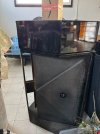
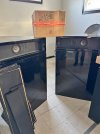
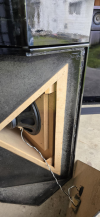
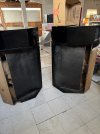
I recently came into a pair of corner speakers based (somewhat loosely, perhaps) off the original klipschorn platform. I know they'll be a bit of a project and I'll be planning on replacing essentially the entire top hat (or at least the internals). I know that it's very unlikely that I'll achieve something close to identical to a true k-horn but I'm hoping to get as close as I can while also achieving the best possible sound within my constraints.

First question, aside from checking for obvious physical sturdiness and inspecting the joints of the bass bin for any obvious leaks, does anyone have any recommendations for assessing the build quality of the bass bins? mostly want to make sure that they're constructed decently enough that the rest of the work I have in mind isn't a total waste of time. I haven't opened up the bass bins yet but I'm assuming it'd be OK to do so, given the apparent access panels that screw in.

Next, obviously the midrange and tweeters in the photos are dome drivers. I'd like to replace these with horns. there's a lot of info and various opinions online about horn replacements and upgrades for k-horns but I haven't found too much pertaining to essentially starting from scratch with the top hat.

I've seen a pretty good deal on a pair (pictured below) of Electro-Voice 1828R Compression Drivers with fiberglass horns (which I'm guessing are the SM-120A but I'm not 100% sure) which seems like it might be a good option but there's conflicting opinions about whether they'll go low enough for a 400hz crossover. I've also seen some original k-77 tweeters with horns at a decent price. does that seem like a reasonable course of action? I'm also considering trying to build my own Bruce Edgar Tractrix horn; I think I'd be in over my head but could probably get a local shop with a CNC machine to cut the parts then assemble myself (though this might not be as cost effective as I'd hope).

Also, the speakers are currently wired for bi-amping so I'll need some kind of crossover. I'm inclined to keep them that way and get an active crossover (or use the dbx crossover that I have).

Finally, are there any random tips or tricks or things to look out for?

thanks in advance!!
 

Attachments

  • 591470367_841731982122261_2461503902435799287_n.jpg
    591470367_841731982122261_2461503902435799287_n.jpg
    86 KB · Views: 108
  • 591180267_1363301685440515_4514275817010240917_n.jpg
    591180267_1363301685440515_4514275817010240917_n.jpg
    80.6 KB · Views: 105
  • 593168003_1231550612356195_8883756070171920736_n.jpg
    593168003_1231550612356195_8883756070171920736_n.jpg
    75.4 KB · Views: 101
  • 619599357_1601215927553764_5388732567969133445_n.jpg
    619599357_1601215927553764_5388732567969133445_n.jpg
    180.2 KB · Views: 107
Register to hide this ad
Bunch of thoughts in no prioritized order:
0) Corner horns need good corners and about 4+ feet of clean wall to work right. Less "works", decreasingly. If walls and just gysum + nothing, that's not a good wall and you'll end-up displeased or changing part of your *house* to fix that if that's where they have to be.
1) The bottom of one of them looks almost "plugged" by the tailboard--the other one looks "more normal". At the grief to fix it, it stays.
2) This needs to be about money first in your head -- otherwise it can run-away so fast you'll surprise yourself. More later**
3) None of those 1" horn drivers do an honest 400--even the 2" drivers aren't worth much down there on big+good horns. Price-out some 2" compression drivers so you're familiar, too. The good news is there have been almost 60 years of people using that basic 828/18XX family of driver (even if 2 at a time). If you're committed to the project (pt 2) and the horns you show are cheap, get them. They won't play high enough to have a 2-way and things that will won't go as low so it becomes a 3-way if you dive that direction (but, IMO, it's not a bad one to pick). AMT's can be a good match w/o needing a horn tweeter, depending.
4) Get a flashlight and get the access panels off and stick your head in there and figure-out what drivers are in the bass bins. That impacts point 2). See if things have been living in the rear chambers somehow. Look on each side of the driver and note if it is cut-out or not. If there's crap in there, clean it out so you can inspect how well-sealed the rear chambers look. Check out the gasketing you probably just tore-off when the access panels were removed. Fix that so it seals again :)
5) Vacuum-out what you can from the tailboard side and look for traces of varmint activity. Inspect seals/joinery as you can there, as well. If things leak, it wont work right and will need sealing to be worth it.
6) Are the glossy panels somehow removable to get at the throats? Otherwise, you'll need to pull the LF drivers to know (and may not care).
7) You should measure the internal height of the top sections to determine the max diameter of compression driver you might slip in there with maybe a smith horn as one idea to not have to throw them away. There are some smaller newer drivers, as well, if you get that interested in such an alternative.
8) Get I dunno about 4 of the foam pipe insulation tubes at the building store and apply it to seal the rears to the room walls when you push them into the corners. If you have high baseboards, relieve for that, etc.
9) If you are a geek, there are software crossovers, too, but you need more amps; just an option to know about.
10) In the best of cases in the right room with the right walls, you get 40Hz and they die.
11) Try them the way they are with whatever you have that's free/cheap. If that's one at a time, it's one at a time. If that's each bottom or each top separately, get them into your intended corners and try to see what you have. If the tops are literally removable, do that and get your ear on the top of the bass bin while they're playing and hear (and feel) what's coming through that.
12) Figure-out the stock thicknesses used where possible. If it's 1/2" or less, you might need more bracing here and there.

** Be honest figuring-out what you really want out of them and start adding-up budget. If you need new woofers, say $600 to start, etc. Active XO's for 3 drivers = 6 amps. Couple AMTs? I think 350 on sale (?). XO's with more features? Passsive XO's? I think 300 a side-ish. Shop some.

Look -- we all can say what we'd do and all of us will have differing opinions.

The good and bad about khorns is that there's approximately endless reading. They have their problems and their benefits. They're just basshorns and they have around 6 feet of delay to deal with (or live with). 300-400 is always always always Never Quite Right (tm) and somehow the woofers play too high out the basshorn. There's ripple from ringing, blah blah. But it is indeed front-loaded horn bass and one can often "get them sold" into your living space. To some of us, there's nothing like it and the tradeoffs are worth it.

There's also a piece of this about how impatient you are/available time for efforts vs. journey or vehicle for experimentation you seek personally. People work on them for years and years. A few go back where they started. If you're working 70-hour weeks or whatever, just trade money for time and get a full set of parts.

So get your head in there, figure out what you have, if they look safe, reseal them and get them in good corners and do some auditioning of say double bass and drums and at least you'll have an idea of what to do. Got weatherstripping? Take pics if you can and talk when you can.

If you want a one-stop for advice + anything to get them going, call Crites. You might ask on the AK subforum as well and it will likely be a different answer (active, 2" midhorns, 1" machined tweeter). You just have to determine the cost/effort/time/preferences balance as best as you can upfront so it doesn't nickel-and-dime you well past sanity.
 
If the 1828 is like the 1823, which i think it is, you'll be needing a top end above 10k. And while it says they'll do down to 190hz, i expect you won't really enjoy the sound till 800hz or so.

I like the 1823 with the phenolic, but it will not do two way satisfactorily. I expect the 1828 to be the same.
 
Cool looking speakers, if the builder followed plans for the K-horns bass bin I bet they are made to decent quality, if there are no obvious loose boards or rattles when moved around they should be ok, maybe open up the bass bin to inspect the woofers or other areas of the cabinet.

As for what horns/drivers to use for the top hats theres all kinds of options for that, best/easiest would be to find original klipsch parts like the k400/401 horns, k55v or k55m drivers, & k77 tweeters along with a AA or AK3 crossover original or from Crites or build your own based on schematics.

You will probably get much better help from klipsch experts in the klipsch korner section.

 
Bunch of thoughts in no prioritized order:
0) Corner horns need good corners and about 4+ feet of clean wall to work right. Less "works", decreasingly. If walls and just gysum + nothing, that's not a good wall and you'll end-up displeased or changing part of your *house* to fix that if that's where they have to be.
1) The bottom of one of them looks almost "plugged" by the tailboard--the other one looks "more normal". At the grief to fix it, it stays.
2) This needs to be about money first in your head -- otherwise it can run-away so fast you'll surprise yourself. More later**
3) None of those 1" horn drivers do an honest 400--even the 2" drivers aren't worth much down there on big+good horns. Price-out some 2" compression drivers so you're familiar, too. The good news is there have been almost 60 years of people using that basic 828/18XX family of driver (even if 2 at a time). If you're committed to the project (pt 2) and the horns you show are cheap, get them. They won't play high enough to have a 2-way and things that will won't go as low so it becomes a 3-way if you dive that direction (but, IMO, it's not a bad one to pick). AMT's can be a good match w/o needing a horn tweeter, depending.
4) Get a flashlight and get the access panels off and stick your head in there and figure-out what drivers are in the bass bins. That impacts point 2). See if things have been living in the rear chambers somehow. Look on each side of the driver and note if it is cut-out or not. If there's crap in there, clean it out so you can inspect how well-sealed the rear chambers look. Check out the gasketing you probably just tore-off when the access panels were removed. Fix that so it seals again :)
5) Vacuum-out what you can from the tailboard side and look for traces of varmint activity. Inspect seals/joinery as you can there, as well. If things leak, it wont work right and will need sealing to be worth it.
6) Are the glossy panels somehow removable to get at the throats? Otherwise, you'll need to pull the LF drivers to know (and may not care).
7) You should measure the internal height of the top sections to determine the max diameter of compression driver you might slip in there with maybe a smith horn as one idea to not have to throw them away. There are some smaller newer drivers, as well, if you get that interested in such an alternative.
8) Get I dunno about 4 of the foam pipe insulation tubes at the building store and apply it to seal the rears to the room walls when you push them into the corners. If you have high baseboards, relieve for that, etc.
9) If you are a geek, there are software crossovers, too, but you need more amps; just an option to know about.
10) In the best of cases in the right room with the right walls, you get 40Hz and they die.
11) Try them the way they are with whatever you have that's free/cheap. If that's one at a time, it's one at a time. If that's each bottom or each top separately, get them into your intended corners and try to see what you have. If the tops are literally removable, do that and get your ear on the top of the bass bin while they're playing and hear (and feel) what's coming through that.
12) Figure-out the stock thicknesses used where possible. If it's 1/2" or less, you might need more bracing here and there.

** Be honest figuring-out what you really want out of them and start adding-up budget. If you need new woofers, say $600 to start, etc. Active XO's for 3 drivers = 6 amps. Couple AMTs? I think 350 on sale (?). XO's with more features? Passsive XO's? I think 300 a side-ish. Shop some.

Look -- we all can say what we'd do and all of us will have differing opinions.

The good and bad about khorns is that there's approximately endless reading. They have their problems and their benefits. They're just basshorns and they have around 6 feet of delay to deal with (or live with). 300-400 is always always always Never Quite Right (tm) and somehow the woofers play too high out the basshorn. There's ripple from ringing, blah blah. But it is indeed front-loaded horn bass and one can often "get them sold" into your living space. To some of us, there's nothing like it and the tradeoffs are worth it.

There's also a piece of this about how impatient you are/available time for efforts vs. journey or vehicle for experimentation you seek personally. People work on them for years and years. A few go back where they started. If you're working 70-hour weeks or whatever, just trade money for time and get a full set of parts.

So get your head in there, figure out what you have, if they look safe, reseal them and get them in good corners and do some auditioning of say double bass and drums and at least you'll have an idea of what to do. Got weatherstripping? Take pics if you can and talk when you can.

If you want a one-stop for advice + anything to get them going, call Crites. You might ask on the AK subforum as well and it will likely be a different answer (active, 2" midhorns, 1" machined tweeter). You just have to determine the cost/effort/time/preferences balance as best as you can upfront so it doesn't nickel-and-dime you well past sanity.
thank you so much for this very thoughtful reply! so much useful information in here.

0) this is definitely a good point to start with and I agree. I'm not 100% sure where I will have the speakers set up long term but the plan is to rent a studio space with two friends / music collaborators, in which case we'll be selecting the space with these considerations in mind.
1) hmm good point; I'll inspect a little closer
2) I definitely agree with you here and my budget for the project is fairly low (at least at any given time; I'm OK with slowly replacing/upgrading components over time).
3) I should have mentioned that my plan is to have them as 3-way speakers and I'd initially been thinking that I'd have an active crossover to biamp the woofers separately from the tweeters/squawkers and then have a passive crossover separating the midrange from the high end. the horns I pictured would cost $90, including the drivers, though they're untested and the seller is a few hours away so it's a decent deal but I'm not 100% sold. If building wooden horns felt attainable, I might opt for that instead. either way, the plan is to also have tweeters; there's a matched tested working pair of k-77s with horns for $200 available as well and I suspect that pairing those with the midrange horn I pictured could create a pretty nice sound, though I'd have to scrap (or heavily modify) the top hats.
4) and 5) these are great points and I will heed the advice
6) the tophats are fully rigid aside from the back panel which has the speaker terminals; that panel is actually loose and can easily slide in and out to access the drivers and the crossover
7) it would definitely be nice to not have to throw them out. what do you think of just mounting a tweeter horn in there and having a midrange horn just sitting on top? a tweeter horn wouldn't have any trouble fitting and trying to find a midrange horn with the desired frequency response, desired size/shape, AND within my budget seems tough (though possible, especially if I'm patient)
8) and 9) great advice; thank you!
10) can you specify what you mean by they die?
11) and 12) great advice.

Again, thank you so much for your very thoughtful reply! everything you mentioned is well reasoned and it's a great place to start. I've definitely got Crites in mind, especially for crossovers, but I hadn't thought of them as a resource for advice so that's good to know.

as far as the AK subforum for Klipsch (and other Klipsch-focused forums), to be honest, I was a little nervous to post in one of those places. I was a bit scared that the Klipsch purists might take offense at the very premise of the project (or at least that they'd tell me the bass bins are not worth messing with and I should just throw it all out and buy official Klipsch gear). but perhaps I'll be brave and take the plunge anyhow. either way, thanks again for your time and thoughtful advice!
 
Last edited:
If the 1828 is like the 1823, which i think it is, you'll be needing a top end above 10k. And while it says they'll do down to 190hz, i expect you won't really enjoy the sound till 800hz or so.

I like the 1823 with the phenolic, but it will not do two way satisfactorily. I expect the 1828 to be the same.
oh good call, thank you! I should have specified that my intent is to make a 3-way. I think if I did get the 1828 with the (probable) SM-120A for the midrange, I'd definitely pair it with the k-77 tweeters, though I am a bit nervous about the 400hz-600hz range
 
Cool looking speakers, if the builder followed plans for the K-horns bass bin I bet they are made to decent quality, if there are no obvious loose boards or rattles when moved around they should be ok, maybe open up the bass bin to inspect the woofers or other areas of the cabinet.

As for what horns/drivers to use for the top hats theres all kinds of options for that, best/easiest would be to find original klipsch parts like the k400/401 horns, k55v or k55m drivers, & k77 tweeters along with a AA or AK3 crossover original or from Crites or build your own based on schematics.

You will probably get much better help from klipsch experts in the klipsch korner section.

awesome, this is super helpful, thank you! I was a little nervous to post in the Klipsch Korner section, in case people there might be offended by the premise of the project, but I'll just go for it; thank you for the encouragement!
 
awesome, this is super helpful, thank you! I was a little nervous to post in the Klipsch Korner section, in case people there might be offended by the premise of the project, but I'll just go for it; thank you for the encouragement!

You will be fine, lots of helpful & knowledgeable members in there. The key to the K horns is the bass bin so focus on that to see if it was built correctly, lots of options for mid/tweeter horns & drivers. The top of a Khorn is pretty basic, you could always make something and finish to match the bottoms, then cut the front board to fit stock horns or whatever you decide on.
 
thank you so much for this very thoughtful reply! so much useful information in here.

0) this is definitely a good point to start with and I agree. I'm not 100% sure where I will have the speakers set up long term but the plan is to rent a studio space with two friends / music collaborators, in which case we'll be selecting the space with these considerations in mind.
Perfect. Also indicates end-use that should steer your effort -- that's good and valuable and already changes advice anyone gives you, so please continue to include that bit in your dealings.

3) I should have mentioned that my plan is to have them as 3-way speakers and I'd initially been thinking that I'd have an active crossover to biamp the woofers separately from the tweeters/squawkers and then have a passive crossover separating the midrange from the high end. the horns I pictured would cost $90, including the drivers, though they're untested and the seller is a few hours away so it's a decent deal but I'm not 100% sold.
Here's an example of where your end usage goal matters (and where advice will differ from each of us). If this were for home use and you were a jazz person with tube amps, I'd post: Get. Them. Now. They'll get you up and running, you can resell them later, and you'll get ear-time on some phenolic if any of them work.

Headed, however, at a studio application down the road, my (personal) preference for what those do wouldn't make sense--you'll be better off making other choices (too much to say, here/now).

If building wooden horns felt attainable, I might opt for that instead. either way, the plan is to also have tweeters; there's a matched tested working pair of k-77s with horns for $200 available as well and I suspect that pairing those with the midrange horn I pictured could create a pretty nice sound, though I'd have to scrap (or heavily modify) the top hats.
Wooden Smith horns are DIY-able for most of us, otherwise my 2c is to forget the wooden horns for the moment -- keep focused on the bass bins as has been advised elsewhere. Again, the mid- and high-freq stuff is where opinions will differ, and you have many options, but I'd probably choose other tweeters as well -- esp for your application target. I want to reiterate that you're going to get a ton of "do this" advice for the MR & HR driver & horn selection -- and most of it will be different -- and all will be right for each of us. This is one slippery slope for money to avoid. You pick a choice, jump to "known good" configurations and only pay for it once. There might be a couple "off-shelf" plastic horns and drivers that'll fit the existing top as well -- it gets to technicalities of what makes the best sense for what you'll be doing and it's too early to decide.

For the record, I'd only think to mess with Smith horns if you want to keep the top and "inboard" your midhorn & tweeter and you fancy the woodworking project maybe with a kid or something--eg, two overlapping goals. Then we give you a steer to the paper and off you go. But yes, many people have "outboarded" their midhorns on top as well and you could just get the sawzall for the front in adapting the top because you already have nice grilles. There are people here that either have or still run Smith horns--follow them as I've never made any.
10) can you specify what you mean by they die?
Front-loaded horns roll-off 4th-order, or 24dB/octave. Not steep in today's electrical rolloff terms, but twice as steep as sealed or TL's, give or take.
Again, thank you so much for your very thoughtful reply! everything you mentioned is well reasoned and it's a great place to start. I've definitely got Crites in mind, especially for crossovers, but I hadn't thought of them as a resource for advice so that's good to know.
Appreciate it. Good eggs, good history, did biz with Michael's father who was a gem (and they service things & carry inventory others dont). It's the only one-stop option I'm aware of, at least for a person on any budget at all. Everything else will require you to be more hands-on (and brain-on). I guarantee the end-speaker will be different than what it will be if you post on the K subforum, but it should be more faithful to the original...set of tradeoffs, I'll say it that way.

as far as the AK subforum for Klipsch (and other Klipsch-focused forums), to be honest, I was a little nervous to post in one of those places. I was a bit scared that the Klipsch purists might take offense at the very premise of the project (or at least that they'd tell me the bass bins are not worth messing with and I should just throw it all out and buy official Klipsch gear). but perhaps I'll be brave and take the plunge anyhow. either way, thanks again for your time and thoughtful advice!
Understood. In-fact, I was once the same showing at the actual factory forum with some EV bins.

Turns-out I'll give ya the same advice there as here but actually don't feel like I can provide anything more useful w/o knowing more about what you and your mates intend to do and without knowing what you're finding in the bass bins. Focus on those, get 'em inventoried, cleaned-up, and sealed. We just wanna know nothing ate the cones and it's not full of mold/mildew :) There *shouldn't* even be dust in the rear chambers, but a person needs to look so you don't energize something that looks ready to be kindling.
See what drivers are in there. If they're some sort of unobtainium, you might sell them off to fund the rest of the thing (and end-up better-off). Sometimes happens, so might as well look first.

Then get cleaning and sealing them (and maybe bracing) so the chamber is airtight and you can deal with the drivers. If you're keeping them, consider spinning them 180 degrees if the wires are long enough so that you may let gravity work on them the other direction for the next...what -- anybody got guesses how old that mid and tweeter are?

If you *do* pull woofers out of the rear chambers, be sure to measure the dimensions of the openings that the front of the drivers fire into (aka throat) and note down. If you're in that far, you can get a vacuum attachment through the throat, too--crap _will_ be outside/in front of that throat. Take pics.

We as a group, are silently trying to determine what sort of horn geometry you Actually have (and you need not care but just feed us a few dimensions you find) and we can tell you how faithful it is to the actual namesake khorn (or analyze it for best driver choice if it goes that route). If you get the covers off, bring a measuring tape with your flashlight & vacuum and scrub brush :)
 
Perfect. Also indicates end-use that should steer your effort -- that's good and valuable and already changes advice anyone gives you, so please continue to include that bit in your dealings.


Here's an example of where your end usage goal matters (and where advice will differ from each of us). If this were for home use and you were a jazz person with tube amps, I'd post: Get. Them. Now. They'll get you up and running, you can resell them later, and you'll get ear-time on some phenolic if any of them work.

Headed, however, at a studio application down the road, my (personal) preference for what those do wouldn't make sense--you'll be better off making other choices (too much to say, here/now).
Thank you for the feedback! you're absolutely right. I think I should also specify a bit further that in addition to a possible studio application, if possible, we'd like to use them for a small party (20-40 people in a medium-large room, depending). I do also have a set of bozak b4000 speakers, which I like quite a bit but are quite a bit more directional and thus don't lend quite as well to getting great sound to a group of people in a full room. I think the bozaks will stay in my apartment.

in terms of amps, I have a crown dc-300a, a bozak pv929, and a hafler 500. one, or perhaps two if I go the bi-amping route, will be used for the bozaks and the other 1-2 will be used for the k-horn clones. once I can afford it, I'll probably look to supplement this with one more amp so that I can bi-amp both sets (and will gladly take suggestions for amps in a similar price bracket to the ones I already have).

Wooden Smith horns are DIY-able for most of us, otherwise my 2c is to forget the wooden horns for the moment -- keep focused on the bass bins as has been advised elsewhere. Again, the mid- and high-freq stuff is where opinions will differ, and you have many options, but I'd probably choose other tweeters as well -- esp for your application target. I want to reiterate that you're going to get a ton of "do this" advice for the MR & HR driver & horn selection -- and most of it will be different -- and all will be right for each of us. This is one slippery slope for money to avoid. You pick a choice, jump to "known good" configurations and only pay for it once. There might be a couple "off-shelf" plastic horns and drivers that'll fit the existing top as well -- it gets to technicalities of what makes the best sense for what you'll be doing and it's too early to decide.

For the record, I'd only think to mess with Smith horns if you want to keep the top and "inboard" your midhorn & tweeter and you fancy the woodworking project maybe with a kid or something--eg, two overlapping goals. Then we give you a steer to the paper and off you go. But yes, many people have "outboarded" their midhorns on top as well and you could just get the sawzall for the front in adapting the top because you already have nice grilles. There are people here that either have or still run Smith horns--follow them as I've never made any.

Front-loaded horns roll-off 4th-order, or 24dB/octave. Not steep in today's electrical rolloff terms, but twice as steep as sealed or TL's, give or take.

this is all very helpful; thank you! would you be willing to have me PM you to ask some specifics?

Appreciate it. Good eggs, good history, did biz with Michael's father who was a gem (and they service things & carry inventory others dont). It's the only one-stop option I'm aware of, at least for a person on any budget at all. Everything else will require you to be more hands-on (and brain-on). I guarantee the end-speaker will be different than what it will be if you post on the K subforum, but it should be more faithful to the original...set of tradeoffs, I'll say it that way.


Understood. In-fact, I was once the same showing at the actual factory forum with some EV bins.

Turns-out I'll give ya the same advice there as here but actually don't feel like I can provide anything more useful w/o knowing more about what you and your mates intend to do and without knowing what you're finding in the bass bins. Focus on those, get 'em inventoried, cleaned-up, and sealed. We just wanna know nothing ate the cones and it's not full of mold/mildew :) There *shouldn't* even be dust in the rear chambers, but a person needs to look so you don't energize something that looks ready to be kindling.
See what drivers are in there. If they're some sort of unobtainium, you might sell them off to fund the rest of the thing (and end-up better-off). Sometimes happens, so might as well look first.

Then get cleaning and sealing them (and maybe bracing) so the chamber is airtight and you can deal with the drivers. If you're keeping them, consider spinning them 180 degrees if the wires are long enough so that you may let gravity work on them the other direction for the next...what -- anybody got guesses how old that mid and tweeter are?

If you *do* pull woofers out of the rear chambers, be sure to measure the dimensions of the openings that the front of the drivers fire into (aka throat) and note down. If you're in that far, you can get a vacuum attachment through the throat, too--crap _will_ be outside/in front of that throat. Take pics.

We as a group, are silently trying to determine what sort of horn geometry you Actually have (and you need not care but just feed us a few dimensions you find) and we can tell you how faithful it is to the actual namesake khorn (or analyze it for best driver choice if it goes that route). If you get the covers off, bring a measuring tape with your flashlight & vacuum and scrub brush :)

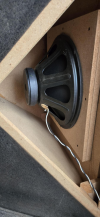
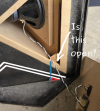
I had a chance to open up one of the bass bins the other day; I didn't think to measure anything at the time and also didn't pull the woofer to see any of the geometry beyond. whenever I get a chance, I'll take a closer look and take some measurements. as pictured, it looks pretty clean in there. it appears that there was no type of sealant used on the access hatch (but I think there may be some at other points) so once I've replaced the woofer (potentially) I'll seal it up more properly.

thanks again for all of your helpful feedback!
 

Attachments

  • Media (3).png
    Media (3).png
    756.2 KB · Views: 24
  • Media (1).png
    Media (1).png
    672.3 KB · Views: 19
  • Media.png
    Media.png
    709.9 KB · Views: 24
  • Media (2).png
    Media (2).png
    578.7 KB · Views: 23
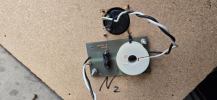
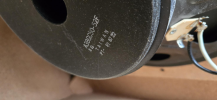
Thanks for pics. I don't know where we get data on that Pioneer but it's close-enough to leave and cloth, etc. Looks clean and well-made. Sinuses aren't used in rear chamber so we can guess that it's not using the "ski slopes" volumes either (like the real article). No big deal. The seal of the chamber is the thing. If it's easy, weatherstripping works. Otherwise, try it the way it is. Cross looks maybe 500-ish if that thing is around 6R. You're on your way--one credit-card transaction away from the Next Great Thing :)

I'm not the guy to give advice about PA/SR or studio/pro stuff, but there are some players and pros on the K subforum that @DEFTECHY mentioned. You'll get better advice on that stuff from them.
 

Attachments

  • deeper_than_chamber_inquiry.png
    deeper_than_chamber_inquiry.png
    237.8 KB · Views: 7
hello all, just posted an update in the klipsch corner (as recommended by some people here) and figured I'd post the link here, in case anyone was curious about the progress of this project.

thanks again!

 
hello all!

I'm back with what might be a bit of a silly question (please forgive me if so; I've still got a lot to learn).

I noticed the other day that the woofers currently installed are 8 ohm, whereas to my knowledge, Klipschorns and EV Sentry IVs (and, crucially, their crossovers) rely on 4 ohm woofers. if I'm understanding the physics correctly, using a woofer with 8 ohm impedance with a crossover built for a woofer with a 4 ohm load effectively moves the crossover point to a lower frequency (please correct me if I'm mistaken on that). there's part of me that's pretty tempted to just buy some Crites woofers, though the woofers themselves seem to be in decent enough condition and if there's something simple and cheap I could try first, I'd love to postpone needing to buy new woofers until I've got a lil more money saved up.

can I just add an 8 ohm resistor in parallel with the woofer or will that reduce the power to the woofer too much? I believe that's possible but again, I may be misunderstanding the fundamentals.

and if so, would it be better make adjustments to the crossover or is it fine to add it to the woofer terminals?

also, I recently (impulsively) picked up the Minidsp UMIK-1 calibrated microphone in order to at least be able to empirically assess the different stages in development of the fine tuning of these speakers (I am not planning on using any sort of software-based or digital EQ / room correction; the calibrated mic is strictly for taking measurements). I'll post the SPL graph of my first measurements if anyone is interested.

the SPL graph does show a pretty considerable dip around 300-400hz, though I suspect/hope that correcting the impedance mismatch may help with this a fair bit.

thanks again to all of you for the help and input!
 
The Klipschorn woofer is nominally 4 ohms. The cabinet horn loads the horn to 16 ohms. The term "nominally" means in name only. I have been told that in the woofer the impedance can be 8 ohms. Did you measure the dcr of the woofers? The dcr can be 60%-90% of the woofer rating. That would get you 4.8 ohms or 7.2 ohm for dcr.
 
Back
Top Bottom