turboyam
The Kenwood fan!
I tried my luck on making loudspeaker grilles reproductions myself.
Now, i am NOT trying to "steal" business from Sonofagon ( Foamspeakergrilles.com) or others.
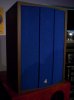
A few years back, i bought some absolutely awesome JBL L-100 Quadrex foam grilles, in blue,
that were nothing short of perfect!. These guys sell them for quite a bit of $ but i know why now!!!.
I have no clue what method they use (CNC milling or hot wire cutting) but it IS a challenge.
Perfectly doable tho, if you have a minimum of tools and patience.
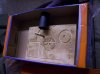
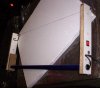
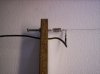
I fabricated a hot wire cutting "tool" myself and i must say that it performs very well. I will post
pictures of the tool i made and the inspirational video link i used, to make this.
For my first try, i bought 1.5inch thick open cell foam, which is "rated" at 20PPI (20 Pores Per Inches). I DO NOT recommend using this PPI rating, this was a mistake on my part, the place from where i got that foam had the 1.5inch thick i needed altho, 1.25 inches would be ok.
The 20PPI foam i used is NOT acoustically transparent enough. It also is availlable in grey only
(open cell Reticulated foam is not availlable in a lot of colors it seems), so you'll have to paint it
with the color you want. Painting that 20PPI makes it even less transparent acoustically.
I know that vintage (and modern replacement) foam is closer to 10PPI and that is WAY better
acoustically, lends itself way better to painting and, looks better.
The best way to color the foam would be to use clothes Die, but i doubt that it's going to work
as the foam won't absorb the die (someone tried to die foam???).
JBL, Altec, Marantz, B.I.C. and every one else probably all painted the foam ( i know that JBL did).
The fun part is that you can paint them any colors you'd want!, even black if retro-colors is not your thing.
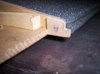
I made the "jiggs" to cut the foam using MDF and Masonite as, using plastics (would melt), or metals (would cool- down the wire). In the linked video, the guy uses thin aluminum so, it might work...
To power my hot wire cutter, i used my DC power supply. It is adjustable from 0 to 20VDC but using too much voltage, gives worsening results (wire is too hot). I found that for a 22inch long wire, 12volts DC is working best, making this doable with a car battery maybe? or a car battery charger...
On my power supply, the power needed was 3amps@ 12 volts. Some wallwarts can supply that,
YMMV. The Hot cutting wire i used is: Temco RW0036 26 guage Nichrome60 wire. I bought a 25 ft rool and it is in-expensive. You could use a different guage but the smaller-the better i think.
This special wire is made to be heated. I imagine you could try stainless steel wire but i did not try.
After every cuts, i cleaned the wire with fine steel wool.
Cutting slots in the foam is very easy!, cutting large, flat surfaces (like the B.I.C. Venturi Formula 3 grilles sides) is more challenging. You need practice on a scrap piece of the same foam, to check the voltage and speed at which you "feed" your cutting tool.
Someone knows a source for thick (depending on the grilles you need to make) reticulated 10PPI open cell foam???.
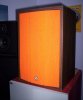
Ideally, grey foam for black, brown grilles and white foam for vibrant, burnt orange, blue and light colors... The grilles pictured are grey still. I have to chose the color, maybe blue!?...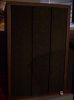
I will post more pictures and details soon.
Now, i am NOT trying to "steal" business from Sonofagon ( Foamspeakergrilles.com) or others.
A few years back, i bought some absolutely awesome JBL L-100 Quadrex foam grilles, in blue,
that were nothing short of perfect!. These guys sell them for quite a bit of $ but i know why now!!!.
I have no clue what method they use (CNC milling or hot wire cutting) but it IS a challenge.
Perfectly doable tho, if you have a minimum of tools and patience.
I fabricated a hot wire cutting "tool" myself and i must say that it performs very well. I will post
pictures of the tool i made and the inspirational video link i used, to make this.
For my first try, i bought 1.5inch thick open cell foam, which is "rated" at 20PPI (20 Pores Per Inches). I DO NOT recommend using this PPI rating, this was a mistake on my part, the place from where i got that foam had the 1.5inch thick i needed altho, 1.25 inches would be ok.
The 20PPI foam i used is NOT acoustically transparent enough. It also is availlable in grey only
(open cell Reticulated foam is not availlable in a lot of colors it seems), so you'll have to paint it
with the color you want. Painting that 20PPI makes it even less transparent acoustically.
I know that vintage (and modern replacement) foam is closer to 10PPI and that is WAY better
acoustically, lends itself way better to painting and, looks better.
The best way to color the foam would be to use clothes Die, but i doubt that it's going to work
as the foam won't absorb the die (someone tried to die foam???).
JBL, Altec, Marantz, B.I.C. and every one else probably all painted the foam ( i know that JBL did).
The fun part is that you can paint them any colors you'd want!, even black if retro-colors is not your thing.
I made the "jiggs" to cut the foam using MDF and Masonite as, using plastics (would melt), or metals (would cool- down the wire). In the linked video, the guy uses thin aluminum so, it might work...
To power my hot wire cutter, i used my DC power supply. It is adjustable from 0 to 20VDC but using too much voltage, gives worsening results (wire is too hot). I found that for a 22inch long wire, 12volts DC is working best, making this doable with a car battery maybe? or a car battery charger...
On my power supply, the power needed was 3amps@ 12 volts. Some wallwarts can supply that,
YMMV. The Hot cutting wire i used is: Temco RW0036 26 guage Nichrome60 wire. I bought a 25 ft rool and it is in-expensive. You could use a different guage but the smaller-the better i think.
This special wire is made to be heated. I imagine you could try stainless steel wire but i did not try.
After every cuts, i cleaned the wire with fine steel wool.
Cutting slots in the foam is very easy!, cutting large, flat surfaces (like the B.I.C. Venturi Formula 3 grilles sides) is more challenging. You need practice on a scrap piece of the same foam, to check the voltage and speed at which you "feed" your cutting tool.
Someone knows a source for thick (depending on the grilles you need to make) reticulated 10PPI open cell foam???.
Ideally, grey foam for black, brown grilles and white foam for vibrant, burnt orange, blue and light colors... The grilles pictured are grey still. I have to chose the color, maybe blue!?...
I will post more pictures and details soon.
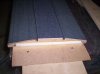


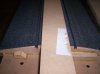


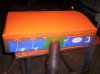
 . The pictures don't do them justice tho, they look all-right. I made a vacuum "box" to avoid excess paint just "pooling" on top of the too small 2PPI foam i had. I was afraid thay the paint would just block- off the surface pores. The system works great!. I simply cut a hole in a cardboard box, that fits the grills in size and used my thrusty ShopVac, to create a vacuum underneat the foam. The airflow seems to pull the paint droplets (from a rattle can), thru a good part of the foam thickness and there is no build-up on the foam's surface.