


There are a bunch of devices and DIY kits that help one understand “does this transistor work” and often reveal a few basic performance specs. Below is a listing of some of these devices you may be interested in, some of the information about each device, and, hopefully, a bunch of comments from other AK’ers who have experience with the listed devices.
I had collected a bunch of links in my browser to help me navigate the choices, then realized the list and info would be better if shared with everyone and with more opinions and experience from others. I am no expert nor am I a professional technician or E.E., so some of the following will be off or even wrong… until kind AK’ers contribute constructively to make this a better, more accurate, more helpful guide.
You can skip ahead if you like:
Note: If you have experience with a transistor testing device that isn’t on the list yet and which might help other AK’ers, please let me know and I’ll add it and your notes to the index and thread.
If you're looking for more of a "how to test transistors", check out Echowars' thread Bipolar Junction Transistor Testing Basics
What is a transistor tester?
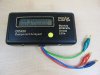
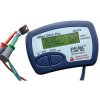
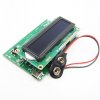
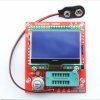
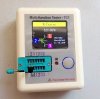
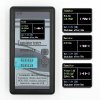
For our purposes here, a transistor tester is a device intended to be used to test the basic functionality of a discrete transistor and show a small number of arbitrary data points about that transistor.
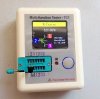


Like many of the vacuum tube testers, the common transistor testers only reveal very basic information about a transistor. Is it shorted or not? Which leads are the emitter, base, and collector? For purposes of comparison only, what is its gain at an arbitrary voltage?
Transistor testers will not display how a transistor will perform in your circuit or application. That’s where the curve tracer takes over.
What is a curve tracer?
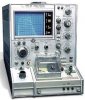
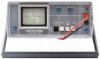
A curve tracer is a more-sophisticated device intended to display the operating characteristics, over a range of voltages and currents, of a transistor instead of just one or two arbitrary data points.
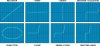
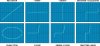
Curve tracers run multiple tests on the transistor, each at a different voltage and current, then display the resulting data points as curves plotted against the axes of voltage and current. With this output and your knowledge of the operating conditions in your circuit, you can tell how a transistor will perform in you application.


@ghazzer has a great thread on building your own curve tracer (or buying an assembled kit) and then some insights from actually using it. If you're thinking about going this route, check out this thread.
@ConradH has a post about what he uses a curve tracer for and another one on how he uses a curve tracers. Very good info.
https://audiokarma.org/forums/index...-is-it-good-enough.729807/page-2#post-9985712
https://audiokarma.org/forums/index...-is-it-good-enough.729807/page-2#post-9986491
Not-quite-tracers
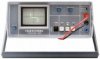
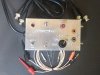
There is another kind of device, a curve-tracer-like device, that warrants mention here. The Huntron Tracker and similar devices like the Octopus curve tracer are covered in the curve tracer section, but they produce somewhat different output.

Continued in the following sections
I had collected a bunch of links in my browser to help me navigate the choices, then realized the list and info would be better if shared with everyone and with more opinions and experience from others. I am no expert nor am I a professional technician or E.E., so some of the following will be off or even wrong… until kind AK’ers contribute constructively to make this a better, more accurate, more helpful guide.
You can skip ahead if you like:
- What transistor testers can and cannot do
- Short answers on “which one should I get?”
- Index of transistor testers covered in this guide
Note: If you have experience with a transistor testing device that isn’t on the list yet and which might help other AK’ers, please let me know and I’ll add it and your notes to the index and thread.
If you're looking for more of a "how to test transistors", check out Echowars' thread Bipolar Junction Transistor Testing Basics
What is a transistor tester?
For our purposes here, a transistor tester is a device intended to be used to test the basic functionality of a discrete transistor and show a small number of arbitrary data points about that transistor.
Like many of the vacuum tube testers, the common transistor testers only reveal very basic information about a transistor. Is it shorted or not? Which leads are the emitter, base, and collector? For purposes of comparison only, what is its gain at an arbitrary voltage?
Transistor testers will not display how a transistor will perform in your circuit or application. That’s where the curve tracer takes over.
What is a curve tracer?
A curve tracer is a more-sophisticated device intended to display the operating characteristics, over a range of voltages and currents, of a transistor instead of just one or two arbitrary data points.
Curve tracers run multiple tests on the transistor, each at a different voltage and current, then display the resulting data points as curves plotted against the axes of voltage and current. With this output and your knowledge of the operating conditions in your circuit, you can tell how a transistor will perform in you application.
@ghazzer has a great thread on building your own curve tracer (or buying an assembled kit) and then some insights from actually using it. If you're thinking about going this route, check out this thread.
@ConradH has a post about what he uses a curve tracer for and another one on how he uses a curve tracers. Very good info.
https://audiokarma.org/forums/index...-is-it-good-enough.729807/page-2#post-9985712
https://audiokarma.org/forums/index...-is-it-good-enough.729807/page-2#post-9986491
Not-quite-tracers
There is another kind of device, a curve-tracer-like device, that warrants mention here. The Huntron Tracker and similar devices like the Octopus curve tracer are covered in the curve tracer section, but they produce somewhat different output.
Continued in the following sections
Last edited:






 )
)


