• The move to the new server is done. There are some software and database maintenance updates in process. This has us passing the hat around to help out. We appreciate any donations. Seriously, even a dollar helps. The payment page may be found here - https://www.audiokarma.org/support.html

dlucy's guide to Dim bulb testers, Variacs and autotransformers

dlucy

dlucy67 (Doug)
Staff member
Moderator
Subscriber
Following is a convenient collection or compendium of information and posts from elsewhere on AK and therefore from many different members. Where possible, the posting member has been credited and the source thread or post has been linked. Corrections and additions (and updates to modern info) are welcome and encouraged. Just send a direct message and your contribution will be added.

What are dim bulb testers, variacs and autotransformers? When should you use each? How to I make my own? Are these the same as isolation transformers?
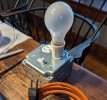
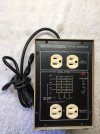
DBT 01.jpg
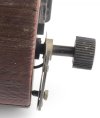
variac 02.jpg
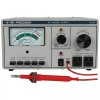
BK autotransformer.jpg
isolatoin transformer.JPG
Dim Bulb Tester (DBT)​
VARIAC​
Autotransformer​
Isolation Transformer​

What are dim bulb testers, variacs, autotransformers and isolation transformers?

In the most basic terms, these are devices you would use to limit AC voltage or current going into a unit (from an AC wall socket). The why/how is different between each device.​
An isolation transformer does not limit current nor voltage; Isolation transformers isolate the chassis of the unit you are working on from the AC wall socket. Isolation transformers are covered elsewhere on AK https://audiokarma.org/forums/index.php?threads/dlucys-guide-to-isolation-transformers.1069427/.​

What is a dim bulb tester? What is a variac?

A Dim Bulb Tester supplies household voltage level (110v here in the US) to the test unit, but does so with the unit in series with the incandescent bulb. The DBT limits maximum current available to the test unit to (household voltage)/(wattage of incandescent bulb), but to vary the voltage I have choose my bulb wattage wisely.
Variac is a single winding transformer where the secondary is a wiper over exposed elements of the primary… which you use to vary voltage available on the secondary by sliding (or rotating, in most cases) a movable tap over the exposed contacts/windings of the primary…so, Variac precisely varies the voltage I want to apply to the test unit, but I have no easy way of controlling or knowing the current drawn by the test unit.
variac naked 01.jpg
variac naked 02.jpg
variac naked 03.jpg
From @lumoStoria
a dim-bulb tester does not act as a fuse but as a current limiter. This is possible because incandescent bulbs (to be precise: their filament) have a positive, non-linear temperature coefficient of resistance, similar to a PTC resistor. That is, if no or only a small current is flowing through the filament it is "cold" and its resistance is therefore low, for example, 30 ohms. If a high current is flowing (when the connected device draws excessive current or even has a short circuit) the filament gets "hot" (glowing) and its resistance is therefore much higher, for example 300 ohms. This higher resistance limits the current that flows through the device and, thus, hopefully prevents damage.

When should one use a Variac or variable autotransformer?

From @Catmanboo
Variac can be used to safely awaken long-dormant or unknown equipment by ramping up line voltage slowly /incrementally, allowing electrolytic caps the time to regroup, reform & awaken safely.
Dim bulb tester protects the gear under test from going up in smoke if there's excessive current consumption like a dead short in it. Bulb reacts like you plugged it into line voltage (Bright light) if the piece under test has obvious issues to identify & rectify before proceeding further.

Lots of answers to “when to use which” in this thread: https://audiokarma.org/forums/index...vs-variac-or-variable-autotransformer.786025/

Can you use an AC speed control or light dimmer instead of a variac?

No.​
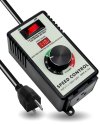
AC speed controller (not a VARIAC) 2.jpg
AC speed controller​
AC speed controller (not a VARIAC).jpg
AC speed controller​
From @EchoWars
No. Dimmers use a triac to vary the duty cycle of the AC line going into the gear. Not very equipment-friendly.
From Chad Hauris​
a lamp dimmer or universal motor speed control operates by chopping the AC waveform, not by actually reducing the voltage...hooking these devices to a transformer power supply would likely do more harm than just plugging the amp into the wall!
From @d3imlay
Most people use a variac to slowly bring up power on a piece of equipment. The hope is to see an unusually high current before damage can occur. A motor speed control reduces the voltage by only using part of each half cycle. Do a search on phase angle control or light dimmers to understand this. Light dimmers and motor controls are identical with one exception. The light dimmers start at minimum voltage and gradually increase the voltage to the bulb. Motor controls start at full voltage to get the motor started and then reduce the voltage. If anything you use a light dimmer, not a motor control.

Are variacs the same as isolation transformers?
No.​
From @gadget73
Most variacs are not actually isolation transformers. They are whats called an autotransformer. Its one winding with a movable tap. Neutral carries straight through, hot goes to the other end, output goes to the moving wiper. The output still references to earth ground through the neutral.

Warnings about using variacs:

From awillia6​
There's also a linearity issue with variacs especially with modern electronic gear. Many (most?) DUTs/UUTs don't consume electrical power in a linear fashion due to any number of reasons, primarily having to do with transformer secondaries feeding voltage regulators designed for specific voltage input and output levels. What happens is basically NO current flows even as the variac voltage applied is gradually raised. Then, all of sudden, the device's voltage regulators switch fully on, supplying gobs of power to downstream circuitry which may or may not be in good order. If you're ONLY using a variac in one of these startup ventures, you'll see little current rise even as the voltage is ramped up from 0 to say 60 or 70 VAC. Then with the next little turn of the dial, suddenly the current spikes, the lights dim, and the smoke billows. IMO, the best way to go is using a gizmo like the catman—a combo variac AND dbt. Each certainly has its place individually, but together they just about bullet-proof the hapless hobbyist.

Notes about variacs and dim bulb testers:

Members report they often use a combination of tools to limit AC voltage and current going to a unit. For example:​
From allengator​
I use an isolation transformer... then variac… then DBT....
From @gadget73
I have mine wired up with a volt and ammeter
From triode17​
I use a 5 amp Variac fed by a Kill-A-Watt. Then you can measure current, Watts, VA and really monitor what's going on. With tube amps, I always start at 60 Vin to get the tubes to light up enough to conduct. SS, start at Zero volts.

Threads on dim bulb testers

Building a dim bulb tester (DBT)
Using a dim bulb tester (DBT)
Troubleshooting a dim bulb tester (DBT)

Threads on variacs
 
Last edited:
Register to hide this ad
Thanks for compiling all this information! It always took precious time, and the "Search" function, to locate this information for new AK members. Now we have a one-stop shop!
I'm assuming this will be a sticky on the DIY forum?

I think making such posts sticky is a very good idea... until there are too many stickies in any given forum.

I've got a compiled list of "various tools and techniques" that may one day serve as a starting point for more threads like this one. If I get time to make more of them, then a master thread starting point would make sense to have as a sticky... and then one could find the specific thread (like this one on DBTs and variacs) more easily.
 
Following is a convenient collection or compendium of information and posts from elsewhere on AK and therefore from many different members. Where possible, the posting member has been credited and the source thread or post has been linked. Corrections and additions (and updates to modern info) are welcome and encouraged. Just send a direct message and your contribution will be added.

What are dim bulb testers, variacs and autotransformers? When should you use each? How to I make my own? Are these the same as isolation transformers?
@dlucy , this compilation is a masterpiece! Should help prevent & answer many repetitive queries from here on. And thank you for using what basic info I provided in hopes of enlightening those who are just starting on their learning curve re: fixing their own gear.
 
Last edited by a moderator:
Following is a convenient collection or compendium of information and posts from elsewhere on AK and therefore from many different members. Where possible, the posting member has been credited and the source thread or post has been linked. Corrections and additions (and updates to modern info) are welcome and encouraged. Just send a direct message and your contribution will be added.

What are dim bulb testers, variacs and autotransformers? When should you use each? How to I make my own? Are these the same as isolation transformers?

Dim Bulb Tester (DBT)​
VARIAC​
Autotransformer​
Isolation Transformer​
Your picture of the BK bench type that you labeled autoformer, is really just a nicely packaged indicating meter selectable low~ medium output current capability variac with connected equipment safety leakage testing confirmation capability !

Sencore and VIZ, as well as possibly other Co.`s offered those combination products as well.
The BK, Sencore, and VIZ products are the only ones that I ever recall seeing and or using.

My 1991 purchased new and very pricy ~40lb 10amp rated VIZ also provides true mains electrical isolation and a variable current circuit breaker feature for the unit`s output along with with the connected equipment`s safety leakage test function.
 
Last edited by a moderator:
I think making such posts sticky is a very good idea... until there are too many stickies in any given forum.
one master thread stuck named "beginners start here" that is not open for replies with links to all useful threads such as: tools needed, dummy load how to, this thread, 6 way diode test, how to connect an equalizer, etc.

then when a beginner posts a thread, he can be pointed to the master thread and can then ask follow up questions in their thread.
 
Your picture of the BK bench type that you labeled autoformer, is really just a nicely packaged indicating meter selectable low~ medium output current capability variac with connected equipment safety leakage testing confirmation capability !

Sencore and VIZ, as well as possibly other Co.`s offered those combination products as well.
The BK, Sencore, and VIZ products are the only ones that I ever recall seeing and or using.

My 1991 purchased new and very pricy ~40lb 10amp rated VIZ also provides true mains electrical isolation and a variable current circuit breaker feature for the unit`s output along with with the connected equipment`s safety leakage test function.
Do you have a brand and model number of a true autotransformer? I'll look it up and find a good image to swap in for the one above.
 
Do you have a brand and model number of a true autotransformer? I'll look it up and find a good image to swap in for the one above.
My statement was referring to my VIZ (ISO-V-ACIII) variac having true integral power line isolation.
As far as I know, all variacs are autotransformer (variable rheostat wired)
 
I wouldn't describe the pictured unit described above as an example of an 'Autotransformer', I would describe that as an 'Inverter' or maybe a 'Solid State AC Isolator/Generator.

The word 'Autotransformer' for me describes a transformer with one winding and a fixed or variable 'Tap' which provides a fixed or variable proportion of the applied voltage to a connected load, including being able to provide a small amount more voltage at the output than the input voltage. In the case of a variable tap variety - this is the same or similar to a 'Variac'.


1728208050073.png

 
Last edited:
I wouldn't describe the pictured unit described above as an example of an 'Autotransformer', I would describe that as an 'Inverter' or maybe a 'Solid State AC Isolator/Generator.

The word 'Autotransformer' for me describes a transformer with one winding and a fixed or variable 'Tap' which provides a fixed or variable proportion of the applied voltage to a connected load, including being able to provide a small amount more voltage at the output than the input voltage. In the case of a variable tap variety - this is the same or similar to a 'Variac'.


View attachment 3313239

That`s also how AVR`s (Automatic Voltage Regulators) are wired, using electromechanical relays or Triacs connected at the various secondary output voltage taps that the unit`s main`s incoming voltage sensing circuitry engages as needed to maintain the AVR`s output thresholds to the prescribed +/-% voltage levels set by the manufacturer`s design.
AKA "Smart Variacs".
 
I believe thee BK Precision 1655A you have a picture of as an Autotrasformer is actually a variable Isolated transformer .
the 2 outputs are labeled as Isolated . I need to check the manual to be sure .
 
I believe thee BK Precision 1655A you have a picture of as an Autotrasformer is actually a variable Isolated transformer .
the 2 outputs are labeled as Isolated . I need to check the manual to be sure .
Wow ! Interesting !
I`m not familiar with that variac, and its availability of isolation output sockets might explain it`s overall lower output ampacity !
 
Wow ! Interesting !
I`m not familiar with that variac, and its availability of isolation output sockets might explain it`s overall lower output ampacity !
Yeah I have one. Got it for 100 bucks. It also has an AC socket on the back for a soldering iron and on the front there is a variable control which varies the AC output for it.

53606996203_29d807268f_h.jpg


Athanasios
 
Fascinating post from @pac1085 over in DIY:

My latest piece of test equipment (just won the auction, it's not here yet).. it was simply too cool to pass up: Tektronix factory variac/dim-bulb tester they used in the final QC testing and calibration of scopes back in the 60's - TU-75B. It has 3 bulbs in it you can switch on/off or bypass all together. I'll need to swap them out when I get it, as it has 250w and 500w bulbs. I'll probably go with a 40, 60 and 200. Sure I could have built something more functional, but I have a thing for 60's Tek gear..
1706753207554.png
1706753642630.png
 
Fascinating post from @pac1085 over in DIY:

My latest piece of test equipment (just won the auction, it's not here yet).. it was simply too cool to pass up: Tektronix factory variac/dim-bulb tester they used in the final QC testing and calibration of scopes back in the 60's - TU-75B.
I used to work at Tek. They had a "company store" where employees could buy surplus gear. It was only open during lunch hour, one day a week. Picked one of those up for $10, many years ago.

I've been trying to find some lit for it. Nothing exists! Luckily, it's pretty simple, but there are a few unusual things going on in there.
TU-75B Power Test Set, 2048_Tektronix__621.381548S_.jpg
TU-75B Power Test Set, 2048_Tektronix__621.381548_.jpg
 
I used to work at Tek. They had a "company store" where employees could buy surplus gear. It was only open during lunch hour, one day a week. Picked one of those up for $10, many years ago.

I've been trying to find some lit for it. Nothing exists! Luckily, it's pretty simple, but there are a few unusual things going on in there.
View attachment 3332209
View attachment 3332208
There's a manual available for it on tekwiki, with parts, schematic etc:
as well as a transformer spec sheet / diagram
 
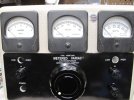
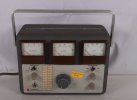
Here are a couple of Variac's I resto'd over the last couple winters. The 10 amp Model is a W10MT3W, the 10 is for the amps, and the W tells you what meter is in it (W=Watts). It has a fresh blast and powder coat, new transformer, switches fuse holders etc...

The 5 amp 3 meter model is a W5MT3AW with the 5 being the rated current (5 amps), and the AW tells you it has an Amp meter and a Watt meter. These are near impossible to find and are great additions to the bench. I've done several of the 5 amp models and I just found one to restore since I have sold the others when the offers got huge. I just need to find a new powder coater since i moved back to Mn. I skipp the Chinee models..... These were built out of heavy steel and the old style meters are bulletproof. They changed to the plastic crap meters in the later models but the old meters are available NOS and they still print the Watt or Amp meter faces so they are correct. The black portion where the big knob is, is a printed Vinyl application I had made up since the original faces are usually beat to hell after 50-80 years of use. Don't skimp when shopping for one, they will last another lifetime if taken care of and many of the new are made of recycled beer cans with no meters and are noisy as hell.


o Variac.jpgvariacs3.jpg5 Amp Variac.jpg5 Amp Variac 1.jpg
 
Back
Top Bottom