
• The move to the new server is done. There are some software and database maintenance updates in process. This has us passing the hat around to help out. We appreciate any donations. Seriously, even a dollar helps. The payment page may be found here - https://www.audiokarma.org/support.html

Do main filter caps need to be big honkers?

Keneye

Well-Known Member
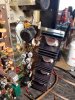
20200512_100005.jpg I plan to recap a Pioneer sx-626. It has two large 2200uf 35v caps. I assume filter caps. Aesthetics aside, do I need to replace with large physical size caps? Why were these so much larger than the other caps when their specs are similar? Are these specifically called filter caps when ordering? I know caps are generally now smaller. But does physical size matter? Thanks!
 
Last edited:
Register to hide this ad
Generally is a fitment thing, putting modern caps of same spec into vintage gear means that normally the caps are smaller. As long as the specs are the same, size should not really matter. You can go up in voltage, not down, and it's generally recommended to stay at same uf value or slighty greater
 
Those caps are probably coupling caps as the 626 is cap coupled. I'm not looking at the schematic but you mention 2 equal caps and I'm guessing one per channel.

Size doesn't matter if you get the same specs. The replacement caps generally will not be identified as to their use in our gear as there are so many more uses for caps. Since in general a cap is a cap (same style, film, electrolytic or ceramic being different) you can use any decent electrolytic in that spot.

If they are coupling caps, I'd probably put on a nice audio quality cap whereas others would use just a good regular cap.

I expect this unit has a single bigger cap for the power supply but again the scat isn't in front of me.
 
I think size may be relevant in some cases independently of a given capacity/voltage, but I don't have data right at hand to directly to back that up.

If a cap was designed for high ripple currents and perhaps targeted to higher or lower circuit frequencies....e.g. ripple at 60/120Hz conventional/linear power supply vs. a SMPS operating at a couple hundred kHz, may influence the physical size at a given capacity/voltage rating.
 
A coupling cap is in the audio signal path and removes DC from the signal. These are used at the input to amps, separate sections of amps, amp outputs (as here) and on most tube gear which runs at high DC voltage carrying the audio signal.

The capacitance is determined by the impedance of the following component, speakers in your case requiring a few thousand microfarads vs a tube pre output to a tens of thousand ohm amp input where one microfarad would be correct. Capacitance affects frequency response of the signal.

I see what is probably the power supply cap on the top right of your pic, that bigger one.
 
Those caps are probably coupling caps as the 626 is cap coupled. I'm not looking at the schematic but you mention 2 equal caps and I'm guessing one per channel.

Size doesn't matter if you get the same specs. The replacement caps generally will not be identified as to their use in our gear as there are so many more uses for caps. Since in general a cap is a cap (same style, film, electrolytic or ceramic being different) you can use any decent electrolytic in that spot.

If they are coupling caps, I'd probably put on a nice audio quality cap whereas others would use just a good regular cap.

I expect this unit has a single bigger cap for the power supply but again the scat isn't in front of me.
Yes and yes. I will use audio quality caps. Thanks!
 
Back
Top Bottom