• The move to the new server is done. There are some software and database maintenance updates in process. This has us passing the hat around to help out. We appreciate any donations. Seriously, even a dollar helps. The payment page may be found here - https://www.audiokarma.org/support.html

Does a recap improve the phono stage?

Jkaput

New Member
Hi everyone out there,
I've been trying to get my Rotel rp3000 and my sansui 2000x to play nice together. The speakers are currently Klipsch kg4.5's and a some cambridge audio s30's. It sounds good when I stream spotify thru a blue tooth receiver in the aux, but when I play records, not so much. I just hooked up an ortropon red (the last cart was a nagatron 1443 (I think thats the number). Its tiresome to listen to any sort of rock or vocal stuff. Jazz sounds good. My question is this...will recapping the receiver improve this, or is it just (as a few folks have said) that the KG's and the Sansui just don't play well together, and nothing I do is going to change that. The reason I inquire is due to the fact that they play well with the bluetooth, digital format, and that makes me wonder.

And yes, I got the cart as close as I could to completely balanced. Still some sibilance and distortion, but not bad IM (humble) O.

Thanks!
 
Register to hide this ad
I was puzzled by your question, especially as you say that Jazz sounds good and vocal doesn't. What's bad about vocals? And Rock? That's a low dynamic range content with plenty of inherent distortion and hard to sound bad.

Having said that, I peeked at the schematic of the pre-amplifier section of that receiver. It's indeed a 1971 product and an old design but the phono section is antiquated, even by 1990s standards. Just two transistors in series. And also a few electrolytics in all the places that, well, they have no place to be. It's an AC coupled circuit (right to the output to the speakers) and there's a 1,5uF/16V right the input, a 10uF/25V after the gain stage and unless I'm reading the schematic wrong, another one, 0,47uF/25V just before the tape monitor on/off switch.
Now, since these capacitors are there since 1971 or so, 50 years later, they are certainly not in their prime.
I would swap the two small values with polycarbonate ones and renew the 10uF one, but frankly, a diy phono stage based on a NE5532 would sound much better. And here comes the strange thing. You would connect that to the aux input, where you have the streaming signal connected. Well, the aux signal goes straight into the same circuit, the gain stage for the phono input via an attenuation 100K resistor, with just the RIAA equalization bypassed. Which means you should have the same problems through the aux input.

Letting aside that this isn't (imho) a good design of an amplifier (for one, why attenuate and then amplify?) the schematic creates a picture that the issue isn't in the gain stage in the sansui. But with such a phono stage, something has to be seriously wrong with the cartridge and / or the setup on the turntable to cause sonic issues. I don't know why you say the receiver and speakers don't mate well together. They appear to be efficient units and 40W from the receiver should keep them going.

Sansui fans may flame me for this but I would not spend too much effort on this receiver. Even after a full recap and proper restoration, it will remain a design obsolete even by late 70s standards.
 
Yes, the 2000 series uses a poor RIAA circuit and even passes the AUX through it, sans RIAA parts. Worse, the circuit is sensitive to the hfe of the transistors used and replacing transistors is apt to mess up the response. All that said, it can sound good if rebuilt properly. That means more than just replacing parts; it has to be tested and the performance verified to be sure the rebuild accomplished what you intended. There are several DIY phono stages that can do far better, perhaps start here: https://audiokarma.org/forums/index...igh-end-phono-stage-no-expense-spared.371889/
 
I've gotta ask then, ConradH, why is this receiver so well loved? I've heard 'tube sound' and that the tuner is good. But aren't most of us playing vinyl on them?

I would love to build a DIY phono stage, but my experience is limited to a rebuild of my speaker crossovers at this point. That wasn't hard, but i'm not sure i'm at that level yet. If there was a video, now, thats another story. For us visual learners, youtube is a godsend.

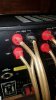
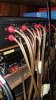
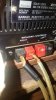
I will say this - I have a multi-room selector hooked up the Sansui (an adcom 6 button), and had doubled up the main receiver to the multi room selector left and right inputs so that I could completely cover the A/B channels. My theory was that I needed to have both left and right plugged on both channels of the receiver to get the full 39 wpc (I'm just learning, so pardon my ignorance about this stuff). For a lark, I ended up just using a single speaker wire, and have the positive side on the left channel A, and the negative on the right of channel B (I hope that makes sense) and it significantly cleaned up the sound. I wouldn't say its amazing, but its a whole lot better. The prior setup didn't seem to cause issues with my Nak, but in this case it made vinyl pretty much unlistenable (fatiguing for after about 5 minutes). I noticed something funny was going on when I was toggling btwn the A, B, and A/B channel selector on the Sansui. It sounded way cleaner on A/B, but killed the ears after 5 min. A/B was more listenable, but dull. I have ZERO idea why changing this out made any difference at all, but it did.

SaSi, I don't know why rock sounds bad, maybe its the records, but even the brand new vinyl was fatiguing. I would love to try my hand at wiring up a DIY phono stage - but as a newb i'd need something pretty easy to understand. I'm a science teacher, and did teach basic electricity, but my understanding is limited to the VIR equation, series vs parallel circuits, and the function of caps, transformers, etc. Its basic (i'm a wildlife ecologist by training actually). But I love to mess around with stuff, and honestly have learned more than I thought I would just by messing around with this Sansui, so in that regard the purchase was worth it.

Thanks for the replies. Happy weekend.
 
Can you please elaborate on the wiring to the speakers? What you describe sounds really wrong.

When I say "rock is full of distortion", I am talking about the fuzz boxes and other effects to the guitar and bass that generate a lot of distortion that can easily mask any deficiencies of a setup. Classical music, opera, even Jazz that is mostly acoustic instruments and have a higher crest factor (wider dynamic range) are more demanding. That's not to say that there are no rock albums that are well recorded and demanding on a setup.

Regarding that tube sound you mention for the sansui... The circuit topology can generate a lot of second order harmonic distortion, exactly what tubes are known for. Sweetens the sound.
 
Heres a couple shots...
 

Attachments

  • 20210117_143504.jpg
    20210117_143504.jpg
    84 KB · Views: 25
  • 20210117_143430.jpg
    20210117_143430.jpg
    105.6 KB · Views: 24
  • 20210117_143444.jpg
    20210117_143444.jpg
    93.7 KB · Views: 23
  • 20210117_143458.jpg
    20210117_143458.jpg
    87.3 KB · Views: 24
Heres a couple shots...
That shouldn't matter... the way the speaker selector switch is wired inside the receiver you are basically doing the same thing as hooking both channels/sides to the same A or B connectors... assuming both are selected by the switch. Not necessarily connected to this though, I would consider the multi room selector... try listening with out it and see how it sounds.
 
the answer is a big maybe. If the existing caps are bad, replacing them will at least change how it performs. If the existing caps are good (meaning on value, not leaky, no ESR problems, etc), replacing good parts with other good parts isn't going to do much.
 
Buy a seperate phono pre? Schitt Mani doesn't cost a ton. If you find that the problem is else where, you can easily sell it for little loss.... People hate paying and waiting for shipping!
I bought a Cambridge Audio "??" Box , basic unit but sounds great as well. I think it was maybe 100 bucks?
 
The receiver should be recapped. There’s no reason to think 50 year-old electrolytics are doing you any favors at this point. If the receiver sounds too warm or flabby, UKL caps would counter this sound signature to a large extent and help it sound more “modern”, as they are low-leakage and cleaner sounding with less noise, and could be considered clinical, cold, exacting. Certainly they would be a good addition at least in the power supply. Leave the tuner section’s ceramic discs alone, but upgrade all the other small value caps to film (mkc, mkp, pps, polystyrene) for any values < 1uf. The multi-layered, COG/NP0 ceramic caps can also be used to improve all the other ceramic discs not in the tuner section if you don’t want to upgrade these to film. Despite what specs or schematics may indicate with regards to its circuit design and potential performance, in my opinion, you need to give this receiver a proper fighting chance to show you what it can do before casting it aside.
 
You first need to check the turntable tonearm cartridge setup . Make sure the tonearm is dead level with the lp record . That is the best starting point , usually if the tonearm is tail high it will exhibit a more strident sound, lower bass level. Tail down will exhibit the opposite. You can use a folded index card with lines to visually get in the ballpark. If your tonearm is not adjustable , then you’ll need to shim the cartridge or use a different thickness mat or both.
 
Last edited:
Other things to check in addition to correct tonearm height (leveling). Make sure your tracking force is optimum for your particular cartridge. Make sure there's no fuzz or dust caked on the stylus, or that it's not worn out, and your records are good and clean and the cantilever isn't bent off to one particular side and is making full, good contact in the record groove.

Purchase a digital tonearm scale to double-check the recommended tracking force of your particular cart, compared to what floating the tonearm through the balancing method / turning the counterweight gives you- as according to the recommended weight. Anti-skate should also be checked/ adjusted (in grams) to match the tracking force you are using on your cart. The table has to be absolutely optimized in these ways to sound its best.
 
Back
Top Bottom