• Please note that Audiokarma will be offline briefly for updates early on Monday morning, September 28th.

Does Bi-Wiring Affect Ohms?

KeninDC

Hazy Cosmic Jive
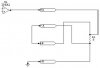
Typical bi-wire setup (not bi-amping):

One receiver + one set of 8 ohm speakers, connected to both A and B speaker inputs. Both A and B speaker buttons engaged when playing (one for low frequencies, one for high).

Does this setup affect the ohms? Are we still at 8, or do we go to 4 or 16?

NOTE: This thread is NOT about whether bi-wiring is "worth it."

Ken
 
Register to hide this ad
Ken, there is absolutely no change in the load your amplifier experiences with bi-wiring. You still have a single amp and a single set of 8 ohm speakers.

Even when you bi-amp the impedance doesn't change. You do, however, have a much "lighter" load on the amp powering the high frequency drivers, because ... there isn't much music up there.

PS: Ken, NOT all amps will allow you to bi-wire with A and B. To test your amp, remove the RED wires on the B speaker outputs, press both A and B. If you still get sound out of half of your speakers, you are OK. If everything, goes quiet, then your amp puts A and B in series and will NOT work for bi-wiring.

Hope this helps ...

Regards,
Jerry
 
I'm not trying to turn this into an 'is it worth it' thread, but have you read this from the Vandersteen site? I thought it made a lot of sense and confirmed a lot of what I was hearing in my own speakers (not Vandersteens but similar in theory). Regardless of what people think, it's interesting reading:

http://www.vandersteen.com/pages/Answr7.htm
 
I was not aware that one can bi-wire an amp using both A+B speakers terminals.
I have my receiver connected so that all 8 cables connect to the A speaker terminals of the CR-1000.
 
I was not aware that one can bi-wire an amp using both A+B speakers terminals.

I have my receiver connected so that all 8 cables connect to the A speaker terminals of the CR-1000.

Nothing at all wrong with what you are doing.

As I explained to Ken, NOT all amps will allow the use of A and B to bi-wire. If your amp does allow, it's pretty neat because with the A and B switches you can test the speaker halves separately.

For example, you could test just the woofers to see if your room is enhancing the Right or Left channel low frequencies.


John, the Vandersteen article is interesting because it leads you to a different solution than using expensive bi-wire cables. Instead, you would use:

1. cheap lamp cord or cheap speaker wire for the high frequency drivers
2. separate the two wires by at least one inch to prevent the high current associated with the low frequencies from influencing the sensitive high frequency drivers.​


Regards,
Jerry
 
Be careful that your amp doesn't support series wiring for A+B. The CR-1000 doesn't I'm sure. I'm just saying to use caution with this setup. I could see a series wiring scheme causing a short.
 

Attachments

  • speaker_series_AB.JPG
    speaker_series_AB.JPG
    8.7 KB · Views: 35
Typical bi-wire setup (not bi-amping):

One receiver + one set of 8 ohm speakers, connected to both A and B speaker inputs. Both A and B speaker buttons engaged when playing (one for low frequencies, one for high).
Ken

Just curious, why are you wiring your system this way? You're not getting the benefit of full spatial stereo with this setup. If you are using A+B, are your speakers connected to just A+B left only, or A+B right only, or A=left and B=right?
 
Thanks a lot for this valuable info......

I just followed my Infinity speakers owner's manual sugestion for bi-wiring, but I was never so sure.
 
Just curious, why are you wiring your system this way? You're not getting the benefit of full spatial stereo with this setup. If you are using A+B, are your speakers connected to just A+B left only, or A+B right only, or A=left and B=right?

Cademan, if the amp puts A and B in parallel, this scheme works. The correct way to wire is Left A and Left B go to the left speaker.

If you connected all of A to the Left speaker, you are making a hash of stereo and sound stange. Surprisingly enought, you can get away with this on some music, because often the audio engineers mix the bass line to mono.

Hope this helps ...

Regards,
Jerry
 
Nothing at all wrong with what you are doing.

As I explained to Ken, NOT all amps will allow the use of A and B to bi-wire. If your amp does allow, it's pretty neat because with the A and B switches you can test the speaker halves separately.

For example, you could test just the woofers to see if your room is enhancing the Right or Left channel low frequencies.


John, the Vandersteen article is interesting because it leads you to a different solution than using expensive bi-wire cables. Instead, you would use:

1. cheap lamp cord or cheap speaker wire for the high frequency drivers
2. separate the two wires by at least one inch to prevent the high current associated with the low frequencies from influencing the sensitive high frequency drivers.​


Regards,
Jerry

I use 4 identical runs of audioquest cable when I bi-wire. It's not really cheap but not really expensive, either, and went this route partly because of this article (and I didn't want to spend $$ on dedicated bi-wire). I don't really separate the wires, but they fall where they may which is generally at least an inch apart.
 
Ahhh, the light just went on! :D The speakers must have two individual inputs. I have seen speakers (duh!) with individual hookups for the hi-end and the low-end. Disreguard my previous post! :thmbsp:
 
I used thick wires, 4mm and I used the same leght for all 8. the only thing I overlooked after reading this article was separating the highs and lows wires by a least one ich.

Mine are laying on top of each other for the whole lenght of the run......Still....I noticed a vast inprovement....

Now I want to go separate them at least an inch to see what I get.....
 
My B&Ws have the two individual inputs per channel and I have been using the A and B buttons on my Marantz 2238 according to the B&W instructions.

You can turn one set of speakers off and hear the lows or turn the other set off and hear the highs. Neato. Turn 'em both off and you hear nothing.

Thanks for the input on the ohms, folks. I was worried about overdriving the amp or clipping some tweets (even though this is my "civilized" family room system).

Ken
 
My B&Ws have the two individual inputs per channel and I have been using the A and B buttons on my Marantz 2238 according to the B&W instructions.

You can turn one set of speakers off and hear the lows or turn the other set off and hear the highs. Neato. Turn 'em both off and you hear nothing.

Thanks for the input on the ohms, folks. I was worried about overdriving the amp or clipping some tweets (even though this is my "civilized" family room system).
Ken

Ken, there is no danger to what you are doing to either the speakers or the amp.

Your test of the amp, however, is inconclusive. I looked up the schematic for your Marantz unit and it does indeed, put A and B in parallel. In short, Ken, you are good to go!

Regards,
Jerry
 
My current main system only has One voice coil ....:D...no reason for bi-wire....or bi-amping


But I wrote this up a while back for what its worth...my living room system is bi-wired.

In that system I have an extra set of output relays helping in the bi-wire setup....

http://www.audiokarma.org/forums/showpost.php?p=1118046&postcount=70

Went over board on this, but what the heck.....


Standard wiring..... Woofer to Mid/Hi is .00021 Ohm, Woofer to amp is .08ohm.

Woofer
|
|(Single X-o)__________________________________________180" X 2 = .08 ohm_____________________ AMP internal load of .08 Ohms
|
|
Mid/Hi Driver


Bi-wired

Woofer (Separate X-o) _________________________________180" X 2 = .08 ohm_____________________AMP internal load of .08 Ohms
Mid/hi Driver(Separate X-o)_____________________________ 180" X 2 = .08 ohm______________________/


The Biwired amps internal load would have a better chance of dampening the EMF from the woofer. Also, the wire has a self inductance and capacitive value that has an influence on the signal.


One item I forgot to mention....and calculate is that the lengths are actually twice the calculated lengths and Ohm readings because I forgot to add the return path...

720" vs. 1" that is 720 Xs longer....

This example is based on my speaker cables of 15 feet TIMES 2. Just some numbers to look at.... For 14 gauge wire....15 feet ( ground & signal ) is about .08 ohm.... for 1 inch it is .00021 ohm.... for 30 feet of 14 gauge wire the total is .16 ohm.... For an AMP with a Dampening factor of 100, the internal resistance would be .08 ohm for a 8 ohm load.... Just some math.


I also tried moving the woofer X-overs from the speakers to the output of the AMP.... I did not like the sound as it seemed to kill the Bass..... not sure why that would have of happen. I mover the woofer X-overs back to speaker.

Some URLs that speak to what is happening in general....these two items below are helped by more dampening, Biamping and Biwire... I think it helps keep the mid ranges near the crossover point clean of Back EMF/Microphone distortions from the woofers.....


http://www.sweetwater.com/shop/live-...s/glossary.php

"Back-Emf
Literally,, back-voltage, is a phenomena found in all moving-coil electromagnetic systems, but for audio is most often used with respect to loudspeaker operation. This term describes the action where, after the signal stops, the speaker cone continues moving (due to inertia), causing the voice coil to move through the magnetic field (now acting as a microphone), creating a new voltage that tries to drive the cable back to the power amplifier's output. If the loudspeaker does too much of this, the cone flops around unpleasantly. It is not pleasant-sounding. To stop back-emf, the loudspeaker must "see" zero ohms looking backward (a dead short), or as close to it as possible from the output of the amplifier. "

http://www.meta-gizmo.com/Tri/june/Darkness.html
"EVERY SPEAKER IS A MICROPHONE:
When this was demonstrated to me, thirty years ago, it blew my mind and it is very easy for you to discover it if you have an oscilloscope. Attach one speaker to a tube amplifier that is on, but no making any music. Connect your oscilloscope across the B+rails. With your other speaker and amplifier turn up the music and watch the oscilloscope trace bounce up and down, as the loudspeaker, acting as a microphone, is producing an AC signal that is surging back into the power supply…as a form of distortion. By this way this phenomenon will not affect your amplifier if you are using actively regulated power supplies.

While your speakers are creating sound waves in your rooms, those sound waves are bouncing back at some time delay and striking the driver, which generates an AC signal. The bigger the loudspeaker driver the more efficient it is as a microphone.

The use of an electronic crossover also diminishes this effect."


jk

 
Thank you Jstang. That was a very informative post and it cleared up a lot for me.

BTW, that 'Speaker as a Microphone' bit is fascinating. :yes:
 
Very interesting jstang.

It's a very strange thing (biwiring)...I've done it on two speakers. I liked the affects on my Dahlquist DQ-30s, but when I got my Sony SS-m7s I noticed, before bi-wiring, a congestion in the midrange that sounded EXACTLY like what was happening in the Dahlquists before I bi-wired them. It was a very distinct sound, a lack of coherence. And when I biwired them, it cleaned right up. It wasn't subtle at all. When bi-wired, the soundstage just jumped foward a bit, everything seemed to detach itself from the speakers. I was surprised, actually, by the difference.
 
Very interesting jstang.

It's a very strange thing (biwiring)...I've done it on two speakers. I liked the affects on my Dahlquist DQ-30s, but when I got my Sony SS-m7s I noticed, before bi-wiring, a congestion in the midrange that sounded EXACTLY like what was happening in the Dahlquists before I bi-wired them. It was a very distinct sound, a lack of coherence. And when I biwired them, it cleaned right up. It wasn't subtle at all. When bi-wired, the soundstage just jumped foward a bit, everything seemed to detach itself from the speakers. I was surprised, actually, by the difference.


Cleaning up of the mid range is exactly what I saw ( heard :D ).....direct positive affect on the mids. By Bi wiring the AMPs Dampening is directly in between the Crossover at the Woofer/MidRange point.....

From an Ohm's/Foot point of view for the wire....Bi-wire now favors the AMP dampening, rather then the Woofer being closer to Midrange driver then the amp in a normal set up....

In a normal wiring plant, my take is the Midrange driver is acting as a damper for the Woofer's Microphone EMF in frequency range of the crossover overlap of the Woofer/Midrange. And that is the source of distortion that is cleaned up once you move to the bi-wire.


jk
 
Back
Top Bottom