Here is one of the write ups about the project the Klipsch Museum of Audio History is doing with Love Injection to get this book launched.
This week, Love Injection fanzine co-founders and disciples of David Mancuso’s Loft, Barbie Bertisch and Paul Raffaele, have launched a Kickstarter campaign to fund the production and publication of their new project, Dope From Hope. A compendium of the newsletters that Paul W. Klipsch, the revered founder of Klipsch speakers, issued from Hope, Arkansas, Dope From Hope is one for all audio fanatics.
Filled with advice on hi-fi audio filtered through the perspective of Klipsch himself, Dope From Hope is an insight into the mind of a great. Kelly Doherty catches up Bertisch and Raffaele to discuss the project.
Barbie Bertisch and Paul Raffaele first learned about the Dope From Hope newsletters incidentally during a memorial for David Mancuso. “During Colleen ‘Cosmo’ Murphy’s eulogy, she spoke of two books. One was Life Energy In Music by John Diamond,” Bertisch says. “The second one she mentioned was Dope From Hope.”
The pair realised that Dope From Hope wasn’t a book but a “set of loose newsletters that were difficult to come by”. Paul Klipsch wrote and distributed these newsletters to “dealers, friends of the company, hardcore fans and owners”. Except for some low-resolution editions they came across online, there was nothing close to a comprehensive collection.
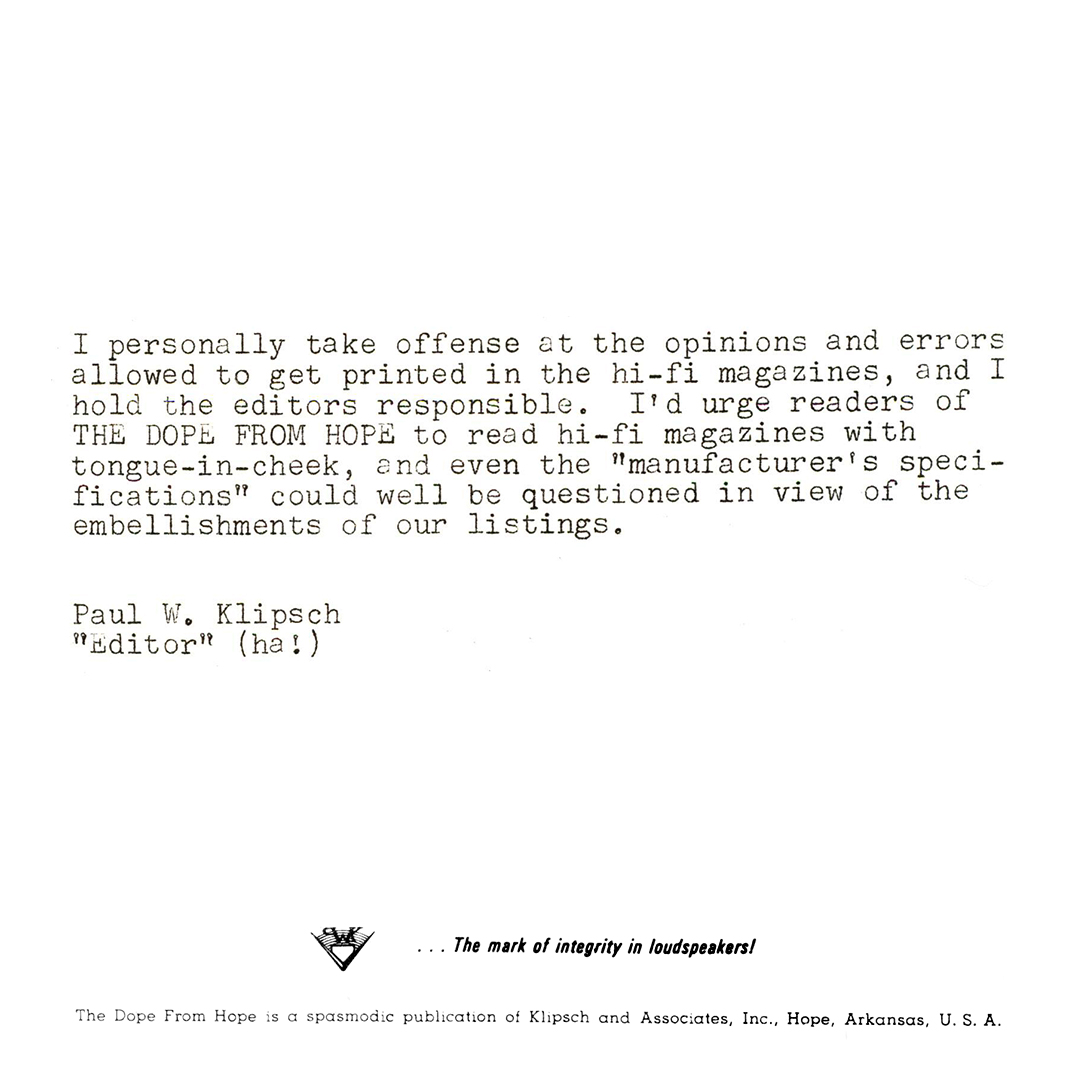
A declaration from Paul Klipsch
Bertisch and Raffaele’s first foray into hi-fi themselves had come from meeting Cosmo at her Classic Album Sundays, which they went on to host in New York. To support their goals of compiling the Dope From Hope, Cosmo introduced them to the marketing people at Klipsch and they soon worked with the Klipsch Museum of Audio History in Hope.
A non-profit that operates separately from the corporation, the Klipsch Museum is “dedicated to archiving Klipsch and related items”. It is also “where all the Klipsch heritage speakers are made in the US today”. The folks working at the museum, including its curator Jim Hunter, put the duo on a concrete path to compiling the newsletter.
“They really opened the door for us and allowed us to see the breadth of what was available. We uncovered preparatory documents and notes that Paul made himself as he wrote and drafted these documents. We also discovered the different letterheads that they were printed on over the years,” Raffaele explains.
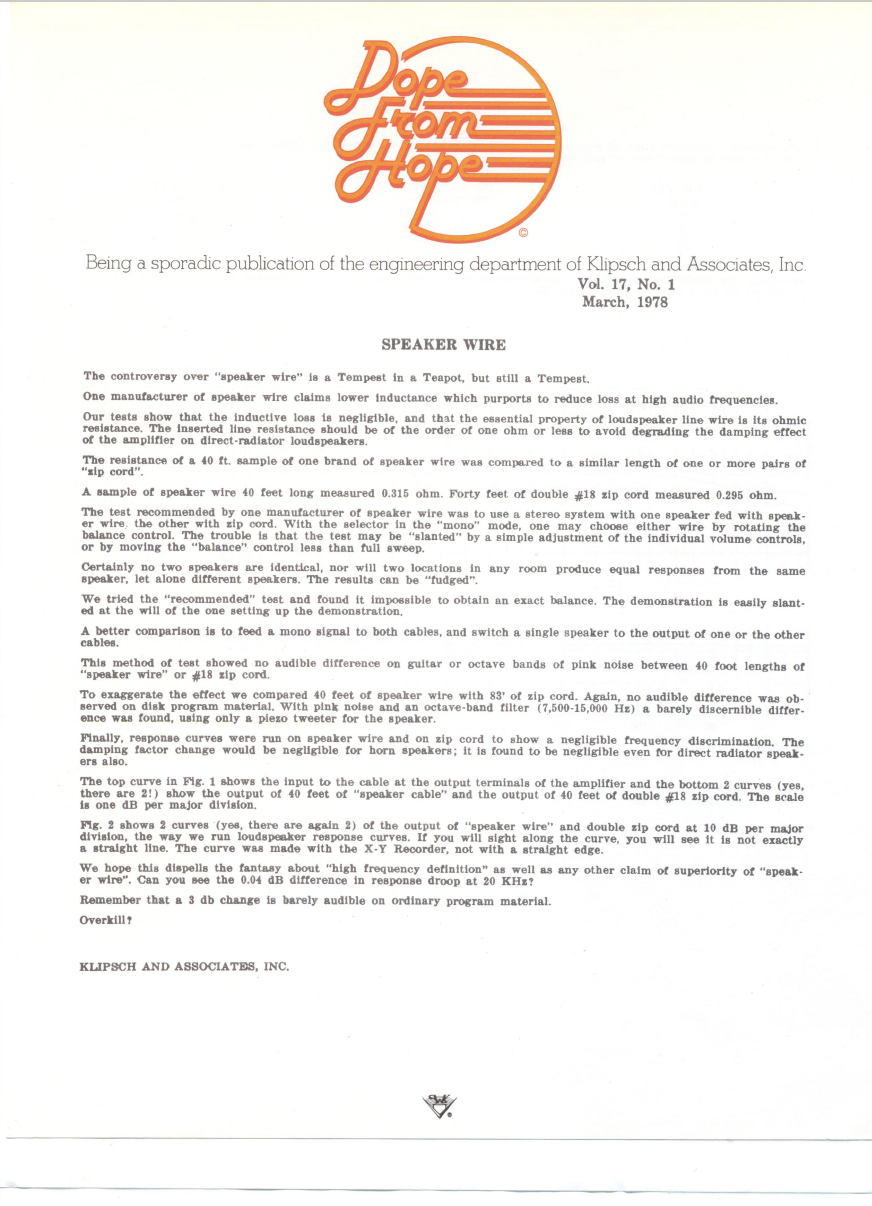
‘Speaker Wire’ from Dope From Hope
For Bertisch and Raffaele, the historical context of Dope From Hope is vital for recognizing its purpose. “As Paul developed his speakers, hi-fi itself was developing at the same time. Many people said things he thought to be inaccurate,” says Raffaele. “He was trying to market his products in a new landscape. He was a polymath who understood things at a scientific level and wanted to dispel rumours and snake oil unfounded claims.”
The newsletters melded Klipsch’s wit with his awareness of science. “It is rooted in the physics of audio and engineering,” Bertisch explains. “It’s written from such a personal perspective. People who know and worked with Paul for years that he had this sort of wit and humour, which comes across in his writing.” Embodying his brand’s unofficial slogan ‘bullshit!’, he counteracted the claims of other audio companies with a firm belief in the science of audio. In one newsletter, he stated; “My theories on audio and audio reproduction will be proven wrong only when the laws of physics change.”
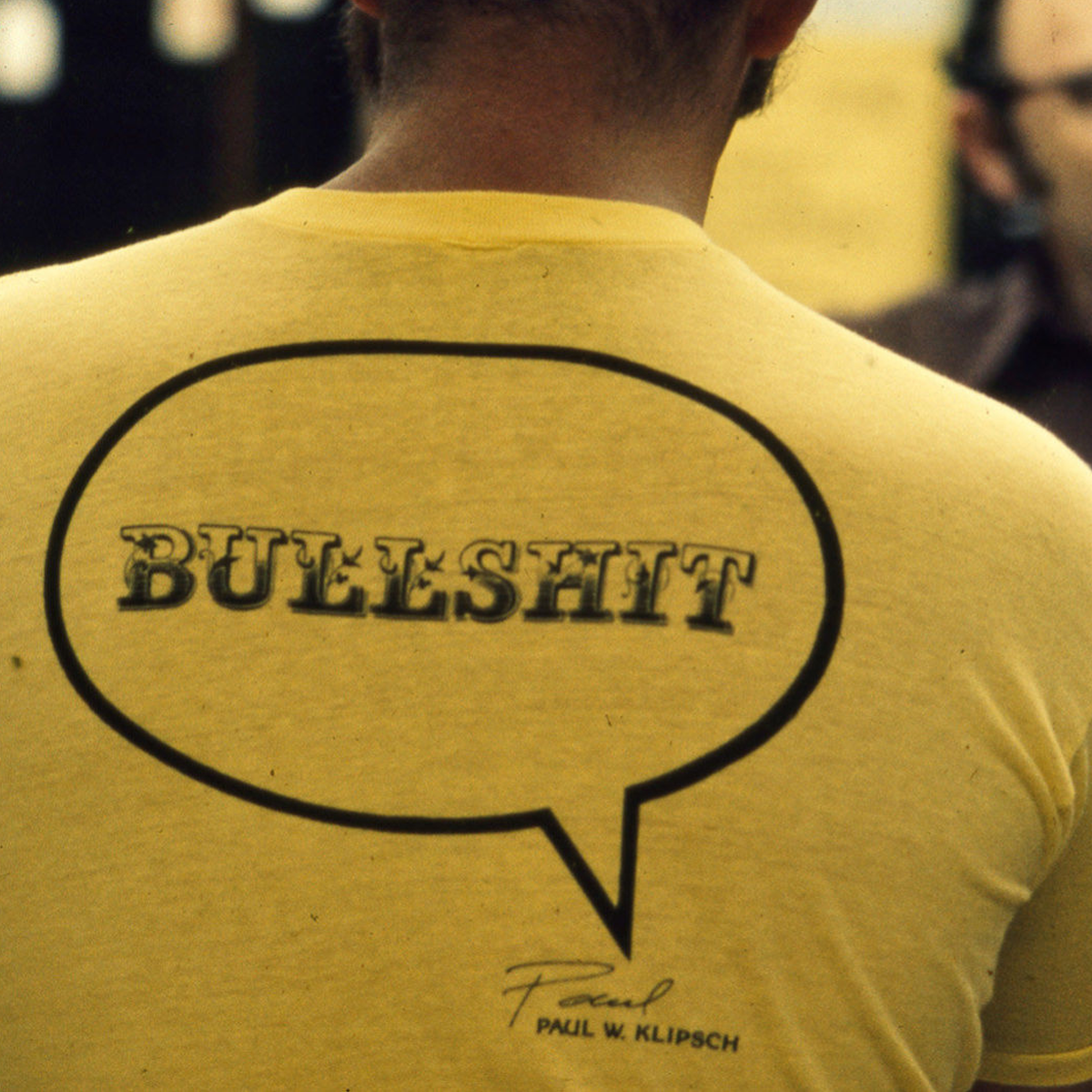
Paul Klipsch’s tagline
One strand of Klipsch’s guidance that is commonly used worldwide is a tutorial from Volume 15, issue No 5. Titled ‘False Corners’, it declares that “all speakers perform better in a corner” before explaining how to create a fake corner when none are available. To Raffaele, this shows how Dope From Hope had a utilitarian purpose. “The newsletters explain how to create a centre channel, where to place speaker corners and so on,” Raffaele explains. “Paul’s outlines of the specifications to create false corners were one of the more popular pieces that David [Mancuso] passed around. People still build those corners today for their Klipsch-based systems”.
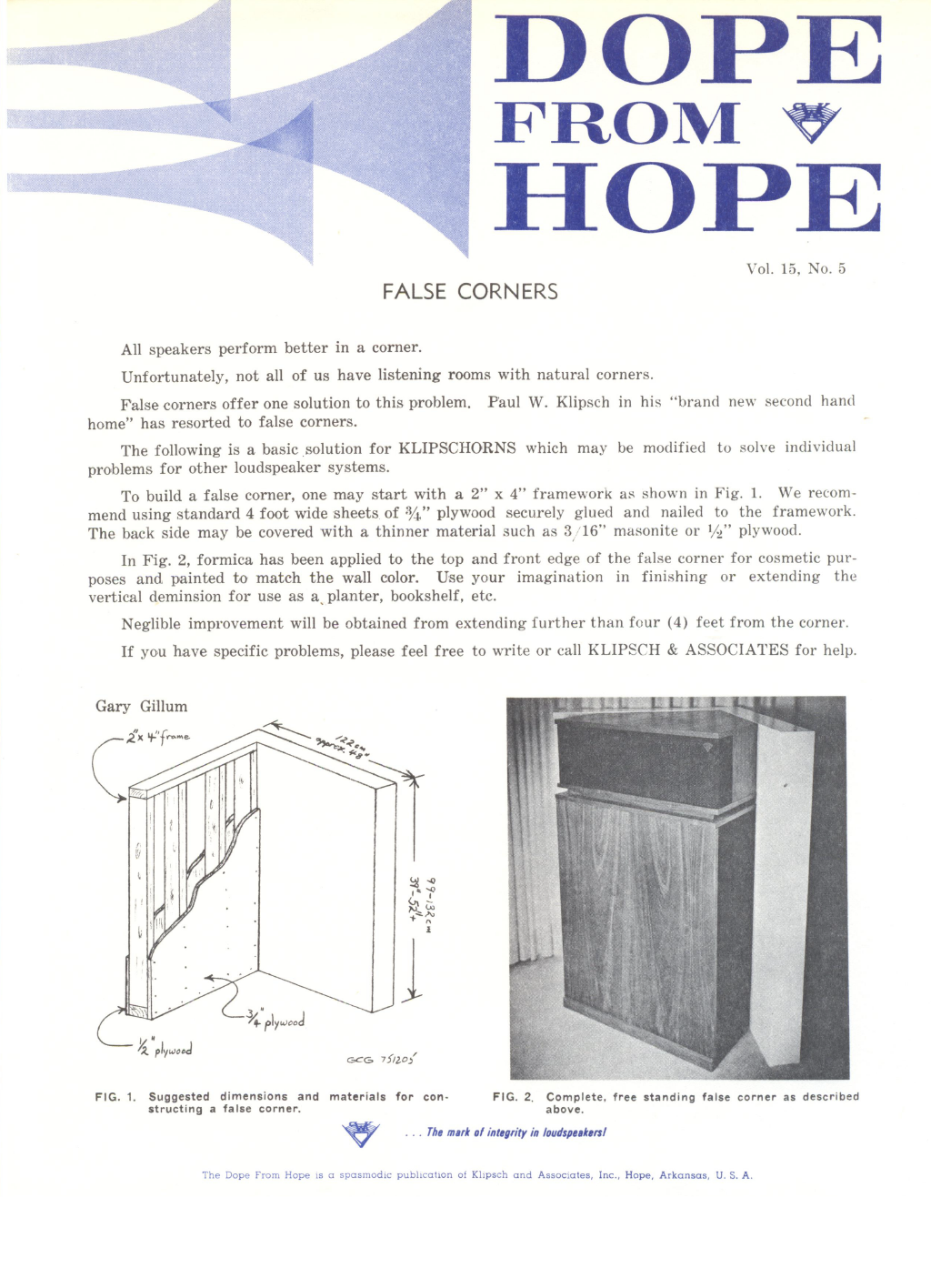
‘False Corners’ from Dope From Hope
Bertisch and Raffaele’s attraction to the project of collating these newsletters stems from the sense of community that surrounds Klipsch’s speakers. “When we first came to The Loft, what we found cool was its community, the surrounding communities, and their offshoots,” Raffaele says. “We were just taken by the people that obsessed over the speakers and the fact that you could walk into clubs all over the world and see Klipsch speakers.”
This appreciation for Klipsch is clear in the Dope From Hope Instagram account the duo run. Filled with imagery of Klipsch systems all across the world, it’s an appreciative ode to his work. “If you step into any of these cities, there’s always a party to go to and you feel at home, even if the scene there isn’t what you’re used to”.
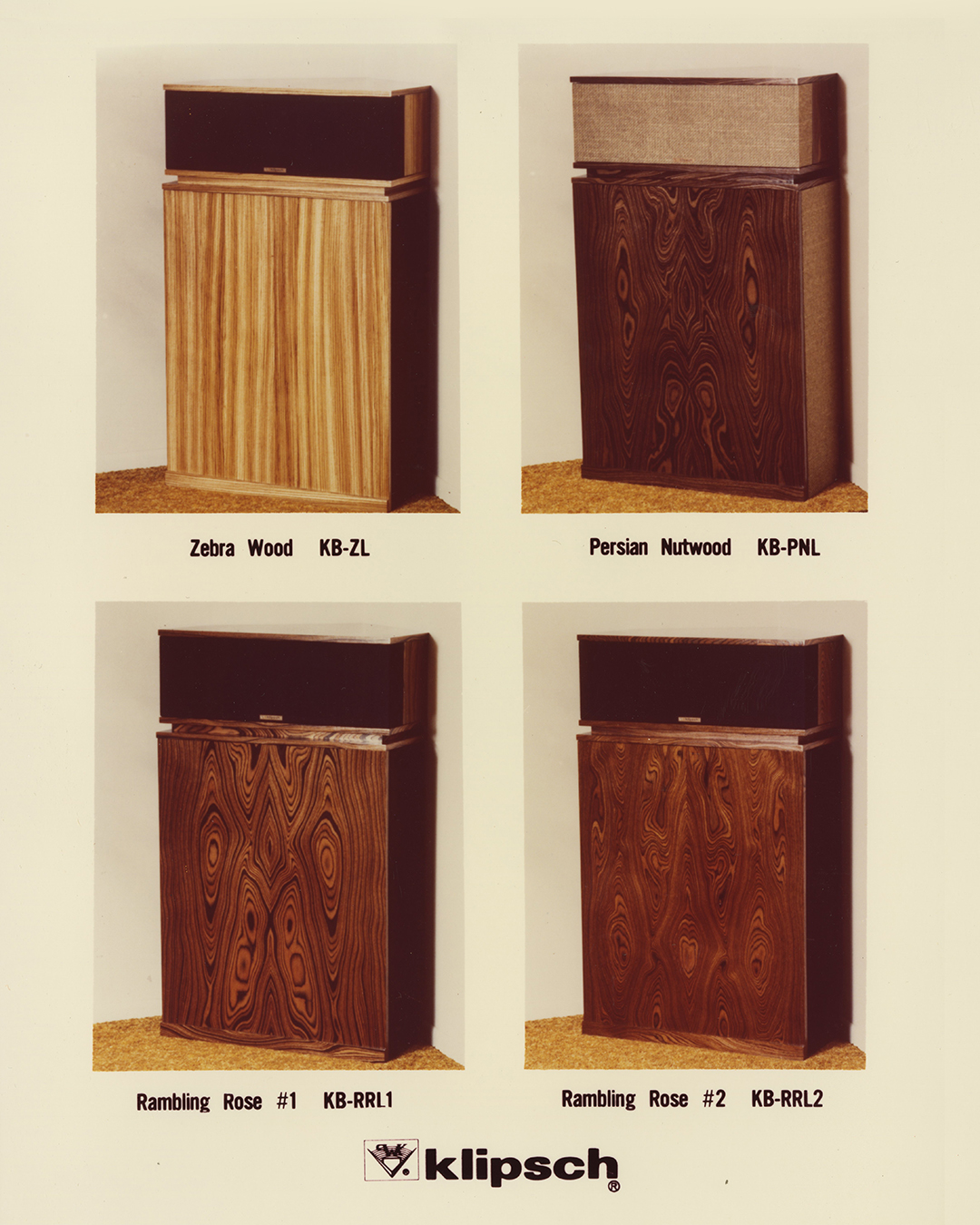
Klipschorn Wood Types
Bertisch and Raffaele’s perspective on the project is based on the spirit of dancefloors rather than the technical approach. “We came into Klipsch through communal listening and dancing,” they explain. “Klipsch as an audio company doesn’t necessarily see that side of things and we thought that was important to highlight that”.
Developing Dope from Hope has been far from easy for the pair. As with so many other projects, they fell foul of COVID-19. “The initial launch of the Kickstarter was supposed to be March 17 2020,” Bertisch says. After cancelling a New York launch event, they decided that the best thing to do was to put the project on hold.
“What we didn’t predict was the state of the publishing industry. In the two years after that, there was a lot of closure of paper mills and the cost of paper pulp became really expensive”. After waiting for the price of paper “to normalise”, the project is finally back on track and has launched its long-awaited Kickstarter, which will run for 30 days throughout February.
Despite the delays, however, the timing for the project seems prescient. “People haven’t been paying as much attention to home audio since digital music and convenience became the go-to for how we interact with music,” Bertisch says. “However, in the last two/three years when people were stuck at home, there was an increased level of conversation about how to listen better at home. It just seems like a great time to reference the simplicity of home audio, and how to make it better through research and archives”.
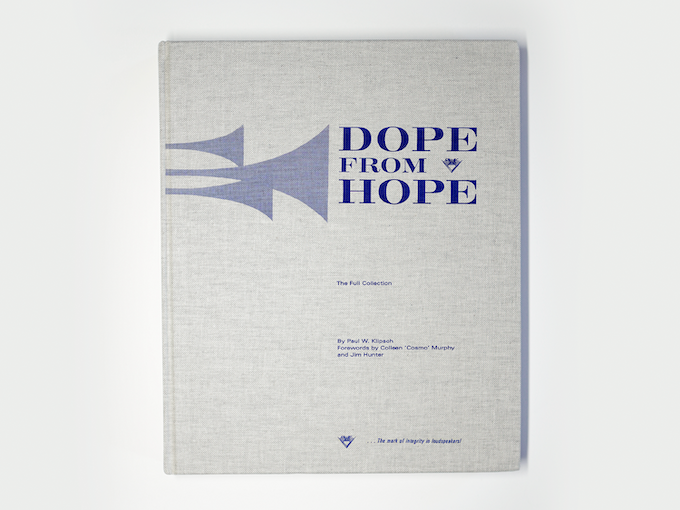
As to the book’s audience, Bertisch and Raffaele believe Dope From Hope holds something for everyone. “This book appeals to lots of people–graphic designers that want to see these beautiful mid-century designs. It’s a coffee-table book that teaches you about audio in a non-academic way. For Klipsch lovers, it’s a really beautiful piece of history”.
The Kickstarter for Dope From Hope is now live. Featuring a series of pledges that include membership to the Klipsch Museum Of Audio History, tours of the museum and book bundles, the Kickstarter will run until March 2. You can find out more here.
This week, Love Injection fanzine co-founders and disciples of David Mancuso’s Loft, Barbie Bertisch and Paul Raffaele, have launched a Kickstarter campaign to fund the production and publication of their new project, Dope From Hope. A compendium of the newsletters that Paul W. Klipsch, the revered founder of Klipsch speakers, issued from Hope, Arkansas, Dope From Hope is one for all audio fanatics.
Filled with advice on hi-fi audio filtered through the perspective of Klipsch himself, Dope From Hope is an insight into the mind of a great. Kelly Doherty catches up Bertisch and Raffaele to discuss the project.
Barbie Bertisch and Paul Raffaele first learned about the Dope From Hope newsletters incidentally during a memorial for David Mancuso. “During Colleen ‘Cosmo’ Murphy’s eulogy, she spoke of two books. One was Life Energy In Music by John Diamond,” Bertisch says. “The second one she mentioned was Dope From Hope.”
The pair realised that Dope From Hope wasn’t a book but a “set of loose newsletters that were difficult to come by”. Paul Klipsch wrote and distributed these newsletters to “dealers, friends of the company, hardcore fans and owners”. Except for some low-resolution editions they came across online, there was nothing close to a comprehensive collection.
A declaration from Paul Klipsch
Bertisch and Raffaele’s first foray into hi-fi themselves had come from meeting Cosmo at her Classic Album Sundays, which they went on to host in New York. To support their goals of compiling the Dope From Hope, Cosmo introduced them to the marketing people at Klipsch and they soon worked with the Klipsch Museum of Audio History in Hope.
A non-profit that operates separately from the corporation, the Klipsch Museum is “dedicated to archiving Klipsch and related items”. It is also “where all the Klipsch heritage speakers are made in the US today”. The folks working at the museum, including its curator Jim Hunter, put the duo on a concrete path to compiling the newsletter.
“They really opened the door for us and allowed us to see the breadth of what was available. We uncovered preparatory documents and notes that Paul made himself as he wrote and drafted these documents. We also discovered the different letterheads that they were printed on over the years,” Raffaele explains.
‘Speaker Wire’ from Dope From Hope
For Bertisch and Raffaele, the historical context of Dope From Hope is vital for recognizing its purpose. “As Paul developed his speakers, hi-fi itself was developing at the same time. Many people said things he thought to be inaccurate,” says Raffaele. “He was trying to market his products in a new landscape. He was a polymath who understood things at a scientific level and wanted to dispel rumours and snake oil unfounded claims.”
The newsletters melded Klipsch’s wit with his awareness of science. “It is rooted in the physics of audio and engineering,” Bertisch explains. “It’s written from such a personal perspective. People who know and worked with Paul for years that he had this sort of wit and humour, which comes across in his writing.” Embodying his brand’s unofficial slogan ‘bullshit!’, he counteracted the claims of other audio companies with a firm belief in the science of audio. In one newsletter, he stated; “My theories on audio and audio reproduction will be proven wrong only when the laws of physics change.”
Paul Klipsch’s tagline
One strand of Klipsch’s guidance that is commonly used worldwide is a tutorial from Volume 15, issue No 5. Titled ‘False Corners’, it declares that “all speakers perform better in a corner” before explaining how to create a fake corner when none are available. To Raffaele, this shows how Dope From Hope had a utilitarian purpose. “The newsletters explain how to create a centre channel, where to place speaker corners and so on,” Raffaele explains. “Paul’s outlines of the specifications to create false corners were one of the more popular pieces that David [Mancuso] passed around. People still build those corners today for their Klipsch-based systems”.
‘False Corners’ from Dope From Hope
Bertisch and Raffaele’s attraction to the project of collating these newsletters stems from the sense of community that surrounds Klipsch’s speakers. “When we first came to The Loft, what we found cool was its community, the surrounding communities, and their offshoots,” Raffaele says. “We were just taken by the people that obsessed over the speakers and the fact that you could walk into clubs all over the world and see Klipsch speakers.”
This appreciation for Klipsch is clear in the Dope From Hope Instagram account the duo run. Filled with imagery of Klipsch systems all across the world, it’s an appreciative ode to his work. “If you step into any of these cities, there’s always a party to go to and you feel at home, even if the scene there isn’t what you’re used to”.
Klipschorn Wood Types
Bertisch and Raffaele’s perspective on the project is based on the spirit of dancefloors rather than the technical approach. “We came into Klipsch through communal listening and dancing,” they explain. “Klipsch as an audio company doesn’t necessarily see that side of things and we thought that was important to highlight that”.
Developing Dope from Hope has been far from easy for the pair. As with so many other projects, they fell foul of COVID-19. “The initial launch of the Kickstarter was supposed to be March 17 2020,” Bertisch says. After cancelling a New York launch event, they decided that the best thing to do was to put the project on hold.
“What we didn’t predict was the state of the publishing industry. In the two years after that, there was a lot of closure of paper mills and the cost of paper pulp became really expensive”. After waiting for the price of paper “to normalise”, the project is finally back on track and has launched its long-awaited Kickstarter, which will run for 30 days throughout February.
Despite the delays, however, the timing for the project seems prescient. “People haven’t been paying as much attention to home audio since digital music and convenience became the go-to for how we interact with music,” Bertisch says. “However, in the last two/three years when people were stuck at home, there was an increased level of conversation about how to listen better at home. It just seems like a great time to reference the simplicity of home audio, and how to make it better through research and archives”.
As to the book’s audience, Bertisch and Raffaele believe Dope From Hope holds something for everyone. “This book appeals to lots of people–graphic designers that want to see these beautiful mid-century designs. It’s a coffee-table book that teaches you about audio in a non-academic way. For Klipsch lovers, it’s a really beautiful piece of history”.
The Kickstarter for Dope From Hope is now live. Featuring a series of pledges that include membership to the Klipsch Museum Of Audio History, tours of the museum and book bundles, the Kickstarter will run until March 2. You can find out more here.