MRX37
Super Member
I had a roommate who had a pair of Royals (EV's cheapo brand) that were rather similar, and sounded great. No, they (and these) were not high end, but for what people had in college back then, they were just fine - you could play them at room filling volume with low distortion and satisfying bass. To the degree that rock albums had left/right separation, they did well, but I don't remember even asking myself if they had depth and imaging - it simply wasn't on the horizon of most listeners of the time.
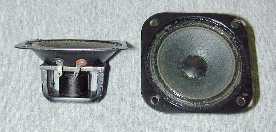
But no - they weren't Quads, IMFs, Fultons, or KLH 9s. And the drivers were not Peerless, if I am not mistaken. Peerless was a competitor of EVs - they both primarily made raw drivers - and the Peerless tweeters had the impedance printed on the cone, which I don't see there (but my eyesight isn't what is was).
Having said this - I think this is a very interesting thread idea. I recognize that its implementation isn't perfect, but as a start, it is worthwhile.
Speaker design and building is complex, and everyone goes through the randowm swapping drivers phase, but I think the original question is intriguing - would a modern speaker sound better than an older one of the same price adjusted price? And I like the fact that the OP didn't take a well known outstanding vintage speaker as the standard.
Hey! You get it!
Yeah I wouldn't mind doing this test again with comparably priced higher end speaker drivers, or even full speakers. Alas I do not have the resources to pull this off. But here are my thoughts on a more scientific test for those that have the time and resources:
Frequency generator that outputs a 20 to 20,000 hz range (There's free software that can do this)
A decibel meter to measure actual volume at various frequency ranges (A phone app could do this, but you run into limitations of the phone's microphone)
A recording setup with a good microphone and good room acoustics
A sampling of several well known songs.


 Well, at least the MR driver does. Screen capture from the video. Click on it and it'll get a little larger.