

You are using an out of date browser. It may not display this or other websites correctly.
You should upgrade or use an alternative browser.
You should upgrade or use an alternative browser.
Dummy load build for noobs
- Thread starter Hikmat
- Start date
Register to hide this ad

Those extruded aluminum case resistors, which I got from Parts Express, are sold as non-inductive and probably are ok up to 20kHz but I tune feedback loops using frequency testing up to 500k or 1MHz. They don't work for that as they are NOT noninductive above the audio frequency range. Just saying in case it matters to anyone else. One of these had me fooled into thinking an amplifier was working very poorly but it was the HF behavior of these resistors. Once I switched to a Dale non-inductive it all settled down the amp actually worked fine.
If you just want to do power testing at audio frequencies they are just fine.
If you just want to do power testing at audio frequencies they are just fine.
Last edited:

Hikmat
New Member
I found these https://www.digikey.com/en/products/detail/ohmite/NHS100-8R-F/17038359 which I think should be really good for this.
Also, can’t believe I didn’t see the “dummy loads for dummies” for the title, it was right there!
Also, can’t believe I didn’t see the “dummy loads for dummies” for the title, it was right there!


tubelectron
Super Member
My DIY dummy load, type V6-KJ Mk.2 - the steatite rotary switch has 4 paralleled section, so the contacts are quadrupled...
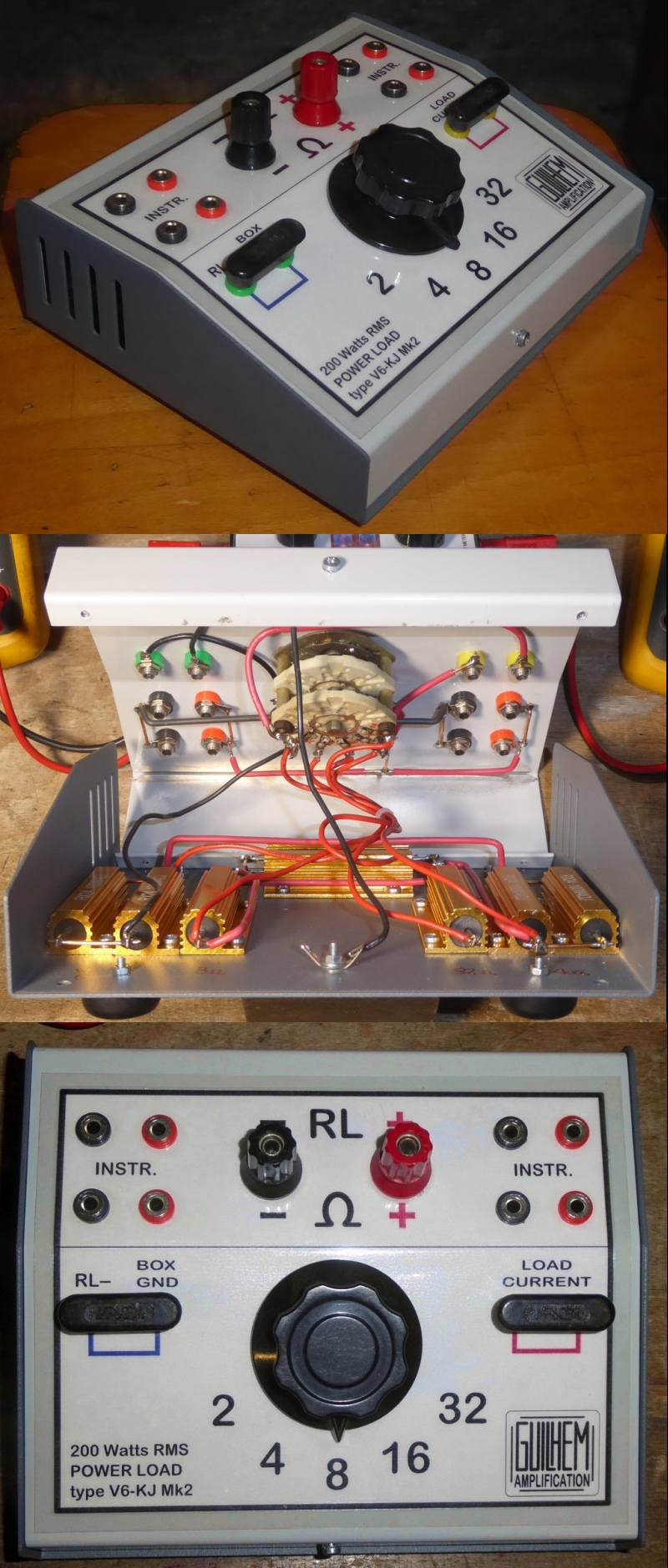
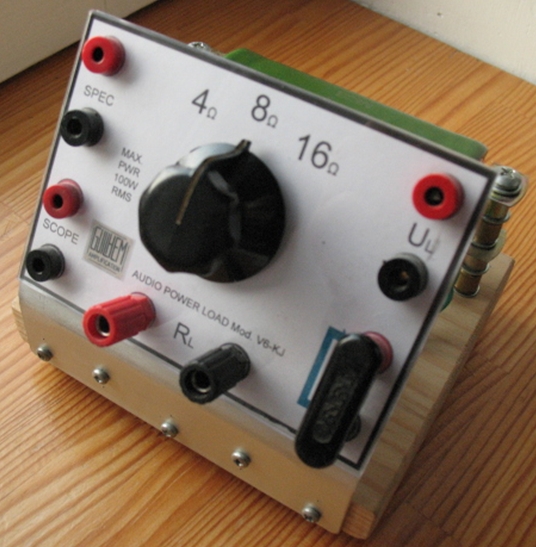
Successor of the V6-KJ (Mk.1)...
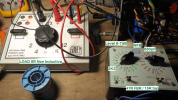
In action :
T
Successor of the V6-KJ (Mk.1)...
In action :
T

I went simple and soldered together three 25 ohm 100 watt resistors in parallel, not the most elegant and slightly inductive but so are speakers and they work well enough to load up a QSC 1700. Total price was $10.00 including the solder. If I need to go beyond the 300 watt total rating they get immersed in a coffee can of ice water.

whoaru99
Epic Member
Looks like Ohmite considers it a 30W resistor with no heatsink.That Ohmite would be a good resistor but it will require mounting on a heatsink to achieve the 100W rating. Not sure how much it can take without a heatsink. There is a temperature rise vs. power dissipation chart in the data sheet.
whoaru99
Epic Member
I use water heater elements mounted in a 5 gal pail of water. Don't recall if they are 1800W or 2000W, 120V elements. Either way they're just over 7/just under 8 ohms.If I need to go beyond the 300 watt total rating they get immersed in a coffee can of ice water.
I'm not attempting to do lab-grade measurments though with them. If the amp is supposed to be XXX watts I'm just looking for basic confirmation/validation.
Haven't seen any amps complain so far, but have seen a few upturned noses.

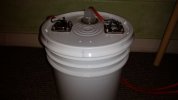
Last edited:
That's "cool". If I just want to verify rated power it doesn't matter too much about the resistor as long as it can take the power. It's when tuning the feedback and frequency response of an amp that a true non inductive is required since you have to know what's going on up to several hundred kHz or higher.I use water heater elements mounted in a 5 gal pail of water. Don't recall if they are 1800W or 2000W, 120V elements. Either way they're just over 7/just under 8 ohms.
whoaru99
Epic Member
I have no idea where the elements stand in inductance, despite that I probably could measure it.That's "cool". If I just want to verify rated power it doesn't matter too much about the resistor as long as it can take the power. It's when tuning the feedback and frequency response of an amp that a true non inductive is required since you have to know what's going on up to several hundred kHz or higher.

Run it to the red line and don't back it down.Haven't seen any amps complain so far, but have seen a few upturned noses.

terracode
Member
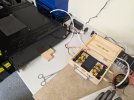
I think you were referring to my simple build. The banana plugs on the cable has an attachment for another banana plug that can be used to connect to Ocilloscope or multimeter. I have light foam around the dummy load heat sink for now to hold it. So far hasn't gotten hot enough to worry about. Later will do a more permanent attachment for the heat sink to the box and remove the foam. The dummy loads have thermal compound between it and heat sink.That's really cool looking. Can you share close up photos of this with the lid open?
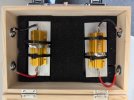
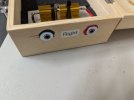
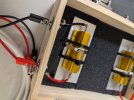

I use these. Arcol pieces.
Mounted with Wakefield 120 thermal compound. To a 24VDC industrial forklift battery chargers heatsink. That I cannibalized.
Mounted with Wakefield 120 thermal compound. To a 24VDC industrial forklift battery chargers heatsink. That I cannibalized.
whoaru99
Epic Member
I do, for a while. But, I'm also realistic. Amps don't run at 100% duty cycle/100% continuous rated output when playing music.Run it to the red line and don't back it down.
HiFi amps no but commercial ones do and are expected to handle full rated output at 100% duty cycle.Amps don't run at 100% duty cycle/100% continuous rated output when playing music.
whoaru99
Epic Member
Music doesn't work that way for "commercial" amps either. Even if the amps are running into occasional clipping whilst playing music the duty cycle is generally not anywhere close to 100%.HiFi amps no but commercial ones do and are expected to handle full rated output at 100% duty cycle.
That's why the somewhat antiquated notion of continuous rated power is not "all that" because covering peak needs is more real world than steady state continuous power rating. But, that's what most people are familar with so those notions will be around.
Now, maybe if your use case is running MRI gradient coils or some other corner case application we'd probably agree more.
Last edited: