• The move to the new server is done. There are some software and database maintenance updates in process. This has us passing the hat around to help out. We appreciate any donations. Seriously, even a dollar helps. The payment page may be found here - https://www.audiokarma.org/support.html

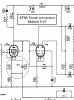
EF86 wired as Triode in Mullard 5-10 - Cathode bypass capacitor?

coylum

Well-Known Member
There are many references to the advantages of wiring the EF86 as a triode in the first stage of the Mullard 5-10 and I want to do this in a new build I am planning - my objective to reduce sensitivity without loss of performance. (I am building the "without tone controls" variant)

My question is do I still include the cathode bypass capacitor and if so, at the same value? (I realise I will have to change the values of C6 and R11 to maintain the correct level of negative feedback.)

The reason I ask this question is that I have seen modified 5-10 EF86 triode circuits with no cathode bypass capacitor, with a reduced value bypass capacitor (10uF across R2 - 1.8k) and with the existing 100uF capacitor across R2, and I am confused!

Cheers, Malcolm
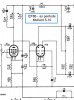
EF86Pentode.jpg EF86Triode.jpg
 
Register to hide this ad
The cathode bypass cap will increase open loop gain. Amps that apply a lot of feedback may need more open loop gain for a given input sensitivity. I’d try it without cathode bypass. See if you can live with the input sensitivity given the amount of feedback you want to apply.

Also, if you triode strap, you may need to rebias the EF86, meaning you may need to change the value of the cathode resistor to give you the bias point you want. Since the EF86 is direct coupled to the phase inverter, you do want the EF86 plate voltage the same as in the original circuit where it was pentode wired.
 
The cathode bypass cap will increase open loop gain. Amps that apply a lot of feedback may need more open loop gain for a given input sensitivity. I’d try it without cathode bypass. See if you can live with the input sensitivity given the amount of feedback you want to apply.

Also, if you triode strap, you may need to rebias the EF86, meaning you may need to change the value of the cathode resistor to give you the bias point you want. Since the EF86 is direct coupled to the phase inverter, you do want the EF86 plate voltage the same as in the original circuit where it was pentode wired.

Thanks for the advice - which I will follow and see how it works out without the bypass capacitor.
 
If I may, triode strapping the first stage will not do anything to reduce input sensitivity as the NFB loop will simply compensate for the reduced open loop gain this move creates. Therefore, without the attendant adjustments this move will also require to the NFB and HF compensation networks, sensitivity will remain the same, but measured performance will drop sharply.

Dave
 
And I didn’t mention it but changing feedback (R11) will require revisiting the HF response. That means looking at C1 and R1 as well as C6. I can’t tell you what those new values should be. They are best determined experimentally.
 
If I may, triode strapping the first stage will not do anything to reduce input sensitivity as the NFB loop will simply compensate for the reduced open loop gain this move creates. Therefore, without the attendant adjustments this move will also require to the NFB and HF compensation networks, sensitivity will remain the same, but measured performance will drop sharply.

Dave

And I didn’t mention it but changing feedback (R11) will require revisiting the HF response. That means looking at C1 and R1 as well as C6. I can’t tell you what those new values should be. They are best determined experimentally.

Thank you both for your comments

From what I had read previously triode strapping the EF86 with adjustment to the negative feedback would reduce sensitivity and improve performance. It was assumed that the triode arrangement would reduce gain fourfold (not sure whether this was with cathode bypass capacitor present - hence my original question) and the negative feedback resistor (R11) would be reduced fourfold to compensate. It was also suggested to increase C6 fourfold as a starting point before checking stability and frequency response.

With the Transcendar output transformers I am well aware that I will need to fine tune C1/R1 and C6 to optimise stability and limit frequency response with the high level of NFB used in the Mullard designs.

In previous builds of the Mullard 5-10 and 5-20 I have left the EF86 wired as a pentode and have reduced the sensitivity with resistor attenuation at input with a noise floor that is still better than the Mullard spec (-80dB). Should I just leave well alone and not bother with the triode modification? - seems I probably should.... :dunno:

Cheers, Malcolm
 
Last edited:
Thank you both for your comments

From what I had read previously triode strapping the EF86 with adjustment to the negative feedback would reduce sensitivity and improve performance. It was assumed that the triode arrangement would reduce gain fourfold (not sure whether this was with cathode bypass capacitor present - hence my original question) and the negative feedback resistor (R11) would be reduced fourfold to compensate. It was also suggested to increase C6 fourfold as a starting point before checking stability and frequency response.

With the Transcendar output transformers I am well aware that I will need to fine tune C1/R1 and C6 to optimise stability and limit frequency response with the high level of NFB used in the Mullard designs.

In previous builds of the Mullard 5-10 and 5-20 I have left the EF86 wired as a pentode and have reduced the sensitivity with resistor attenuation at input with a noise floor that is still better than the Mullard spec (-80dB). Should I just leave well alone and not bother with the triode modification? - seems I probably should.... :dunno:

Cheers, Malcolm
With the oem pentode input, you have a power amp that doesn't require an active line stage. Just a passive level control and input selector.
 
Except that reducing open loop gain (by triode strapping or removing cathode bypass) will automatically reduce the amount of applied feedback without changing anything in the feedback circuit. Thus, sensitivity won’t change hardly at all if just reducing open loop gain, even though potentially significantly less feedback may be automatically applied.

To reduce sensitivity via feedback you actually need to add more feedback than the amount applied that is inherent in the design given the open loop gain of the circuit. You can try running the amp in triode mode and/or with no bypass cap, and then apply some appropriate amount of feedback to obtain the sensitivity you desire while at the same time retuning the amp for HF response. Will that yield better performance than stock? Unknown (to me) until you try it and compare. If someone has already done that with rigor with your output transformers in the 5-10, then that’s a different story.

Also there’s one more situation to be aware of when triode strapping. When a pentode is triode strapped the Miller capacitance is no longer shielded internally. Miller capacitance in conjunction with the output impedance of the previous stage forms a low pass filter. If the stage gain where Miller is present is low enough, or the capacitance itself is low enough, or the output impedance of the previous stage is low enough, or all three, this low pass filter is less likely to get in the way of the audio band. But it’s something to be aware of if you tinker.

My opinion is there’s nothing wrong with tinkering as that’s the way you learn. But if you’re just looking to apply a pre determined formula to “get lower sensitivity” or to “improve performance” and aren’t in the mood to experiment, I think I would just add an input attenuator of some appropriate amount and be done with it. That’s literally a 20 minute change and not invasive to the extent it can’t be undone later.
 
I'll stay with the pentode format - at least I have good practical experience with that arrangement and feel confident to tune frequency response and stability with my particular output transformers
Thanks to all
Cheers, Malcolm
 
I know that i am very late to the party here, but there is an e-lektor schematic floating around the internet that has the EF86 triode strapped with all the modificatons needed. I had the same issue as you had and decided to go with that schematic.
See http://www.r-type.org/articles/art-008.htm

The ony place where you will have to experiment is the power supply and the grounding scheme.
I have not yet built the electronics yet, I'm currently working on the housing and ordering parts.
 
I know that i am very late to the party here, but there is an e-lektor schematic floating around the internet that has the EF86 triode strapped with all the modificatons needed. I had the same issue as you had and decided to go with that schematic.
See http://www.r-type.org/articles/art-008.htm

The ony place where you will have to experiment is the power supply and the grounding scheme.
I have not yet built the electronics yet, I'm currently working on the housing and ordering parts.
Well im really late to this thread.but i have the tubes and most of the parts to build this except op transformers.Did anyone here get this built and dialed in if so how does it sound.?also wondering about UL taps % and how many K INput Since i would have to buy some iron anyway Thanks in advance for any replies i may get .It has been a while since this topic was discussed
 
I don't build UL, but there are numerous options for EL84 output transformers. At a glance, the schematic referenced in this thread looks very good to me. I'm a big fan of the EF86 (in both modes) and the long tail pair phase inverter. My last amp used a triode EF86 driving a LTP, although the outputs are pentode mode 6L6. This approach can provide excellent distortion characteristics and lots of driver headroom.

Jack
 
Essay thanks for the transformer info.Im glad to hear it is working nicely and enjoy .And Gadget73 are the dyna z565 available again .and are they of the same quality as the original ones. There are some reproductions around now with it looks like the proper ul taps for Magnavox 8802 mods that were researched by Dave Gillespie.Im needing to replace some 6v6 tube sockets on my maggie and when im in there may as well do some upgrades..The stock OPTs are a bit weak where did you find the Dyna z565
 
Dave Gillespie says they are just as good as the old ones. I trust his judgement on this.

I have no idea if they are currently available or from where. You'd have to check at the usual suppliers of Dynaco stuff.
 
In the end, I used Hammond 1608A transformers.
The amplifier works very nicely by the way.
Congrats! Assuming you made measurements, I have a few questions. Did you use the Elektor schematic (triode EF86 to 12AX7 LTP)? How much loop feedback (dB) does this apply? What is the full-power sensitivity of the amplifier?

Jack
 
Last edited:
Dave Gillespie says they are just as good as the old ones. I trust his judgement on this.

I have no idea if they are currently available or from where. You'd have to check at the usual suppliers of Dynaco stuff.
Hi thanks there was some talk on a thread a while back when none where to be had from the Dynaco sellers Do you know if the musical Power House ones were ever tried by anyone the specs 8k and the UL tap is at 25% I could get those with out a wait and get my magnavox back in shape to drive some KLH speakers i I improved the x overs + tweeters and mid drivers a nice match with the 6v6 amp and if i can get 8-10 clean watts .After the Mods I will have to buy a better cartridge for my turntable .I also a packrat with a truck and trailer.I got a 1968 Magnavox color tv along with some consoles given to me .do you have any idea what voltages the giant power transformer maybe in the Tv ? I never could find a schematic for the tv but i pulled 18 or 20 tubes out of it most or all are 6.3 filiment but im wondering about B+ - for A future build Thanks again
 
Back
Top Bottom