• Please note that Audiokarma will be offline briefly for updates early on Monday morning, September 28th.

Eico HF-81 Tube Amp to Restore

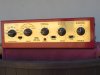
It's bare brass, it does look a lot better now I can't wait to hear how it sounds.
My last two EL84 type tube amps (Scott's) didn't last two long (I sold them), I'm
hoping this has that special EL84 tube sound that I hear all about.

Tube
 
with factory clear removed the brass can be polished to a beautiful finish and shot with a automotive clearcoat or rustolium gloss clear.
 

Attachments

  • 85 finished 007.jpg
    85 finished 007.jpg
    54.9 KB · Views: 69
Yup works great!! The face plate is what makes the HF81 looks so wonderful. I think they look stunning in semi gloss black with the brass faceplate. Kelly Holstein and I (with his instance) were messing with these amps long before they became popular...Kelly Holstein was the person that designed and put my website up originally and is also responsible for helping me find the name NOS Valves.

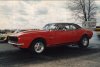
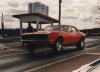
Before going into this business full time and during development of my website we were looking for a name. My internet handle back then was related to Drag Racing NOS440... NOS for Nitrous Oxide Systems and 440 for my 60 over bored 427 BB Chevy.....My totally street able stock slapper bar suspension 67 Camaro turned high 8's low 9's at 150+ MPH back in the day(not a big deal today but in the 90's that was flying)... it could even be cruised around (not raced) on premium unleaded pump gas...

Kelly came up with NOS tubes and I thought that was kind of lame...than he came up with NOS Valves....its all history now...
 

Attachments

  • BurnOut.jpg
    BurnOut.jpg
    71.1 KB · Views: 32
  • Camaro67_5.jpg
    Camaro67_5.jpg
    97.4 KB · Views: 36
Okay I have the amp set up with a dim bulb tester with a 60 watt bulb and the two
rectifier, four power and the two 12AX7's in the back are lighting, the two 12AU7's
and the phono 12AX7's are not is it because there not enough power yet or
somethings wrong, also there's a switch on the top of the chassis by the tube's
which way should it go if looking from the top left or right?

Tube
 
This is the first time I got a amp to restore and the voltage figures either matched
or are in this case and little less. The pin 9 reading on the eL84's as stated in the
manual 330volts on mine it reads 323 to 326, once I get those 200 ohm resistors
in there should bring it down further. The only thing the 12AX7 at V-1 pin 6 says
60 volts but mine is 70 volts that's a little high, I wonder Cap or something?

Tube
 
The 200 ohm resistors will cause the B+ to rise a bit....less current less voltage drop across the power supply dropping resistors... It will also raise the voltage on the 200 ohm resistor even though it is running the tubes cooler. When I say cool things down it is in reference to current which is what produces heat not voltage. A device with 1 volt on it with 1 amp of current will get real hot. A device with 1000V on it with 1 ma of current would be cool...voltage does not create heat current does.
 
How about the V1 12AX7 tube pin 6 being 70v little high compared to the other one
which is 60v but reads 61.4v @ pin 6?
 
Uh.....it takes voltage AND current to produce heat. Without voltage you have no current, so you can't have any heat. In fact, E (volts) X I (amps) = Watts, which is heat. Applying the examples given then, 1 volt X 1 amp = 1 watt of power (or heat in this case) produced. Just as equally, 1000 volts X .001 amp = (again) 1 watt, for the same amount of power produced.

I hope this help!

Dave
 
Well of course bone head....I'd think a bright dude like you would realize the context of the post that THERE WOULD BE VOLTAGE PRESENT.
 
This is the first time I got a amp to restore and the voltage figures either matched or are in this case and little less.
Tube

Nice work. It's great when what you are doing today closely matches the voltages in the original design/schematic.
 
I don't want to rain on anyone's parade but I'm actually concerned that something is actually causing the voltage to be lower than expected.

Low voltage usually means excessive current draw from some part of the circuit usual suspect is output tubes.

What do the output tubes cathode voltages measure on the 165 ohm resistors and what did those 165 ohm resistors actually measure in resistance. Check them before firing up the amp then let it warm up and check the cathode voltage where the 165 ohm connects to the output tube sockets.
 
Last edited:
The original 165 ohm resistors where shot (fell apart), so I replaced them with 180 ohm as per
the earthlink website.

Tube
 
Voltages of EL84 tubes ( I'm using 6P14P Russians)

V-7
Pin#3 12.8v
Pin#7 326v
Pin#9 323V

V-8
Pin#3 12.9v
Pin#7 326v
Pin#9 323v

V9
Pin#3 12.3v
Pin#7 324v
Pin#9 323v

V10
Pin#3 12.3v
Pin#7 324v
Pin#9 326v

Amps being powered with a bucking transformer at 117volt.

Tube
 
Yup for some reason your output tubes are drawing near maximum idle plate dissispation right now on one channel and still too hot on the other. pin 3 voltage is the important one in this respect.

When developing 12.8 Volts on the cathode resistor it basically equates to over 35 mA per tube in one channel.

323V - the 12.8 volts on the cathode = 310.2 effective plate voltage x .036 (current) = 11.16 watts of plate dissipation and this takes for granted that the tubes are reasonably close matches which they most likely are not unless you bought them from a reputable professional tube seller that burned them in and then matched them. Those rusky mil spec tubes are always wildly mismatched... I know I used to buy them buy the 100 lots years ago. So if they are not matched one tube could be drawing way more then the other in the channel which is real bad...I'd be upping the cathode to at least 220 ohms if those are the tubes your going to use...

Where did you get the tubes?
 
Back
Top Bottom