• The move to the new server is done. There are some software and database maintenance updates in process. This has us passing the hat around to help out. We appreciate any donations. Seriously, even a dollar helps. The payment page may be found here - https://www.audiokarma.org/support.html

EL-84 Push Pull console yank, which caps will contribute most to sound quality?

angelaudio

Super Member
Hey everybody hope you’re all having a good week.

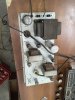
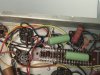
I yanked this nice integrated amp from a console and I would like to know which caps will contribute most to sound quality before I have it serviced. Any help/tips/suggestions are appreciated. Thanks in advance :)
 
Register to hide this ad
make/model/schematic ideally?

if you want this as broad as possible, bad caps are the ones most affecting sound quality.
Capitol Records Model 936
 

Attachments

  • 2C59D64C-D9C3-47FA-832E-6D47AAED7C6D.jpeg
    2C59D64C-D9C3-47FA-832E-6D47AAED7C6D.jpeg
    104.4 KB · Views: 55
  • 4D2D5E36-9BFD-4D73-B17B-9FF4B94224E2.jpeg
    4D2D5E36-9BFD-4D73-B17B-9FF4B94224E2.jpeg
    83 KB · Views: 47
  • 4AFCEFB5-D214-4510-A7A1-EBD0C4CE46BA.jpeg
    4AFCEFB5-D214-4510-A7A1-EBD0C4CE46BA.jpeg
    87.8 KB · Views: 49
Yeah... So it basically has to work first.

This means power supply caps. Bad filter caps can cause buzzes, hums, pops, small house fires, neighborhood firestorms, etc.

Those are C20, C21, and C22 on your schematic.

Once you are past that, and you don't get any unwanted sound, you get into the quality of the desired sound. That means coupling caps.

The main power tube coupling caps are C12,C13,C14,and C15 on your schematic. These will not only affect sound, but if they are old and (electrically) leaky, they will make it eat power tubes.

C1,C2,C3,and C4 are also coupling caps, and would also affect sound quality based both on their quality and condition.

All caps are not created equal. There are lots of ways to make a capacitor, even for a single given capacitance and voltage rating. Lot's of people have preferences on what types of caps sound the best -- which you can leave in, and which absolutely need to be replaced.

I'm not that particular, but I've found that ones with mold growing out of them should generally be replaced. (Partially not joking -- that is from actual experience.)

This isn't to say that other ones are not important. I'm just mentioning the ones that get the most discussion around here.

 
It looks like one of the tubes has gone bad. The one with the whitish looking top looks like is gone gassy. Maybe just dirt?
 
Yeah... So it basically has to work first.

This means power supply caps. Bad filter caps can cause buzzes, hums, pops, small house fires, neighborhood firestorms, etc.

Those are C20, C21, and C22 on your schematic.

Once you are past that, and you don't get any unwanted sound, you get into the quality of the desired sound. That means coupling caps.

The main power tube coupling caps are C12,C13,C14,and C15 on your schematic. These will not only affect sound, but if they are old and (electrically) leaky, they will make it eat power tubes.

C1,C2,C3,and C4 are also coupling caps, and would also affect sound quality based both on their quality and condition.

All caps are not created equal. There are lots of ways to make a capacitor, even for a single given capacitance and voltage rating. Lot's of people have preferences on what types of caps sound the best -- which you can leave in, and which absolutely need to be replaced.

I'm not that particular, but I've found that ones with mold growing out of them should generally be replaced. (Partially not joking -- that is from actual experience.)

This isn't to say that other ones are not important. I'm just mentioning the ones that get the most discussion around here.
Thank you for breaking that down linuxslate :beerchug:
Got a good general idea of what’s going on now. The unit is working and sounding pretty good but I would like to make sure everything that needs to be replaced, is replaced. I trust my tech, he’s an honest guy, but the last time I took a console to him I told him to recap the whole thing which may or may not have been the best thing to do considering what you mentioned above about leaving some in-spec caps in. Visually there are one or two slightly bulging paper caps I can see underneath this chassis, but I don’t know what is good or bad otherwise due to lack of test equipment. No hum at all though which I presume is a good thing in regards to the filter caps, right?
 
I'm not one for "blanket" cap change-outs either.

If a baby had the same conditions (other than the "normal" leaking fluid and ... well, never mind...) would you be concerned? Bloating, cracking skin, oozing, change of color, different than normal odors, getting hot... all indicate a problem.

A hum is very common with bad filter caps, but it is not always present. Large Electrolytics (IMHO) are always suspect unless proven good. In the case of true vintage (80's and older) equipment, it is due to age, and probably sitting unused for decades. In the case of newer equipment (into the early 2000's), it is due to the capacitor plague.

Other symptoms can be hot, burned-looking, or smoking downstream resistors (R36 and R37 in your schematic), low volume, or just poor sound. (Due to low B+).

Warning: Those resistors (and other components) can have lethal voltages on them even with the amp unplugged. Do not attempt to touch them unless/until you know the amp has been made safe. Even a failing filter capacitor can store more than enough energy to kill.

Eating Rectifier tubes, failed SS rectifiers, hotter than normal, leaking or destroyed power transformers are other possible symptoms of bad filter caps. Note that especially for console pulls, they are usually not worth the cost of replacing the power transformer, so changing the filter caps is a prudent precaution. (Oh.. Yeah... and there is that thing about the house fire -- usually not worth the cost of a couple of HV electrolytics either.)

Thanks to the now ubiquitous Switching Power Supply (which is in almost everything in your house), Elecrolytics of sufficient voltage are cheap, small, and reliable.
 
I would definitely change the wax paper capacitors.

The other ones (Dull Red, and Green) were actually pretty good caps for their time, but they are very old, too.

I would pull the output tubes (only) and measure the voltage at pin 2 of each tube socket (remember tube socket numbers are up-side-down). If the voltage was really close to 0, I'd call C12,C13,C14,and C15 good and leave them in there (I'm pretty sure those are the green ones). If I had any significant voltage on any measurement, I'd change them all. (Set meter to read DC, and certainly anything over 1 VDC would indicate a problem).

This is an easy, and relatively safe measurement to make, since you can do it from the top.

Be careful not to damage the socket with the meter test probe. Do not attempt to push the test lead into the socket. There will be lethal voltages on other pins of the socket.

Yeah, it's also true what is said above -- the getter flash (the shinny part) of a tube turning white is just as much an indication of a bad tube as if it was run over by a Buick, or went around in the kitchen sink garbage disposal for a while. -- no question -- no testing -- they are bad; replace them. Unfortunately, just like the coupling caps -- You don't want to mix and match; All of the power tubes should be replaced, at the minimum, both tubes on that channel.

It may sound OK as it is, but it is running (at least that channel) as class A.

Note that a tube turning white simply means age or physical damage. It does not tell you much about the rest of the circuit.

It's a nice little amp, and worth putting some money into. Unless someone is going around handing out fully restored Citation II's, it's about the best introduction to tube amps you could have found.
 
Those red ones may be molded paper as well. Lots of caps from this period were paper inside a plastic sleeve. Somewhat better than wax dipped but prone to the same issues eventually. I've had a number of 50s molded caps that were electrically bad. Most of the ones in my Philco TV were actually swollen and cracked. Never actually tested those, but I wasn't going to keep caps that were physically failing.

No idea what those light green ones are. I don't recognize them. Looks like metal cases though. They might actually be something decent but they are certainly old and at a bare minimum need to be checked for value and leakage if there are any thoughts on keeping them.

The electrolytic caps are overdue for replacement though.
 
It looks like one of the tubes has gone bad. The one with the whitish looking top looks like is gone gassy. Maybe just dirt?
I thought the same thing but it’s working. I omly fired it up for about 5 minutes just to take a listen but will leave it alone until I get it looked over. Thank you for pointing that out:thumbsup:
 
Both look gassy. The rectifier and one of the output tubes. Rectifiers are cheap.
Whats the number on the rectifier and that output tube?
It’s a CBS branded 5U4GB...just wiped the dust off, it’s a chrome top. The output tube is an Amperex bugle boy EL84
 
I would definitely change the wax paper capacitors.

The other ones (Dull Red, and Green) were actually pretty good caps for their time, but they are very old, too.

I would pull the output tubes (only) and measure the voltage at pin 2 of each tube socket (remember tube socket numbers are up-side-down). If the voltage was really close to 0, I'd call C12,C13,C14,and C15 good and leave them in there (I'm pretty sure those are the green ones). If I had any significant voltage on any measurement, I'd change them all. (Set meter to read DC, and certainly anything over 1 VDC would indicate a problem).

This is an easy, and relatively safe measurement to make, since you can do it from the top.

Be careful not to damage the socket with the meter test probe. Do not attempt to push the test lead into the socket. There will be lethal voltages on other pins of the socket.

Yeah, it's also true what is said above -- the getter flash (the shinny part) of a tube turning white is just as much an indication of a bad tube as if it was run over by a Buick, or went around in the kitchen sink garbage disposal for a while. -- no question -- no testing -- they are bad; replace them. Unfortunately, just like the coupling caps -- You don't want to mix and match; All of the power tubes should be replaced, at the minimum, both tubes on that channel.

It may sound OK as it is, but it is running (at least that channel) as class A.

Note that a tube turning white simply means age or physical damage. It does not tell you much about the rest of the circuit.

It's a nice little amp, and worth putting some money into. Unless someone is going around handing out fully restored Citation II's, it's about the best introduction to tube amps you could have found.
So glad you jumped into this thread Linuxslate. Thanks a ton. I’m going to check the voltage at those pins and report back. The white stuff on the 5U4GB and EL84 ended up being dust. Funny thing to note though is that the power tube that looked like it was gassy is simply lacking a chrome/smoked glass top unlike the other three, but they are all amperex bugle boys :dunno: How many watts would you guess this little amp puts out?
 
Those red ones may be molded paper as well. Lots of caps from this period were paper inside a plastic sleeve. Somewhat better than wax dipped but prone to the same issues eventually. I've had a number of 50s molded caps that were electrically bad. Most of the ones in my Philco TV were actually swollen and cracked. Never actually tested those, but I wasn't going to keep caps that were physically failing.

No idea what those light green ones are. I don't recognize them. Looks like metal cases though. They might actually be something decent but they are certainly old and at a bare minimum need to be checked for value and leakage if there are any thoughts on keeping them.

The electrolytic caps are overdue for replacement though.
Thanks for the info gadget. I’m going to put together a cap-discharge rig before I dig my paws into this thing. Will report back here with the results.
 
This looks to be better than your typical monkey wards comsole.
I'd start by changing the cathode bias caps, the power supply electrolytics and checking all the resistors for drift.
I like those little tag strips they make for a very neat and professional looking bottom side.
 
Back
Top Bottom