• The move to the new server is done. There are some software and database maintenance updates in process. This has us passing the hat around to help out. We appreciate any donations. Seriously, even a dollar helps. The payment page may be found here - https://www.audiokarma.org/support.html

Electrolytic Capacitor Questions-Help!!!

hntjr

Active Member
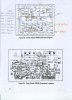
I recently bought a Marantz 2250B and I am disappointed in the way it sounds. The sound is strident/harsh/bright rather than the warm/lush sound I had read about in the Marantz forum. The person I bought the unit from was an analog engineer and had replaced several electrolytic capacitors “on the tone board”. He had paper work which he gave me and I have scanned for your review. I am wondering, did he not go far enough and should have replaced more? I have been watching “Morgan” who does restoration of Marantz units and then sells them on eBay. More recently I found a Sansui Seven in mint condition that meets all original specifications. I sent Jerry a question about the Sansui asking whether he had done the same work as Morgan on the Sansui:

Morgan’s work:
Diffuser paper behind the tuning scale replaced to restore that classic Marantz blue glow! Power supply electrolytic capacitors replaced for increased reliability. Tantalum capacitors on tone board replaced with electrolytic capacitors for improved performance. DC electrolytic capacitors replaced on Phono Amplifier, Tone, Audio Power Amplifier Boards for improved reliability Audio power amplifier Forward Bias and DC Offset set to factory specifications. Power supply voltage set to factory specifications.

Jerry’s response was that the Sansui Seven met all original specifications, but his work was not a restoration like Morgan. He could do a full restoration for an additional charge.

What does aged electrolytic capacitors that need to be replaced sound like? Could a receiver meet all original specifications and still need to have aged electrolytic capacitors replaced? In the case of my Marantz 2250B, are there other electrolytic capacitors that need to be replaced and are responsible for the strident/harsh/bright sound or is this unit just “bright” as some have said in the Marantz form?
 

Attachments
  • Image (5).jpg
    Image (5).jpg
    84.4 KB · Views: 83
  • Image (6).jpg
    Image (6).jpg
    44.6 KB · Views: 63
  • Image (7).jpg
    Image (7).jpg
    84.7 KB · Views: 67
  • Image (8).jpg
    Image (8).jpg
    69.1 KB · Views: 64
Last edited:
Register to hide this ad
Not all capacitors sound the same. Smooth sounding electrolytic caps are Elna Silmic II. Another factor are what speakers are you using? At times speakers may not match up well with some receivers.

Perhaps you may want to try a different Marantz receiver. I recommend the Marantz 2230 known to be very smooth sounding. Have larger budget? A Marantz 2325 is very nice sounding.

Or, sinfully jump to the Sony side and purchase a STR-V4. The V5, V6 & V7 use old op-amps in the tone board & do not sound as good as the all discrete V4 design. The STR-V4 are extremely smooth & precise sounding. But, this Sony does not look as good as the Marantz if that is important.
 
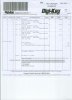
I have heard that as some people recap their Marantz receiver that all is going well until they get to the Tone Board and then after that is done some say they do not like the sound. I think you have to be very careful with your choice of caps on the Preamp/Tone board. Perhaps some pics will help us see what was done. I see from the Digikey order that Panasonic FC's were most likely used on the P/S board and also on the Preamp/Tone Board. He may have also replaced the Main Filter caps.
 
Last edited:
I have heard that as some people recap their Marantz receiver that all is going well until they get to the Tone Board and then after that is done some say they do not like the sound. I think you have to be very careful with your choice of caps on the Preamp/Tone board. Perhaps some pics will help us see what was done. I see from the Digikey order that Panasonic FC's were most likely used on the P/S board and also on the Preamp/Tone Board. He may have also replaced the Main Filter caps.

I agree with tone boards. I can 'upgrade' my STR-6060FW tone board, but the Sony perfectly meets my sonic needs so it remains factory stock. The Sony jumped up a level in sonic performance after the power supply & speaker output coupling caps were replaced with Epcos computer grade capacitors. The undersized PS main cap at 2000uF was increased to 4700UF & undersized 1000uF speaker output caps increased to 2200uF. I may change the FM multiplexer audio out caps from electrolytic to polycarbonate type & likely improve the FM tuner section.
 
All capacitors do in fact sound the same. There is no actual proof that says otherwise. Try listening with an unbiased mind. You won't hear any difference at all - that's because there is none.

It's easy to imagine stuff when you really want to hear it. It's called expectation bias. It's science. Saying "all caps sound different" is not.

Go back to school.
 
All capacitors do in fact sound the same. There is no actual proof that says otherwise. Try listening with an unbiased mind. You won't hear any difference at all - that's because there is none.

It's easy to imagine stuff when you really want to hear it. It's called expectation bias. It's science. Saying "all caps sound different" is not.

Go back to school.


Really? So a 35 year old electrolytic that may now have a value different than when it was new sounds the same as a new component? I would have to disagree with you. You did state that "all capacitors do in fact sound the same". Why cant the bias be in the other direction?
 
Not all capacitors sound the same. Smooth sounding electrolytic caps are Elna Silmic II. <snip>

You seem pretty keen on Elna Silmic II, I tried them once, that was enough - I doubt I will ever try them again.

Just my opinion.
 
All capacitors do in fact sound the same. There is no actual proof that says otherwise. Try listening with an unbiased mind. You won't hear any difference at all - that's because there is none.

It's easy to imagine stuff when you really want to hear it. It's called expectation bias. It's science. Saying "all caps sound different" is not.

Go back to school.

Nothing is created equal. There is no way a poorly made cap will sound as good as a high grade audio cap.
If you do not hear the difference you are not listening closely enough, or with good enough gear. You likely won't hear the difference if you are using average speakers.
A lot of the diffference is in durability. The elna caps last very well, when cheap caps used in early 80s technics gear, for example are often leaking by now.
Also depends on the circuit design. If the signal is passed through an electrolytic cap, the cap has much more potential to affect the sound.
 
All capacitors do in fact sound the same. There is no actual proof that says otherwise. Try listening with an unbiased mind. You won't hear any difference at all - that's because there is none.

It's easy to imagine stuff when you really want to hear it. It's called expectation bias. It's science. Saying "all caps sound different" is not.

Go back to school.
Hum...Let's see how many people comment on this.....

Anyway

hntjr....Check out patfont thread:
http://www.audiokarma.org/forums/showthread.php?t=381961

Pat did alot of work on the 2220b....
 
I think it is better to redo all of the boards youself to be sure it is done right. I don't know much about caps, but just recap my 2240B with elna II and cerafine and it there was alot of differnce in the sound compare to my non recap 2250. Could have use all the same caps, but some were backorder and didn't want to have the unit sitting disassemble. Marantz are kind of picky on speakers too so you might want to try a few sets. For example when hook to my ADS 1290 it sound too warm and tubby. But to the L630 it is more balance.
 
The person I bought the unit from was an analog engineer and had replaced several electrolytic capacitors “on the tone board”.

Panasonic FC are very good capacitors but usually sound flat or even bright if used in tone board. I use them in PS. If you like smooth and relaxed sound try replacing some of the tone board capacitors with Elna Silmics. BTW these require about 80 hours to burn in.
 
Just a note: "undersized 1000uF speaker output caps increased to 2200uF". That point should be taken seriously. Increasing the Voltage rating of the cap i.e. 1000uf @71V to 80v is okay and may improve the output but output caps like to run at their uf rating and increasing the uf will effect the output quality. So I'd go back to the 1000uf.
 
Just a note: "undersized 1000uF speaker output caps increased to 2200uF". That point should be taken seriously. Increasing the Voltage rating of the cap i.e. 1000uf @71V to 80v is okay and may improve the output but output caps like to run at their uf rating and increasing the uf will effect the output quality. So I'd go back to the 1000uf.

Where did you get that bad advice? If original are 1000uF, 2200UF is a good upgrade. A very good coupling cap is the Epcos 2200uF @ 100 VDC. These have the screw terminals. My Sony STR-6060 came with 1000uF caps. Likely the largest that would fit in chassis area in 1968. It was a compromise. The new Epcos blow the old Elna away sonically. Tightened up the bass & made it musical too. Micro details across the entire frequency range plus dynamics went up at least one level. The Sony now sounds more like a direct coupled amp with just a trace of that capacitor output smoothness. A perfect combo- not sterile sounding that sucks the life out of music, it is now very musical sounding.
 
Most cap discussions go in circles and repeat what's been said before, often in error. Electrolytic caps are highly imperfect components and every one ever made is different. That may or may not mean you can hear the difference. I'm in the "usually not" camp. What will reveal a lot is measurement. Caps that measure essentially the same will sound the same, regardless of who made it or how much it cost. Warning- when I use the term "measurement" I'm talking about way more than just the value. The Panasonic FC is a decent general purpose cap, but nothing special in terms of esr or other properties.

Generalizations are dangerous but I'd have to say that stock receivers and such, with good original caps will tend to sound softer or less harsh than after a restoration with new caps. Disturb wiring and replace good parts with caution! You also have to watch out for that expectation bias because it will trip you up every time.
 
Excuse me, Conrad....may I pull a chair up to your table.:yes:
Plus 1...
 
Last edited:
All capacitors do in fact sound the same. There is no actual proof that says otherwise. Try listening with an unbiased mind. You won't hear any difference at all - that's because there is none.

It's easy to imagine stuff when you really want to hear it. It's called expectation bias. It's science. Saying "all caps sound different" is not.

Go back to school.

No way all caps sound the same. A comparison is ceramic vs polyproplyene. A huge difference & can be viewed on a scope as well. I can take a Fender amp & make it sound like a Marshall with cap changes.

So all, do not believe it.
 
Last edited:
I recently bought a Marantz 2250B and I am disappointed in the way it sounds. The sound is strident/harsh/bright rather than the warm/lush sound I had read about in the Marantz forum.

Improper bias can lead to what you are complaining about. You might make sure its getting warm enough. Also, in my experience it takes a few hours of being on before these older units really start to sound anything close to warm/lush.
 
Back
Top Bottom