• The move to the new server is done. There are some software and database maintenance updates in process. This has us passing the hat around to help out. We appreciate any donations. Seriously, even a dollar helps. The payment page may be found here - https://www.audiokarma.org/support.html

Empire 208/398 platter bearing polishing?

robiles

Active Member
I have acquired, quite a while ago, an empire 398 turntable, whith the intention of restoring it. After i bought it i discovered that these have a few known problems (for example pitting, and tonearm part shortages), and also discovered that using a 50hz us model in europe is quite problematic, and came to the conclusion that it will be a much more problematic task than first thought.

Fast forward some months to now, when i almost got it working, but i am a bit stuck with speed stability issues (or at least it appears so). What bugs me, and i assume that this is causing the speed problems, is that the platter bearing makes scratching noises while it spins. It is also visible that the bearing spindle has some scuff marks at different places.

I have already cleaned both parts of the bearing with ipa, polished the captive ball as best as i could, added a delrin thrust plate, and new oil. This made things a bit better but not perfect.

Now the only thing left to do is redo all what has already been done, and/or polish the bearing. Anybody tried the polishing part with home made parts? Is something like this adviseable, or better not?

Also worth mentioning is that i have not mounted a tonearm yet, so no test with music has been made.

Anything else that i could try?
 
Register to hide this ad
I would really be worried about the belts you have chosen. To much tension or surface quality could easily effect the speed and consistency of speed. If the motor shaft has any play, does it spin freely with the belt installed. Does the motor come up to speed instantaneously? If not you are in need for sure. Disassemble and clean and lube the motor properly using synthetic lubricants. With out the belt spin the platter by hand at appox 45 rpm and release. The platter should easily spin over 1 minute and when warm over 2 minutes. At least the ones I serviced did back in the 60's.
 
Lets see some pictures of the wear marks on the spindle shaft. Can you catch a fingernail on it?

BillWojo
 
I would really be worried about the belts you have chosen. To much tension or surface quality could easily effect the speed and consistency of speed. If the motor shaft has any play, does it spin freely with the belt installed. Does the motor come up to speed instantaneously? If not you are in need for sure. Disassemble and clean and lube the motor properly using synthetic lubricants. With out the belt spin the platter by hand at appox 45 rpm and release. The platter should easily spin over 1 minute and when warm over 2 minutes. At least the ones I serviced did back in the 60's.

Motor has already been cleaned and oiled, just forgot to mention it. The platter reaches 32,x rpm in about 3 seconds ant then fluctuates up to .5 rpm slower or faster. If i stop it and hold the platter by hand, the motor spins with the belt attached another 2-3 seconds, so i think the motor is ok.
Platter speens freely for a long time if spun by hand with no belt in place (but is is a really heavy platter)
Regardless if the speed issues are caused by the bearing noise or not, i would still like to get rid of them - the might possibly transmit the noise as vibration to the cartridge.
Also my method of measuring rpm might not be perfect (arduino tacho placed under the platter), but the rpm app confirms this weird behaviour.

Lets see some pictures of the wear marks on the spindle shaft. Can you catch a fingernail on it?

BillWojo

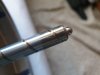
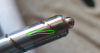
First i thought there there aren't any, by i just found one that does (catch a fingernail) - it is only in the lower part of the spindle, maybe first inch or so. Bust most of them are just marks that can be seen in a certain light but not felt - as seen in the other foto.

Now i am certain some treatment should be made, but how to proceed to not cause more damage?

20230316_072735.jpg 20230316_072713.jpg
 
@robiles - that shaft is constantly in an oil bath, assuming the correct amount of oil is in the well and the Archimedes Screw pulls it up to the top. There’s always a good coat of oil between the shaft and the bushing.. While polishing shouldn’t hurt anything if not overdone - I think it’s unnecessary. Looking at your pictures I think that any wear is not on that lowest part but rather above it where the shaft is brighter in color.. I say, clean the shaft and bushing well, refill with quality oil - and run it. :)
 
@MisterDK - the scratch and scuffs i was mentioning are in fact on the darker part o of the spindle. My theory is the lighter part of the spindle is factory made, so the majority of oil remains in that area. Above it is another dar area , aprox. the same height as the lower one. Here is a photo where the scratch is marked:

upload_2023-3-16_9-34-58.png

Most of the other traces are also in this area - it is much easier to see in person than in the photos. I will try to take some better fotos with a real camera and macro lens whe time permits.
I was thinking of using some 2000 or finer grit sandpaper to remove excess material above the surface, and not obsess on removing the scratch entirely. In any case, metallic rubbing noises are bad and should be eliminated - even if they cause no speed stability issue, they certainly cause wear.
As spindle oil i have been using Liqui Molly HLP 46 or 22 (cannot remember now which one), which are recommended for thorens bearings.
 
Good idea to remove the protruding metal there but I still see no need to polish the entire shaft. That scratch was likely caused by a careless previous owner - I doubt it was from wear. Every time the platter is pulled though, that spot could cause more scratching to the bushing but I can’t actually see how bad that spot is..
 
Good idea to remove the protruding metal there but I still see no need to polish the entire shaft. That scratch was likely caused by a careless previous owner - I doubt it was from wear. Every time the platter is pulled though, that spot could cause more scratching to the bushing but I can’t actually see how bad that spot is..

Just as i thought. I will proceed and polish carefully where i see obvious and deeper scratches and see if it is improving.
Would it make sens to try and polish the bushing if the treatment to the bearing does not improve things? I will try to test the table over the weekend with a record to see if any unwanted noises make it's way to the speakers.
 
Back
Top Bottom