• The move to the new server is done. There are some software and database maintenance updates in process. This has us passing the hat around to help out. We appreciate any donations. Seriously, even a dollar helps. The payment page may be found here - https://www.audiokarma.org/support.html

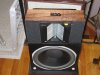
ESS AMT-3 Rock Monitors from Down Under - Oz

My AMT1's are first gens, 10" drivers, ported cabs, made in '75 before ESS moved away from alnico.
The differences are really quite nuanced and only reveal themselves as you drive the speakers close to their electrical limits. The modes of distortion produces by an alnico magnet are somewhat similar to those produced by a tube amp whereas the distortion from a ceramic is more like solid state clipping. But you really only get into that heated debate with guitar amp fanatics who are very particular about their tone and overdrive characteristics. In a home audio speaker you really don't want to drive the speaker hard enough to exploit those distortion characteristics so it doesn't make any difference. Between '76 and '78 everyone was moving to ceramics and to avoid having to redesign whole speaker systems they were basically engineering their ceramic magnet drivers to behave identically to alnico. Aside from the magnets, my alnico drivers look absolutely identical to the ceramic drivers.
Bottom line: for speakers of the mid-late 70's the magnet basically doesn't matter.
So it sounds like mass is the only tangible difference. If an alnico magnet is twice as powerful per weight/size, make the ceramic magnet twice the weight/size to get the desired results? I suppose the only one who would have a beef with that is the poor UPS guy carrying them up the drive.
The magnets on my monsters have combined to form a singularity that I blame for the disappearance of everything, including that last piece of chocolate cake in the kitchen. I'd like to theorize that their great size and strength is responsible for the tightness of my bass, but that would be a disservice to the engineers that had to think out the entire package.
 
I would listen to the woofers-and not sweat it too much. If they sound good, spend you money on a good crossover rebuild and be happy. I might be tempted to use Hurricane nuts on you baffles-epoxy.
The whole reason manufactures , including ESS moved away from Alnico was there was a shortage-a civil war in Zaire, there a lot of myth and misinformation on how things sound etc. Neo and Alnico magnets are stronger vs weight-but bot can sound good/bad or frankly the same.
ESS never used rubber surrounds on their woofers-but that doesn't mean they should sound bad/speed etc. The foam vs rubber debate has little to do with "speed" but rather better pistonic movement/less side to side issues, cone control.This can be made up with the spider. To me how they SOUND is way more important-the other stuff is a good discussion perhaps, but little to do with what your facing.
I bet the person had rubber surround put on them because he was tired of dealing with them every 3 years or so. Todays foam is much better-my PS1220's in the 80's where good for 3-4 years max-either foam slab, or surrounds. Environment, humidity/smoking speed this up big time.
If they sound good-you lucked out. I imagine they are probably fine.
 
If the woofers sound good, I'd leave the surrounds as is. Why borrow trouble.
Maybe you can improve the cabinet damping by following the "AutoMojo" treatments.
 
If the woofers sound good, I'd leave the surrounds as is. Why borrow trouble.
Maybe you can improve the cabinet damping by following the "AutoMojo" treatments.
The "Automojification" foam treatment was developed for the Dayton woofers and the need for a clear pathway to the ports. The factory scheme with the half-hearted port was the cabinet stuffed with poly-fill. Although it couldn't hurt (except financially if you have to buy the foam) to try, careful listening tests between the two may be in order here.
 
As far as the foam damping, I used more or less, the classic box 50% fill damping techniques for vented enclosures from Colloms and Dickason. 1-2" on the box walls, and 3" directly behind the woofers, angled as not to cover the vents. With the foam side walls you cut to fit and wedge-it will stay there.
I found any other combination either leaded to anemic bass, or boomy bass.
In my case I used P.E. 1 1/2 foam on the walls. 1 piece of Auralex+ 1 piece of P.E. 1 1/2" foam behind the woofers. 4" of ( 2 pieces) Auralex killed the bass.
The P.E. foam is not as absorbing as the Auralex- so the added piece more or less equals 3" of Auralex. I use Paul Simon/Loves Me Like A Rock/Kiss/Cold Gin and Big Star/In a Back Of a Car as my test bed tracks. If you get clean tuneful and hit you in the chest bass from these tracks (some are pretty congested low bass/drums filled recordings-Big Star and Kiss-Paul Simon fat bass) your good to go with anything else.
To note-there is a very small window between low bass output and clean bass-if you have the same driver/ box setup/venting you should be happy with the above damping scheme. Anything slightly more/or less wasn't up to par.
The stock setup may also benefit from removing the poly and using foam-never tried it. Foam is easier to adjust-the real critical damping is directly behind the driver-makes the biggest difference. If your getting a lot of garbage and not clean air/bass out of your rear vents-you don't have enough damping.
The clean bass cleans up and 'aligns' the overall response of the speaker-you will hear things that were masked before because of the weird bass response.
 
Tool Guy,

Sorry for being a NooB...

.

L@mb,
I saw the "sorry for being a NooB" at the top of this page, addressed to ToolGuy, and had to chuckle to myself about it. ToolGuy is the antithesis to some of the sniffing, pretentious types you see attempting to add meaning to their lives on other forums at AK. Not only does he see that the emperor has no clothes, but he doesn't hesitate pointing out how poorly endowed the emperor is.
Which makes me realize that I don't think I've ever seen any of the ESS aficionados be less than helpful and genuinely interested in evangelizing the audio gospel according to Oscar Heil.

AMT_Wings1.jpg
 
Haha I don't know what to say lol... The quick wit, humour and helpful advice, I appreciate it all so thanks.

Keith,

I liked your music selection / test tracks, I like being introduced to new artists.

Here is my all time favourite musician, song writer and singer, if you could humour me, play this on your Rock Monitors and let me know how the reproduce this track, it has amazing lows, highs and his silky smooth voice: Luther Vandross - Dance with my Father.


Thanks again to all
 
By the way as far as the epoxy goes if your surfaces are really dry mix in a slight amount of denatured alcohol to thin it out a bit it'll help soak down a little farther
I found it actually takes at least a week to be totally cured
I would use a hurricane nuts otherwise your holes are just going to fall apart or you'd have to rotate the woofers and drill new holes
The problem is the cabins are 40+ years old and the glue is drying out in the particleboard
That's why it's a good idea to paint the outside surfaces as well with the new coat of black paint
Cheap insurance and it makes them look a lot better all you need is some paint some tape plastic bag for the Heil or you can take it off
A couple hours later and several coats of paint they will look awesome!!
 
Last edited:
Has nothing to do with speed per say
But transient response and efficiency
Yes I agree the Great Heil needs a transition driver
No different than certain tweeters that work better in three-way designs versus 2.
 
Has nothing to do with speed per say
But transient response and efficiency
Yes I agree the Great Heil needs a transition driver
No different than certain tweeters that work better in three-way designs versus 2.
I was wondering what your assessment was of the Alpha 6A as the Mid?
 
image.jpeg image.jpeg
I was wondering what your assessment was of the Alpha 6A as the Mid?
I like it. It's a good driver very clear.
As Will mentioned you need to install a l-pad and run it half throttle.
After my first pair was fully broken in I switch back to the start driver because I found myself adjusting the level a little too much for different program material.
It definitely changes voicing. Seems to me the stock driver goes down slightly lower in response- as overall the response is much smoother and it does mate up well to the Dayton woofers.
I'm thinking on my second set with the custom hardwired crossover I'm going to stick with the stock drivers and skip the l-pad.
This set originally had 4 ohm woofers and 4 ohm Peerless midrange luckily I managed to pick pair of refoamed 8 ohm mids off eBay a couple years ago for cheap.
A lot of this is up to taste and if you don't have the stock driver definitely go with the Alpha
My alphas probably aren't fully broken and they probably will sound much better once fully broken in
I probably have five hours max on mine
The Dayton woofers took at least five hours a break-in to get decent bass response
But they continued to break in up to about 20 hours I would say- maybe more I'm just guessing.
And I rung them out pretty good at some pretty high levels
What I'm going on is how I adjusted the damping after that 20 hours or so to the classic model of 3 inches behind the woofers.
The bass started becoming a bit too boomy for my taste.
Also as a sidenote make sure that you're running the midrange out of phase from the Heil
Some have stated it sounds better I disagree- is it seems to cancels out a lot of information between the crossover area of the Heil in the mid driver- in other words it becomes pretty bright
Actually with the L. pad on the mid it's pretty easy to distinguish the difference as you turn it down and turn it up.
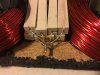
I also run my Heils with foam blocks on each side
If you don't there is a significant difference in how the Heil interacts with the mid driver- and I really haven't experimented the difference between running the Alpha with foam blocks and with out foam blocks
I just couldn't get myself wrapped around the lower mids and upper mid bass response with a Heil running wide-open with no blocks
There's a cancellation/interference that was very annoying to me.
I have a split level so there's quite a distance between the speakers and the wall - but even when I ran them up
against the wall I still prefer foam blocks in the Heil.
But it's definitely worth experimenting as its only going to cost you a few dollars for the foam blocks
Crossover is a work in progress roughly 50% finished
Brand-new rotary switch fuse holder and input terminals
Large gauge inductors mills resistors in large gauge point wiring
Also running a larger 400 V cap for the woofers
 
Last edited:
Visaton W250S-8b Parts Express
Could be a possible replacement for the AMT-3- till Eminence comes out with a 10 inch version of their new pro/hi-fi woofers
 
Visaton W250S-8b Parts Express
Could be a possible replacement for the AMT-3- till Eminence comes out with a 10 inch version of their new pro/hi-fi woofers
That was the one I had chosen for my 3-way pyramid project, simply because it needed the right volume for the enclosure scenario, but the PE chart says it needs a bit more breathing room than the AMT3 has to give. Can this be compensated for with the porting (he asks the guy with the software)?
Other than the construction difficulties associated with making a pyramid, I'm glad I didn't do that project because of the downward firing woofer that I just couldn't come to grips with in my mind.
 
image.jpeg It should work there's a slight rise but fairly minor
My Dayton's are tuned to 38 Hz - taking into account the damping material
The X max spec is a bit misleading there's quite a cushion
X-mech is 8.7mm
From what I've able to determine the play pretty cleanly down to 32 to 34 Hz for sure
Blow that is not the right ideal range but they have response down to about 28 Hz
I ran them with the Harrison 30 hz subsonic filter but it took away way too much bass
I have a pair of F mod 30 Hz high pass filters will see how that works
The only time any of this really comes into play is at extremely high volumes I have pushed these speakers to the max for sure
West super low bass content you get some woofer flutter so that's what I'm hoping that F mods will help clean up
The 37 hz filter definitely eliminated the flutter but as mentioned took away too much bass for my taste
For most people this wouldn't be a problem because at those volumes they are blasting you out of the room and the bass is hitting you squarely in the chest - and trying to push you into the next room!
Definitely not for the faint of heart
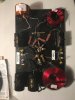
The latest pic is the first crossover finally finished I will add the leads to the drivers later
Not pretty but functional I'm not trying to win any engineering awards
I'm looking for sound and durability should be good!
!
 
Thanks!
I basically started with the board the basic parts layout and went from there
I was more concerned how the multiple connections we're going to pan out not exactly what I wanted but it'll work
I had a number of different schemes for the resistors but this seemed to make the most sense and have the fewest connections
It doesn't look as nice as my other plan but again it will be serviceable
The second one will be slightly different the way I run several of the connections because I had some mistakes
 
It's really too bad they discontinued the Dayton's
I think a lot of people overlook them and didn't realize how good they actually are and how low they will actually go with spl and low distortion and awesome transient response
A lot of the guys at parts express knew how good they were and really disappointed they were discontinued they didn't understand it either
The only problem I have with talking with them- can't recall the gentleman's name but he was the one that always dealt with this line of woofers
They seemed more concerned about the power handling versus how they actually sound
I have my box tuned to 38 Hz and for the exception of what I mention they're perfect
You could actually tune and them to around 41 Hz and probably not have this problem
They always wanted you to tune them higher 46-48hz for power handling
Part of this could be they were used in a lot of pro settings
But the bottom line is they don't need a lot of power to play loud and clean- so I doubt anyone in the home setting would overdrive them
After doing some research the surrounds on the Daytons, Santoprene is closer to foam the rubber in the way it's made Cheaper than vulcanized rubber.
 
Last edited:
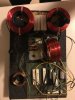
4 coil crossover minus the brightness switch before I pull the plate off to use on my second hardwire crossover
Note 8 resistor Zobel in the woofer circuit image.jpeg
 

Attachments

  • image.jpeg
    image.jpeg
    94.3 KB · Views: 9
  • image.jpeg
    image.jpeg
    65.1 KB · Views: 10
  • image.jpeg
    image.jpeg
    85.8 KB · Views: 9
I have to say after all these years I'm still amazed how well the speakers turned out with the Dayton's
I've been running I'm wide-open the last couple hours in the bass detail still just blows my mind
Whether it's fat - crunchy- lean in fast and they put it right out there in front of you the way it should be
It's really too bad ESS didnt figure out how to do this back in the 70s
I wonder how good their new speakers actually sound but I bet they don't even come close to a Dayton equipped/modded AMT3
Accurate I don't know accurate enough but they play music that's all that matters
 
Last edited:
I don't know why ESS didn't exploit the large crop of modern 5 - 6 inch fast drivers to make a modern rendition of the AMT3. One of the point source drivers would be a good compliment to the Heil and allow for a higher crossover point.
As I'm happy as a clam with the Daytons, I have to live vicariously through someone else developing the next generation of Rock Monitor hot rodding. I'd like to hear the results of someone using the Visaton woofers, but I'm not holding my breath as it seems that the case volume is not desireable for a pair of them per this note on their PE page:

Note: For best bass performance, install the W250S into one of the following cabinets:
• A 1.77 cubic foot cabinet tuned to 43 Hz with two 2-1/2" diameter ports that are 5-3/4" long.
• A 2.47 cubic foot cabinet tuned to 39 Hz with two 2-1/2" diameter ports that are 5-3/4" long.
• A 3.53 cubic foot cabinet tuned to 34 Hz with two 2-1/2" diameter ports that are 3-15/16" long.

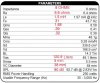
By this criteria, an ESS monitor cabinet could only accomodate 1 woofer. The TS parameters between the Daytons and the Visatons seem disparate enough to make the potential outcome a mystery: (Dayton spec sheet with comparable Visaton specs in red)
VisatonComparison.JPG

This, from the Visaton page at PE seems hopeful, even though it contradicts the abovementioned volumes and port specs:

Optimum Cabinet Size (determined using BassBox 6 Pro High Fidelity suggestion)
Sealed Volume0.8 ft.³
  • Sealed F376 Hz
  • Vented Volume1.65 ft.³
  • Vented F347 Hz
One may have an easier time searching for a driver that would work out in a sealed environment, like the discontinued Eminence 1040SF. There's just not a lot of volume there for a pair of woofers.

 
Back
Top Bottom