• Please note that Audiokarma will be offline briefly for updates early on Monday morning, September 28th.

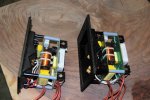
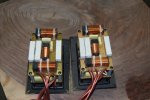
Experimental Heresy Three Crossovers

Daveintn

AK Subscriber
Subscriber
Kirby was a well known Klipsch Head from the Klipsch forum. He used to stop in every year to subject himself to the Super MWM's and talk audio and be snoopy to see what was new here. Sadly he died doing what he loved and while skiing with his son ran into a tree and died. Miss you Kirby. His last visit here he brought some things he was not going to use and figured a tinkerer like me would enjoy. One of them was a set of experimental H3 crossovers from the Klipsch facility where Roy did his R&D. The group Kirby was with was told they could pick some things off a table and take them home if they wished. This crossover was his choice and I have never plugged it in to see how it works.
 

Attachments

  • FRONT.jpg
    FRONT.jpg
    86.3 KB · Views: 29
  • SIDE ONE.jpg
    SIDE ONE.jpg
    91.5 KB · Views: 29
  • SIDE TWO.jpg
    SIDE TWO.jpg
    107.3 KB · Views: 29
  • BACK.jpg
    BACK.jpg
    93.6 KB · Views: 27
Register to hide this ad
I'm sure it works fine with the the right drivers. Keeping in mind that plastic, resistors, printed wiring boards (my former profession) in batch Wave Soldering are way CHEAPER than wood, hand wiring, and Autoformers in a production environment of higher volumes and Cost Cutting Management's goals of more profits!
 
@mboxler is playing with PCB’s. I do wonder if there will be any audible difference between them and my time consuming laborious builds. I doubt it, but it will not be easy convincing some.
 
@mboxler is playing with PCB’s. I do wonder if there will be any audible difference between them and my time consuming laborious builds. I doubt it, but it will not be easy convincing some.
I once did a thesis on the volume resistivity of copper. Mostly for High Current applications where I had to output 500 amperes of current for an electric bus. Copper makes a great and expensive heat sink, which is why everyone uses aluminum.

2 oz. copper on a single side works fine for Crossovers, just use minimal etch or copper pour techniques in CAD. IOW don't rinse away all the copper you paid for. Use it!
 
2 oz. copper on a single side works fine for Crossovers, just use minimal etch or copper pour techniques in CAD. IOW don't rinse away all the copper you paid for. Use it!
An easy method to know how WIDE to make a connection with 2 oz. copper on a single sided PC board, is to do an equivalent Solid Wire gauge analysis vs. the planar nature of copper on the board.
The the Solid Wire gauge has the Worst thermal emissivity via, the least amount of surface area to air. So if it passes the worst case thermal test in the solid AWG form, it will always be better on the pcb via the huge gain in surface area to air.
 
Back
Top Bottom