• The move to the new server is done. There are some software and database maintenance updates in process. This has us passing the hat around to help out. We appreciate any donations. Seriously, even a dollar helps. The payment page may be found here - https://www.audiokarma.org/support.html

External FM Antenna Options for Vintage Receiver

PMCA88

New Member
All,

I have just purchased a Setton RS220, vintage receiver. It seems to be in excellent cosmetic and working condition. The only issue which I have found thus far is that the FM reception is awful. As such I would like to augment the receiver with an indoor external antenna. Ideally it would be an antenna which I don’t need to plug into the mains and which I can hide away.

For those of you unfamiliar with the Setton RS220, there is some more info to be found at the following location:
http://www.hifi-studio.de/hifi-klassiker/Setton/Setton_RS220/RS220.htm

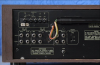
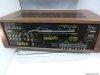
Also please see attached some pics of the rear of the receiver.

I am pretty clueless about audio systems, although I am beginning to learn a little, with input from good people like yourselves. I have several specific questions which perhaps you could help me with:

1) I assume that on the Setton (as seen in the images) the terminals to which one can connect an external antenna are screw type terminals and if so they take either spade/ring connectors to connect to an external antenna. Is this assumption correct? Specifically does my receiver need a spade/ring type connector on any external antenna?

2)For FM there appears to be two different types of external antenna option, a 75ohm and a 300ohm. What is the difference between the two? Which option should I take?

3)For the two options of external antenna described above there appears to be a different way to connect the external antenna. For the 300ohm option it seems that two wires should be connected to the receiver. Is this correct? However I am less clear on what to do for the 75ohm setup, is there only one wire for this option?

4)There is a ground terminal, do I need to connect anything to this, or is that just for an AM antenna?

5)What is the best type of external antenna for my needs? I will want to buy the antenna on eBay, do you have any suggestions? I found a few options (I am very much open to other options though):
http://www.ebay.co.uk/itm/FM-Dipole-Indoor-Antenna-HD-Radio-SPADE-TERMINALS-Connector-RIBBON-AERIAL-/321949021634?hash=item4af5a835c2:g:TAsAAOSwAYtWLkr7
http://www.ebay.co.uk/itm/Indoor-Digitaal-TV-Antenna-VHF-UHF-TV-Freeview-Digital-Telescopic-FM-Radio-/201506336762?hash=item2eeab6affa:g:9a4AAOSwfZ1WbhWV
http://www.ebay.co.uk/itm/Indoor-Portable-HD-TV-Aerial-With-Telescopic-Antenna-FM-VFH-/181982136666?hash=item2a5efb095a:g:QzAAAOSwKrxUZZ2o
http://www.ebay.co.uk/itm/Active-Indoor-Loop-TV-Antenna-50dB-Black-Superior-UHF-VHF-TV-and-FM-DAB-RADIO-/121870745948?hash=item1c6010015c:g:5U4AAOSwGotWn7pB
http://www.ebay.com/itm/NEW-GENUINE-SONY-1-754-399-11-ANTENNA-LOOP-175439911-AM-FM-OEM-/191678033273

6)Some of the options I have listed above don’t take the spade/ring connectors, for example one has a coaxial connector. Would it be possible/suitable to use an adaptor, for example the one below:
http://www.ebay.com/itm/UHF-VHF-FM-Gold-Plated-75-300-Ohm-TV-Coaxial-Antenna-Cable-Matching-Transformer-/252189063331

Many thanks for your time and advice,
Peter
 

Attachments

  • Setton 1.jpg
    Setton 1.jpg
    77 KB · Views: 135
  • Setton 2.PNG
    Setton 2.PNG
    549 KB · Views: 143
Register to hide this ad
A lot depends on your local reception conditions. How far away are your
desired stations? An indoor dipole may not get the distance you need. It
would help to know the direction they are from you, too, though it's not
required.
 
RxDx, many thanks for your reply. Conditions for local reception are good. The nearest transmitting station for the radio station I listen to (a national station) is 14 miles away to the south west. I have a crappy radio which I have connected a wire cable to and it manages to pick up the channels ok. I tried connecting this same cable to the Setton receiver (it was the wrong connecton so I could only touch the terminal and wire end together) and it improved the signal a little but it was still not ideal. Peter
 
Last edited:
I was thinking, I have a box of Phone wire I was going to fish outside and wire up a car antenna to it on my roof.
I think this may help me???
In my car or truck I get all the stations I would like in the house.
Worth a shot.
 
I was thinking, I have a box of Phone wire I was going to fish outside and wire up a car antenna to it on my roof.
I think this may help me???
In my car or truck I get all the stations I would like in the house.
Worth a shot.
Many thanks for your reply Brunis, if other options fail I will look into that one. Peter
 
Any receiver requires an antenna. They do not come with an internal FM antenna, although many have a built in AM antenna. I think this is the source of your confusion. Just buy a T shaped FM Dipole antenna and connect it to the 300 Ohm antenna terminals. Then hold the antenna in a T shape with your arms stretched out and turn to find the best direction. If you can, mount it so that it is in that orientation. If not, just mount it on the wall in back of the receiver, as high as possible and stretched out. You can experiment with putting the arms of the T horizontal (which will make it directional) or vertical which makes it omnidirectional.
 
Any receiver requires an antenna. They do not come with an internal FM antenna, although many have a built in AM antenna. I think this is the source of your confusion. Just buy a T shaped FM Dipole antenna and connect it to the 300 Ohm antenna terminals. Then hold the antenna in a T shape with your arms stretched out and turn to find the best direction. If you can, mount it so that it is in that orientation. If not, just mount it on the wall in back of the receiver, as high as possible and stretched out. You can experiment with putting the arms of the T horizontal (which will make it directional) or vertical which makes it omnidirectional.

Many thanks dr*audio, very helpful reply, I will do just that. Do I need to do anything with the ground terminal? Peter
 
This seems to be an ongoing question whereas many folks have little to no experience with antennas or broadcast reception. VHF frequencies are for the most part line of sight. This means they go over terrain and are reflected or get blocked by structures in their path.

the best option is to use a BEAM type antenna and get it up into the air above the surrounding structures. this could be houses, building even trees that block signals from being received. For most people living in a metropolitan area or within say 20 to 30 miles of the transmitters sites a simple DiPole as described above will allow them to receive many commercial broadcast stations. If you live further away or have the option of living between areas of major stations a BEAM antenna and a rotor will allow you to point the antenna and narrow onto the signal for best reception.

there are many companies that make outdoor antennas. Do some research ask a local amateur radio operator to help you find the best antenna for your area. Antennas vary in gain, and other criteria so for you particular needs it is important to do some research as it may provide you with the ability to get programs form small powered stations and their programming may be something you either like or come to like as you listen.

I personally use stacked yagis for reception of a low power college Jazz station and its transmitter is almost 60 miles from me. I am actually 27 miles outside its extreme fringe area and by all accounts should not be able to receive it even in mono setting but I have managed through use of the proper antennas, 75 ohm coax and selective pointing to get a solid stereo signal and hear the programming without issue. It just takes a little planning and effort if you want to use a tuner to its full capability or just be stuck with what you can get from an indoor DiPole antenna.

Best of luck
Hermit
 
Here is a company that makes possibly the best quality antennas for amateur use. If you want a serious outdoor FM broadcast antenna check these out:

http://www.innovantennas.us/antennas-a-accesories/on-line-shop/22/88-108-broadcast-band

I have no connection with this company I just use their products for Amateur Radio and have put up a few of these FM broadcast examples for my myself and friends. These in my opinion are some of the best possible antennas for quality, longevity and reception one could get. They aren't cheap but they work when nothing else will, stand up to extreme weather conditions and once up are about the least problematic of anything available. They are in addition the best performing antennas I have ever used and I have used many. One bonus is they are the quietest antennas you can buy.

By quietest I mean in external noise they are engineered to reduce noise which does affect reception. The better the ability of the antenna to receive (GAIN) verses selectivity (BEAM WIDTH) allows the user to pin point and maximize their receive. If they are also in FM DXing these antennas are simply the go to item and provide the best possible solution. Extreme DXers would of course use several couple together to max out their gain/selectivity and have the best possible reception period. With just one of the 17 element models we have been able to get stations as far off as TEXAS from Southern CALIFORNIA and that is no small feat. For local reception it completely eliminates any interference from close stations including those having several if not 10-20 times the ERP (Effective Radiated Power Levels) of the small college stations we were trying to lock onto. Multi-path (fluttering, picket fencing sounds) issues were no longer a concern as we could dial onto the desired station and eliminate again issues from that.

Hope that helps to provide some additional information with regard to antennas/FM-reception/use.

Hermit
 
Any receiver requires an antenna. They do not come with an internal FM antenna, although many have a built in AM antenna. I think this is the source of your confusion. Just buy a T shaped FM Dipole antenna and connect it to the 300 Ohm antenna terminals. Then hold the antenna in a T shape with your arms stretched out and turn to find the best direction. If you can, mount it so that it is in that orientation. If not, just mount it on the wall in back of the receiver, as high as possible and stretched out. You can experiment with putting the arms of the T horizontal (which will make it directional) or vertical which makes it omnidirectional.


A little bit of additional information regarding orientation of a DiPole antenna. the diPole is basically 2 quarter wave elements connected to in this case a feedline (to make a 1/2 wave length antenna) that you can connect to the 300 ohm connections. It is omni-directional in both the 'horizontal polarization" configuration and if you rotate it 90 degrees it becomes omni-directional in the "vertical" polarization.

What usually occurs when using it in the standard TEE configuration is you will find that it becomes a bit more selective depending on where it is mounted with regard to the direction of where the signal (Transmitter) site is located. Most vehicle antennas are vertical because it is easier to mount them and for the directivity increase the you would notice on a moving vehicle it serves best to have it positioned in that manner. A fixed location as is the case with most stereo receivers/tuners often Horizontal is the best proven method to use.

The other question you asked about 75 vs 300 ohm connections:

Both impedance 75/300 are common for feed-lines to and from antennas. The newer 75 ohm has in some cases better shielding and is used more today that the 300 ohm flat lead. There are trade offs for each. The older style 300ohm is really better in wet or high humidity environments since the 75 ohm coax has issues if the interior has moisture or water vapor inside it. The 75 ohm works better due to the insulation on the newer RG-6 version to prevent loss over longer runs and stray RF signals being picked up. The 75 ohm also needs special end terminals and those have to be properly installed or the issue with moisture is a likely issue and the movement of it can produce noise and loss of signal.

Your unit doesn't have the newer type 75 ohm screw on connector so you would either fold back the braid and connect the center to the single terminal with that little fold over metal strap taking the shield to ground or use a 300-75 balun adaptor to connect it to the 300 ohm terminals on the back. Both feed lines are available with 75 ohm being easiest to find since it is used for TV, Cable and Satellite (Direct and Dish TV) installations.

Their is a lot more info but hopefully this helps answer your other questions.

One final point grounding is something you really want to pay attention to especially if you live in areas of storms or electrical storm areas, It really helps eliminate a lot of noise on receive if done properly. anyone who suggests against doing it is simply not aware of what they expose themselves to nor the benefits to using a proper ground. If you listen to AM it really should be done and it helps quite a bit for FM reception again if done properly.

Hermit
 
A little bit of additional information regarding orientation of a DiPole antenna. the diPole is basically 2 quarter wave elements connected to in this case a feedline (to make a 1/2 wave length antenna) that you can connect to the 300 ohm connections. It is omni-directional in both the 'horizontal polarization" configuration and if you rotate it 90 degrees it becomes omni-directional in the "vertical" polarization.

What usually occurs when using it in the standard TEE configuration is you will find that it becomes a bit more selective depending on where it is mounted with regard to the direction of where the signal (Transmitter) site is located. Most vehicle antennas are vertical because it is easier to mount them and for the directivity increase the you would notice on a moving vehicle it serves best to have it positioned in that manner. A fixed location as is the case with most stereo receivers/tuners often Horizontal is the best proven method to use.

The other question you asked about 75 vs 300 ohm connections:

Both impedance 75/300 are common for feed-lines to and from antennas. The newer 75 ohm has in some cases better shielding and is used more today that the 300 ohm flat lead. There are trade offs for each. The older style 300ohm is really better in wet or high humidity environments since the 75 ohm coax has issues if the interior has moisture or water vapor inside it. The 75 ohm works better due to the insulation on the newer RG-6 version to prevent loss over longer runs and stray RF signals being picked up. The 75 ohm also needs special end terminals and those have to be properly installed or the issue with moisture is a likely issue and the movement of it can produce noise and loss of signal.

Your unit doesn't have the newer type 75 ohm screw on connector so you would either fold back the braid and connect the center to the single terminal with that little fold over metal strap taking the shield to ground or use a 300-75 balun adaptor to connect it to the 300 ohm terminals on the back. Both feed lines are available with 75 ohm being easiest to find since it is used for TV, Cable and Satellite (Direct and Dish TV) installations.

Their is a lot more info but hopefully this helps answer your other questions.

One final point grounding is something you really want to pay attention to especially if you live in areas of storms or electrical storm areas, It really helps eliminate a lot of noise on receive if done properly. anyone who suggests against doing it is simply not aware of what they expose themselves to nor the benefits to using a proper ground. If you listen to AM it really should be done and it helps quite a bit for FM reception again if done properly.

Hermit

Vey comprehensiver replies Hermit. Many thanks for your input.

In the future I hope to purchase an outdoor antenna and I will revisit this post to take advantage of the information you provided on that topic.

I have now successfully set up a dipole antenna. There resultant sound quality is not ideal (there is a bit of crackle) but by using the mono setting and the "HIFIL" button on the receiver it seems to work out pretty good. Do you think that these options will degrade the sound quality?

I havent bothered to ground my receiver via the ground terminal. I believe that it will be ground already via the UK 3-pin plugs. Is that assumption correct?

Once again many thanks for your comprehensive reply. All the best,

Peter
 
Vey comprehensiver replies Hermit. Many thanks for your input.

In the future I hope to purchase an outdoor antenna and I will revisit this post to take advantage of the information you provided on that topic.

I have now successfully set up a dipole antenna. There resultant sound quality is not ideal (there is a bit of crackle) but by using the mono setting and the "HIFIL" button on the receiver it seems to work out pretty good. Do you think that these options will degrade the sound quality?

I havent bothered to ground my receiver via the ground terminal. I believe that it will be ground already via the UK 3-pin plugs. Is that assumption correct?

Once again many thanks for your comprehensive reply. All the best,

Peter

Sounds like the issue could be several things:

1. is there a meter on this unit and if so is the reading close to the full reflection? If not you might need to re-orient the antenna a bit or possibly install something of a higher gain.

2. It might mean it needs a bit of clean but that isn't the usual case.

The noise or bit of noise requiring the Hi-Blend is that the receiver isn't getting enough signal to "lock onto" the full signal to allow full stereo reception and the 19kHz pilot tone is causing a slight nuisance in the received signal and the Tuner can't quite rectify it well enough. (rectify is an old term from the 30's but Iike to toss it out now and again especially when I chat with someone who understands the old British terminology from the Golden Era of radio.

I would suggest you try a bit of antenna movement to see if the signal increases if you can see the meter or you can always find an older TV aerial to hook up outside and find out if the issue was simply not enough signal to the tuner. It may be as simple as that to allow you to realize full stereo sound. IF you are still getting noise email me and we can try some other avenues to help get that monster under control.

It should at least allow for flat lead 300 ohm or 75 coax (round) style cable to the rear inputs. If you have just the 300 ohm inputs you can get a balun for 75-300 ohm fairly readily or I could send one along if you can't find one. Just let me know. I couldn't let a fellow AK'er have to put up with less than the best possible reception if I could do something to assist now that wouldn't be sporting.


Hermit
 
Sounds like the issue could be several things:

1. is there a meter on this unit and if so is the reading close to the full reflection? If not you might need to re-orient the antenna a bit or possibly install something of a higher gain.

2. It might mean it needs a bit of clean but that isn't the usual case.

The noise or bit of noise requiring the Hi-Blend is that the receiver isn't getting enough signal to "lock onto" the full signal to allow full stereo reception and the 19kHz pilot tone is causing a slight nuisance in the received signal and the Tuner can't quite rectify it well enough. (rectify is an old term from the 30's but Iike to toss it out now and again especially when I chat with someone who understands the old British terminology from the Golden Era of radio.

I would suggest you try a bit of antenna movement to see if the signal increases if you can see the meter or you can always find an older TV aerial to hook up outside and find out if the issue was simply not enough signal to the tuner. It may be as simple as that to allow you to realize full stereo sound. IF you are still getting noise email me and we can try some other avenues to help get that monster under control.

It should at least allow for flat lead 300 ohm or 75 coax (round) style cable to the rear inputs. If you have just the 300 ohm inputs you can get a balun for 75-300 ohm fairly readily or I could send one along if you can't find one. Just let me know. I couldn't let a fellow AK'er have to put up with less than the best possible reception if I could do something to assist now that wouldn't be sporting.


Hermit
Hi Hermit,

Many thanks for taking the time to help me out.

I have toyed with some of your suggestions over the last few days.

The company I bought the receiver from cleaned out the internals proir to my purchase so I would hope thats not the issue.

Regarding hooking up a coax- in an ideal world thats what I would do however, I live in a rented appartment, I dont know how secure the external antenna on the building is (its probably a few decades old), specifically I dont know if its ground properly. As such I wouldnt like to hook it up to my receiver. In the future when I eventually own my own house, I would plan to get an external antenna and coax hooked up that I am happy to connect to the receiver.

Using the current dipole antenna the signal meter reads ~1.3 on a scale of 1-5, so I guess that means that its not getting a very strong signal. The reason why I have positioned the antenna in its current position is that its hidden from view, I didnt want it visible in the living room...I realise if it was more visible it would probably get more signal.

What I will try doing is finding a better but still hidden position for the antenna, which affords a greater signal strenght. However as I mentined in my previous post, even with the signal strenght weak when I use the mono setting and the "HIFIL" button on the receiver I get a relatively clean sound (there is very minor crackle when I hold my ear up to the speaker, not audible unless I do this). To be honest I really cant hear any difference, other than eliminating the crackle, in sound quality when I turn on mono and HIFIL. If I decided to live with this option can you tell me if
1)Mono and HIFIL degrades the signal somewhat (even though I cant seem to hear a degredation)?
2)Would a very minor amount of crackle on the speakers cause them any damage?

Many thanks for your continued support.

All the best from a stormy Scotland,

Peter
 
By quietest I mean in external noise they are engineered to reduce noise which does affect reception. The better the ability of the antenna to receive (GAIN) verses selectivity (BEAM WIDTH) allows the user to pin point and maximize their receive. If they are also in FM DXing these antennas are simply the go to item and provide the best possible solution. Extreme DXers would of course use several couple together to max out their gain/selectivity and have the best possible reception period. With just one of the 17 element models we have been able to get stations as far off as TEXAS from Southern CALIFORNIA and that is no small feat. For local reception it completely eliminates any interference from close stations including those having several if not 10-20 times the ERP (Effective Radiated Power Levels) of the small college stations we were trying to lock onto. Multi-path (fluttering, picket fencing sounds) issues were no longer a concern as we could dial onto the desired station and eliminate again issues from that.

Hope that helps to provide some additional information with regard to antennas/FM-reception/use.

Hermit

If I were an extreme DXer for hobby purposes, I would have to have it with one antenna mounted on a rotor. Never heard of DX from southern California to Texas unless it came via E-skip, which didn't last long.
 
Last edited:
If you are going with an external antenna, you should have two antennas - an Omni to alert you that there is a station on that frequency and a narrow beam antenna on a rotor to tune in the station with maximum signal-to-noise ratio and minimum multipath.
 
Back
Top Bottom