• The move to the new server is done. There are some software and database maintenance updates in process. This has us passing the hat around to help out. We appreciate any donations. Seriously, even a dollar helps. The payment page may be found here - https://www.audiokarma.org/support.html

Feeding the Sansui bug

jeeem

Active Member
I think it bit me. I remember Sansuis from the '70s, which were talked about in tones of awe rivaled only by McIntosh and Marantz. My first equipment as a teenager was mainly midline Pioneer, Kenwood -- still good-sounding and good-looking stuff -- but about five years ago I bought my first Sansui. I'd like to get your advice on what you can recommend I seek out to complement the Sansui receivers I already have, which are:

1000A (tube) (1967)
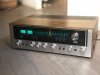
8080DB (1975)
4000 (1969)
G-6000 (1978)
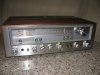
Classique 550 (about which I've been able to learn practically nothing, but it was dirt cheap)

Got any Sansui gems you can recommend?
 
Last edited:
Register to hide this ad
....Highly recommend the AU-9900....had been looking for a AU-11000 or a AU-20000 but all the dealer could get me was the AU-9900....am really pleased with it..
..you have a nice collection started.....in Receivers, I would look for an 881..or a 9010...
......my next buy will be a 717..
 
You have a pretty nicely rounded collection already, covering the tube era (1000A), cap coupled early solid state (4000), the first generation monster receveiver era (8080DB), the Pure Power DC era with the G6000. The Classique 550 is kind of an unremarkable 80's rack system era unit, so the first three in your list are the real treasures.

Depending on your objectives and budget, there are a couple of ways you can go from here. If you really enjoy receivers and want to collect them specifically, there are many models between and beyond what yoy already have. The third G series (G-4700-9700) are very good, and a bit more modern in aesthetics, being from the 1980 model year.

If you want to dabble in separates, a TU-717/AU-717 combo is a very nice starting point that is highly regarded still somewhat reasonable to buy. The 719 and 919 iterations are also great but more expensive. The first gen X balanced amps like the AU-G99X are excellent and still somewhat overlooked, but no longer found cheap owing to their having been "discovered" by the masses

If you are interested in rarities, thd AU-70/TU-70 tube amp and tuner combo is really nice (or just the amp) but will need full restoration to be usable. Later rarities like the X balanced pre and power amps, and alpha series models are excellent amps but very pricey. Many area of these are only available as Japanese market models meaning they run on 100 volts input and need a step down transformer to use anywhere else in the world. Most often they have to be purchased and imported from Japan which makes them even more costly up front.

Finally, there is quad. If you are interested in that, the QRX-9001 is the definitve statement in quad receivers. It will have the same basic sound as the 8080DB you have now, but adds two channels plus quad decoding and synthesis capabilities (the latter "creating'" quad from stereo material). The overwhelming majority of my listening anymore is to quad, so be careful as once you have gotten in that mindset, regular stereo can sound underwhelming. It also requires committing room for four speakers, something that not everyone can manage due to space constraints and spousal approval factor.
 
Thanks, all. I don't know why my Sansuis are all receivers since FM reception is terrible where I live (I usually use streaming to listen to live radio).

Well, yes I do:

IMG_6352.jpeg

I love those gorgeous tuning dials!
 
Last edited:
Thanks, all. I don't know why my Sansuis are all receivers since FM reception is terrible where I live (I usually use streaming to listen to live radio).

Well, yes I do:I love those gorgeous tuning dials!

Then you'd love the QRX-8001 and 9001. The tuning needle is behind a mask that represents a "wave" and as you tune the FM, it follows the wave up and down. Each crest and trough represents a frequency. The AM portion is at the bottom, but is a straight line.
 
I second the 5000x, great sounding receiver,

Third!...but he does have a 4000 already..

7000 is a big cap coupled rarity with many fans, same as a 5500 is special.

Eight or Eight Deluxe would probably win your heart if you stay with the earlier offerings.
 
Or QRX9001
Or 9090DB

One of the big guys.......
:beerchug: I have both of these, plus 6001 and 7001. I love the power of the 9090DB and it's wonderful sound. The QRX-9001 in X2 mode (stereo front speakers only) is so close to the 9090DB in power, you can't tell the difference. But in Quad mode, you can't beat the overall sound. Synthesized quad with stereo source material is really awesome. And the "effect" with TV/DVD/Blu-Ray is very good compared to actual home theater "surround" receivers. Even the QRX-8001 would be identical in "sound" and aesthetics, but slightly less power, and no Dolby. The QRX-6001 and QRX-7001 share the exact same quad boards as both of their bigger Brothers. But the aesthetics are more "old school", and have no power meters. If you prefer the "old school" look, the 6001/7001 would be your choice. If you want a much better, slightly more "modern" look and power meters, the 8001/9001 is the choice. The "quad effect" is virtually the same in all 4 of them. The other Sansui quads just don't quite compare, though are decent on their own. And don't discount the 7001's power. With all 4 speakers, it gets very loud.
 
Third!...but he does have a 4000 already..

7000 is a big cap coupled rarity with many fans, same as a 5500 is special.

Eight or Eight Deluxe would probably win your heart if you stay with the earlier offerings.
Don't forget about the SIX. It has a very pleasing sound signature and plenty of power for it's size. Plus the tuner is excellent in them. I love my Sansui SIX.
 
I think it bit me. I remember Sansuis from the '70s, which were talked about in tones of awe rivaled only by McIntosh and Marantz. My first equipment as a teenager was mainly midline Pioneer, Kenwood -- still good-sounding and good-looking stuff -- but about five years ago I bought my first Sansui. I'd like to get your advice on what you can recommend I seek out to complement the Sansui receivers I already have, which are:

1000A (tube) (1967)
8080DB (1975)
4000 (1969)
G-6000 (1978)
Classique 550 (about which I've been able to learn practically nothing, but it was dirt cheap)

Got any Sansui gems you can recommend?

The Classique 550 is kind of an unremarkable 80's rack system era unit, so the first three in your list are the real treasures.

Actually the Classique 550 is from the 70s, not the 80s and isn't a rack unit. It is, for all intents and purposes, a silver faced 6060 with white lights.

6060 1.jpg
classique 550 1.jpg

Almost no one seems to know what it is and frequently misidentify it as a Classique A-550 and thus undervalue it

a-550.jpg


Here is a link to a thread of my findings on Classique 550: https://audiokarma.org/forums/index.php?threads/sansui-classique-550.941364
 
Last edited:
Ah, one of those. Sansui first used the Classique branding on reissues of certain models (often with cosmetic tweaks) that were sold as part of a bundle system (receiver, turntable, two speakers or similar) so essentially a precursor of the rack system marketing approach that hit full bore about 1981-82.

The Classique 550 was thus a quick and easy way to squeeze a few more dollars (Yen?) out of an existing model nearing the end of it's run and which already had it's sunk costs long since covered from previous sales. There is a good chance it was originally bundled with an inexpensove semi auto turntable and a couple of very average mass market speakers when sold new. Also, probably was sold at a department store or a deep discount dealer ike Crazy Eddie's (wasn't that the name fo the joint?).

These combo systems were a marketing gimmick probably done at the behest of certain mass retailers so they could sell a complete functional system at one price, and avoid comp shopping (and price matching) at the same time.

This is still common practice today with big retailers like Best Buy or Walmart who have enough pull to get their own versions of a product like a TV or computer that often are nothing more than a model number change of an existing identical product. Presto, no price matching or comp shopping possible because "oh, it's a different model". Heh, yeah. What you did there; I saw it. So slick you almost had me fooled.

The first few applications of the Classique sub-brand were in the lateish 70's. It really got heavy use though starting in about 1981 with several of the Super-compo series models being offered concurrently under two model numbers, one conventional like the T-7 tuner or the A-9 integrated amp as a couple of examples, and alternate versions that were virtually unchanged save the model number and having the Classique designation applied.

This practice continued into at least 1985-86 from what I can surmise from ads and marketing material of the era. Later iterations from 1983-84 onward may have actually had cost reductions made to the Classique badged models by way of omitting a feature or two as a means of further justifying the split-identity product lines and further enhance the profitability of the decontented versions.

What is the serial number on that Classique 550? I'm curious now to see if it falls within the regular production timeframe of the 6060/690 that obviously spawned it, or if it was made a bit later to milk the already extant tooling and production capabilities to get another few months of additional profits from the 6060's "carcass" after it had been discontinued. If there is no overlap in production dates, then I suspect the latter to be the case. Obviously it will take more than one data point to establish that.

 
Ah, one of those. Sansui first used the Classique branding on reissues of certain models (often with cosmetic tweaks) that were sold as part of a bundle system (receiver, turntable, two speakers or similar) so essentially a precursor of the rack system marketing approach that hit full bore about 1981-82.

The Classique 550 was thus a quick and easy way to squeeze a few more dollars (Yen?) out of an existing model nearing the end of it's run and which already had it's sunk costs long since covered from previous sales. There is a good chance it was originally bundled with an inexpensove semi auto turntable and a couple of very average mass market speakers when sold new. Also, probably was sold at a department store or a deep discount dealer ike Crazy Eddie's (wasn't that the name fo the joint?).

These combo systems were a marketing gimmick probably done at the behest of certain mass retailers so they could sell a complete functional system at one price, and avoid comp shopping (and price matching) at the same time.

This is still common practice today with big retailers like Best Buy or Walmart who have enough pull to get their own versions of a product like a TV or computer that often are nothing more than a model number change of an existing identical product. Presto, no price matching or comp shopping possible because "oh, it's a different model". Heh, yeah. What you did there; I saw it. So slick you almost had me fooled.

The first few applications of the Classique sub-brand were in the lateish 70's. It really got heavy use though starting in about 1981 with several of the Super-compo series models being offered concurrently under two model numbers, one conventional like the T-7 tuner or the A-9 integrated amp as a couple of examples, and alternate versions that were virtually unchanged save the model number and having the Classique designation applied.

This practice continued into at least 1985-86 from what I can surmise from ads and marketing material of the era. Later iterations from 1983-84 onward may have actually had cost reductions made to the Classique badged models by way of omitting a feature or two as a means of further justifying the split-identity product lines and further enhance the profitability of the decontented versions.

What is the serial number on that Classique 550? I'm curious now to see if it falls within the regular production timeframe of the 6060/690 that obviously spawned it, or if it was made a bit later to milk the already extant tooling and production capabilities to get another few months of additional profits from the 6060's "carcass" after it had been discontinued. If there is no overlap in production dates, then I suspect the latter to be the case. Obviously it will take more than one data point to establish that.

According to @LBPete, production for the 6060 ended in 3/78. Mine is in the database and has manufacture date of 6/78 but there is another that has a 3/78 manufacture date.

fyi: I grew up in NYC so I know all about Crazy Eddie. His prices were INSANE!!!
 
Last edited:
Back
Top Bottom