• The move to the new server is done. There are some software and database maintenance updates in process. This has us passing the hat around to help out. We appreciate any donations. Seriously, even a dollar helps. The payment page may be found here - https://www.audiokarma.org/support.html

Fisher 400 heat with Cabinet Installed

sony6060

Super Member
Banned
Anyone concerned how hot the Fisher 400 or 500/800 becomes placed in the wood cabinet? I wish Fisher manufactured a metal cabinet.

I ordered a 17 cfm fan to be place behind the power transformer and HV capacitors. The heat shield around the 7868 tubes will make for a convenient shroud directing air flow around the interior. I plan to have the fan blow out, not in. The 120 volt AC outlet on the back panel is handy too. The new fan only produces 17dB of noise & likely inaudible.
 
Register to hide this ad
Lots of tube equipment runs stunningly hot, sometimes more so than is healthy. I've got some stuff that runs so hot in it's metal cabinet you could probably fry eggs on it. Doesn't seem to bother the tubes much, but its hell on the passive components. Moving some air through the cabinet helps tremendously.
 
I run a small muffin fan behind my 500-c , just personal preference, I can't see how added heat can aid transformers in performance.
 
It's hard to know if this hot is the standard hot or there's a change because of your power supply upgrade.
I've always made it a point to bias the outputs somewhat below max dissipation and have never had a problem. Around 32ma is good.
If it's the standard hot, you can look on ebay most any day of any week and find at least one untouched 400 that still runs almost 50 years after initial sale with original tubes.
If your cabinet is custom, make sure the cutouts on the bottom allow the vent holes in the chassis bottom cover to draw air in.
 
It's hard to know if this hot is the standard hot or there's a change because of your power supply upgrade.
I've always made it a point to bias the outputs somewhat below max dissipation and have never had a problem. Around 32ma is good.
If it's the standard hot, you can look on ebay most any day of any week and find at least one untouched 400 that still runs almost 50 years after initial sale with original tubes.
If your cabinet is custom, make sure the cutouts on the bottom allow the vent holes in the chassis bottom cover to draw air in.

The power supply mod did not make the power transformer hotter as a final result. The -19 volts bias vs -16.5 results in cooler 7868 tubes plus less demand on the power transformer even with higher input filter capacitance. Power supply software modeling also indicated less stress after the bias & B+ filter upgrade. I estimate the transformer operating at 140F.

I just never ran the Fisher 400 in a case before. The fan will increase life for the can electrolytic next to the transformer and perhaps slightly better life for some other components.
 
I have my Fisher 400 in a wood case. Maybe I'm off calibration but I thought it was one of the cooler running pieces due to the silicon rectifiers. In the 400 the power tubes are directly over the vent in my unit. What does your case look like?
 
Silcon rectifier or not your still lighting up 16 tubes and running lights and a relay (at least in my 500-c) I found the transformer to get somewhat hot, with a fan it just brings down the temp and with my luck with transformers I need all the cooling I can get.
 
I have my Fisher 400 in a wood case. Maybe I'm off calibration but I thought it was one of the cooler running pieces due to the silicon rectifiers. In the 400 the power tubes are directly over the vent in my unit. What does your case look like?

Case is a new reproduction with large screen vent on top and large opening in bottom. The 400 is not crazy hot, but operates hotter than without a cabinet.
 
I think you're Ok.
I haven't seen a fan I didn't hear if I was relatively close.
The sound of the fan is a distraction to me. I can rationalize sounds like a refrigerator compressor, humidifier, heat, you name it, but I don't see the upside others profess when adding fans. These are designed to be warm and to tolerate it.
 
I agree with Don. Fisher wouldn't have sold cases if the engineers didn't think the gear couldn't handle the heat. My 400 (when i had one) was in the case 90% of the time. The other 10% was in a console.

My 800-C has never been run by me outside of a case except when on the bench. And no fans.

The 400 is a refridgerator compared to a SANSUI 1000A. That sucker will leave burned skin on the case if you don't watch it. That's why I don't run it when the grandkids are over.
 
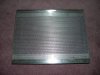
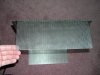
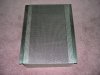
I took the home made cover off my 500B and measured it. It fits snugly to the sides of the receiver and sits on the lip of the bottom cover and the top of the black tuner faceplate. The top is 16 1/2 x 13; sides 11 6/32 x 4 3/4 and the offset between the top and sides is 7/8. Here's some photos:
 

Attachments

  • DSCN3997.jpg
    DSCN3997.jpg
    121.7 KB · Views: 31
  • DSCN3998.jpg
    DSCN3998.jpg
    169.8 KB · Views: 24
  • DSCN3999.jpg
    DSCN3999.jpg
    121.6 KB · Views: 24
  • DSCN4000.jpg
    DSCN4000.jpg
    156.8 KB · Views: 21
  • DSCN3821.jpg
    DSCN3821.jpg
    117.9 KB · Views: 44
Heat kills. True this equipment may have been designed to work inside a cabinet, but if there is a way to make a cutout on the top of the enclosure or add vents on top, parts will run cooler and be happier. So will you because your equipment will last longer. Most caps are rated at 85 degrees C. Be best not to get near that.

I am not familiar with Fisher cabinets but some other manufacturers of that era employ a slide in screen which allows heat to escape through the top (heat rises) instead of only the rear opening which may be inadequate.

A fan is a good addition if your amp is totally covered on top. If you place it on one side it will make a U-pattern cold air in on one side and heated air out the other side.

But as other posters state, this equipment does just run hot - that is the norm. But if you can find a way to extend the life of these rare items, makes sense to do so.
 
I took the home made cover off my 500B and measured it. It fits snugly to the sides of the receiver and sits on the lip of the bottom cover and the top of the black tuner faceplate. The top is 16 1/2 x 13; sides 11 6/32 x 4 3/4 and the offset between the top and sides is 7/8. Here's some photos:

Interesting. Thanks for sharing pictures.
 
I'll weigh in on the "heat kills" side. While I agree that the engineers must have calculated the heat factor in the design, it is equally clear that the chassis vent holes , open back and screened top of the original cabinet were all put in to dissipate heat. And so, IMHO, a little more help with a fan or two can't hurt:

http://audiokarma.org/forums/showpost.php?p=6398151&postcount=4

I have my fans wired so I can switch them off when playing at low volume.
 
Final Result- Fan Installed

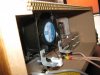
After fan installed (temporary), the power transformer is slightly warm at perhaps 105 degrees F. Rest of interior is slightly above room temperature. The 85 degrees F rated can capacitors will appreciate this.

This is a 17 cfm fan with 17dB noise level. Just barely audible in listening room with volume down. I will place legs with sorbothane feet on the fan and simply stand up in same area as in picture. The sorbothane will make the fan inaudible same as when held in my hand.
 

Attachments

  • IMG_1028.jpg
    IMG_1028.jpg
    66.4 KB · Views: 36
Sony; Look at the spec's for the caps again. I have yet to see a cap rated in Farenheit. All caps I've seen since I was in short pant's have been rated in Celsius. So 85*C = 185*F

The original caps(including the can's) were usually rated for 65*C or 149*F

There are Caps rated for 105*C or 221*F.

Larry
 
Sony; Look at the spec's for the caps again. I have yet to see a cap rated in Farenheit. All caps I've seen since I was in short pant's have been rated in Celsius. So 85*C = 185*F

The original caps(including the can's) were usually rated for 65*C or 149*F

There are Caps rated for 105*C or 221*F.

Larry

Yes, CE new replacement caps are rated 85 C (not F). The four section can cap next to the transformer gets extra heat from the resistors soldered on the can itself.
 
Back
Top Bottom