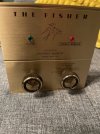
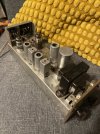
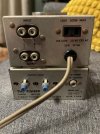
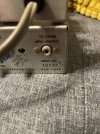
Carbs -- Any of the Fisher tuners and receivers that include the "Wide Band" label were designed from the ground up based on the GE/Zenith multiplexing format. Therefore, they have the wide band Ratio Detector transformer and WX or MPX-65 MPX sub-chassis installed and will deliver the FM Stereo MPX performance that Fisher was famous for. For receivers, this includes the 400, 500B, 500C, 800B, and 800C. For tuners, this includes any of the "B" versions or later (FM-50B, FM-100B, and FM-200B), the FM-1000, and the KM-60 tuner kit. The later consoles employing console specific tuner/preamp heads that came with built in MPX capability (as shown on the input selector switch) also included the wide band technology, although these units didn't always include the Wide Band terminology on the front panel. I have an Ambassador tuner/preamp head that has all the good stuff in it, but no labeling that it was wide band capable. That's likely because when the choice was initially made to go with the GE/Zenith format, everybody scrambled to modify their existing equipment to work optimally with that MPX method. That resulted in Fisher and a number of other manufacturers labeling their modified designs during that time period as "Wide Band" to distinguish the updated units from their previous non-wide band designs. After a period of time however, it was simply accepted that all current offerings were based on the GE/Zenith format, so the Wide Band label was no longer needed. For equipment built during and around the time when the FCC announced its decision however, the Wide Band label is the key to look for to get the best FM Stereo MPX performance. Of course, all of those type designs will already have MPX decoders installed, making the need for any external device in that case a moot point.
Dave