I’ve read descriptions of how SACDs can be copied via “a PS3 or a few of the modified players”. Based on what I’ve read, some of the “hacking” procedures for copying SACDs are not straightforward, and my assessment is that these procedures would mostly appeal to computer hobbyists. This is different from dropping an SACD into the PC disc tray and directly playing the SACD layer (which is what I meant when I said you can’t play the SACD layer on a PC).
Similarly, I’ve read that it’s possible – but not easy – to copy Blu-ray and Ultra HD Blu-ray discs.
Installing the software on my PS3, provided everything went right; took a grand total of like 5 minutes. Mine came with the higher than recommended firmware....thankfully it was in a position to be downgraded to the required version. The downgrading was a PITA due to the tons of differences in custom firmwares. I just had to download different ones and execute them. Once I had it in a position to accept the ripper...it was maybe 5 minutes for the script to modify what it needed and to install everything.
I haven't copied a Blu-Ray...but from what I can tell the process was like it was for DVD. Find the right utility, have it create a disc image, write image to a blu-ray.
Apparently, some people enjoy performing these copying “hacks” – i.e., it’s a hobby. To each their own. However, I question whether this saves time, when you consider the time to learn the procedure, install and configure the software, and copy all of the discs, and edit metadata for each recording (which is reportedly required for classical recordings in order to sort out composer, composition, conductor, orchestra, soloists, etc.).
Others (like me) would rather drop a disc into the tray of a universal player (e.g., Oppo UDP-205) and hit the Play button. (Or use folders to organize downloaded hi-res files (e.g., from HDTracks), and use the Oppo’s remote to navigate the folders.)
I'll admit, it took me a couple of hours to get ripping working...that's because the guy that sold me the PS3 said it was 3.55 and it was actually 4.something...and *that* is where you can run in to the headaches. After I solved that though...it's not a huge process. You' seem to act like you need a computer science degree to get this done. If you keep assuming it's beyond your grasp...then you'll never learn if it is or not. Disc takes about 20 minutes to rip...it's not a fast process but it's not any slower than ripping some other forms of media.
As far as editing metadata...since all my SACD's stay in ISO format...metadata is only handy for looking nice in the player...it doesn't get cataloged. I don't use database software that way either. I still treat my collection as a bunch of discs where I usually have to have some idea what's on the disc.
A problem with using an external DAC is finding one that will handle all digital music formats (CD, SACD, Blu-ray, Ultra HD Blu-ray, hi-res FLAC download, and hi-res DSD download) – and that someone who is not a computer hobbyist can easily install and use – without investing significant effort in transcoding their music library.
So...in all of those you listed it's basically DSD vs PCM, that's it. You act like each one is some kind of crypitc format..it's not. CD's are PCM, BluRay in any format is PCM, high-res flac is PCM, SACD is DSD, hi-res DSD is DSD. You basically just need a device that supports high-resolution PCM and DSD. Sure, we have things like DSD128 which is the 5.6mhz variant...and even 11.2mhz variants. But those are fringe. No one is releasing music in that content except bootlegs.
But hey...guess what...finding a DAC that will do any remotely feasible PCM format and DSD isn't that hard! They sell them every day! My SMSL M8 supports up to 384khz PCM and 5.6mhz DSD. I'm covered. I don't have to transcode anything. You didn't even need to be a computer enthusiast. Foobar 2000 + SACD Component; make sure the output device is set to the right thing...it'll play everything. Installing the DAC was as simple as plugging it up; Windows 10 even had a working driver I didn't have to do anything. All my stuff plays in it's native format, as-is, with little to no effort. When I had to reformat and reluctantly installed Windows 10 last year; getting my DAC and Foobar working was the least of my issues.
It's not as complicated as you think. Even more important, it's nowhere near as complicated as some guys on forums make it out to be. I've read what some people say is required for digital playback...they're usually overcomplicating it. The KISS (Keep It Simple Stupid) works for the world of digital audio. The guys that write three page long posts on what they did to get "digital working"...I read these and I'm like "well you could have simplified it by just doing this". The issue is these same guys have been following the bad advice of the other guys and are convinced if they don't do it "that way" it's wrong.
OTOH, for people who prioritize state-of-the-art-quality digitized music, hi-res discs (SACD, Blu-ray, Pure Audio Blu-ray, Ultra HD Blu-ray) represent an easy-to-use option.
For starters, I'm pretty sure the only improvement UHD Blu-Ray brought was just increased video resolution. It seems 192khz/24-bit is about the ceiling for consumer audio formats. The only thing Blu-Ray itself did to improve things over DVD-Audio was allow 5.1 to have 192khz. So I look at it even more simply, high-res PCM vs DSD.
Discs are easy to use, but a lot more intervention. How many times do you have to get up if you want to listen to multiple symphonies? All I have to do is drag the ISO's in to my player and I can queue up as many discs as I want. I'm not big in to playlists either, I used to be; but these days I am more apt to put on the entire album for at least two or three entire listens. In many ways...the convenience of not having to locate the disc and put it in the player have more advantages than using the physical disc. For one...you're handling the disc a lot less. They're a lot easier to find. I don't have to get up and take the disc from room to room to listen to it. I don't have to worry about my player failing. I mean I pay a premium for these discs most of the time; I'd rather leave them safely in a case than have to drag them out to listen to.
Bottom line, different people enjoy different music, and enjoy the hobby of hi-fi differently.
You're right. If you like the ritual of changing discs, that's great. I know that's why some guys like vinyl and why some guys still watch Laserdisc. But the problem if you talk like something is just automatically everyone's grasp....they'll assume it is. I'm probably betting you've read some of the stuff here on getting digital working and it scared you. It scares me too...becuase a lot of these guys are going way beyond what's actually required.
I hate to argue semantics...but when you're dealing with stuff people might be new with; it's important. IF they see "can't" all over the place when a person means "I just don't understand how"...they're likely to walk away with the idea they can't either. This is something I've noticed and has bugged me with ham radio forums. You'll get old guys who just don't want to understand the PC side of things use words like "can't" or "impossible" as if no one can do it at all. Then you get new guys who are like "so and so said that can't be done"....and you have to reply "well so and so is just a crotchety OM who doesn't want to learn."
I
am not trying to call you a crotchety OM (old man), I was just making an example for a different hobby based on what I've seen. For starters....just about every male operator regardless of age is called "old man", that's just part of the lexicon from the wireless telegraphy days. I'm only 35 and I've had guys in their 80's call me OM. But there's an attitude that a lot of the guys who are literally old don't want to bother learning. Half of them are mad you can get the top-class license without learning morse code now. But these guys will rant on forums about how hard digital modes are...and how they're useless....and so you get new guys who come to learn read a 40 page thread about hard digital modes are and how impossible it is to get the radio working with the PC and they don't bother trying to learn step two.
My whole point is generically using words like "can't" or "that's too difficult" might be taken by someone who doesn't know as "word of law" and not bother learning for themselves. That's all.
And DSD can be transferred to HiRez PCM/FLAC just fine with no artifacts.
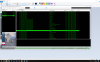
One thing I'll point out...that I haven't...is that with PCM you maintain an even signal-to-noise ratio across the audio spectrum. You don't get that with DSD. Once you get beyond 30khz or so, your ultrasonics begin to be overtaken by noise. This is why a lot of SACD players have a 40khz low-pass filter on the output. Yes, I can confirm DSD will respond to the entire spectrum; but the signal-to-noise ratio becomes an issue. Here's a picture of the spectrals of "Good Morning Judge" from 10cc's Deceptive Bends, converted from SHM-SACD to 96khz PCM.
So you actually do sacrifice something with DSD over PCM, but then the debate comes in to "do the ultrasonics really matter"? You can see why I dislike the DSD vs PCM debate as much as the digital vs analog.[/QUOTE]



 they pretty much do it themselves. Might need to download a driver every once and awhile but no harder than installing a new printer.