Jeromeof
New Member
Following on from my post about the ZA3 - I have managed to get my hands on a pre-release of the new V3 Mono from Fosi Audio and decided to write up a review:

Fosi Audio are one of a handful of Audio companies that rapidly iterate and most importantly take feedback from the audio community and then incorporate the best suggestions from that feedback into the next generation of their products.
The new Fosi Audio V3 mono is both a natural next step for Fosi Audio using that process, but I also feel that this Power Amplifier has moved Fosi Audio into the next tier of Audio products where people want a product with no limitations or restrictions and do not care how much something costs. The astonishing thing is Fosi Audio have delivered the V3 Mono in a similar price range as their previous outstanding Amplifier’s the V3 and the ZA3 yet, with the V3 Mono they have technology which ‘solves’ one of the key limitations of typical class D amplifiers, the ’load-dependency’ issue, I will explain this issue and Fosi Audio solution later in this review.
But the V3 Mono also includes some other very useful features which I will also discuss.
Note: I would like to thank Fosi Audio for providing a pre-release of V3 Mono for the purposes of this review - if you are interested it is currently available with significant discounts via Kickstarter
Alternative this is the product page on Fosi Audio website here
Unlike previous Fosi Audio Amplifiers that included ‘monoblock’ options like the Fosi Audio ZA3 (and the similar Aiyima A07 MAX) the V3 Mono is a pure monoblock, power amplifier. So, it requires a pre-amp for Volume control, and you need 2 x V3 Mono’s for stereo, one for each speaker. I believe Fosi Audio are preparing a separate Pre-amp product to go with the V3 Mono, but I will discuss the streamers and pre-amps I used later in the review.
So, lets get into the details of what you can expect from the V3 Mono:
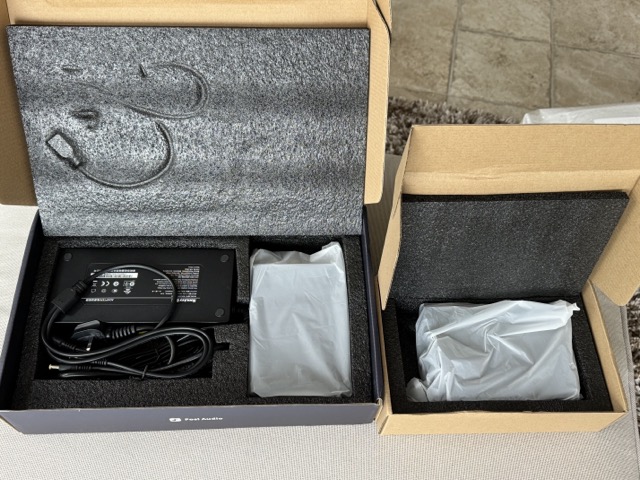
But I imagine the Kickstarter (and the initial retail units) will come in a single bigger box.
So this is the full contents:
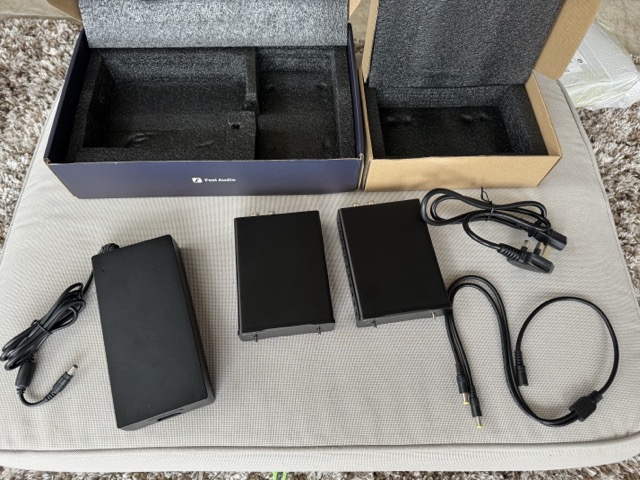
I received one 48V 10A power supply, a UK power lead and a ‘splitter’ to allow this single power supply to provide power to both V3 Mono’s. I believe the Kickstarter includes separate options to either 2 x 48V 5A power suppliers or this 48V 10A power supply.
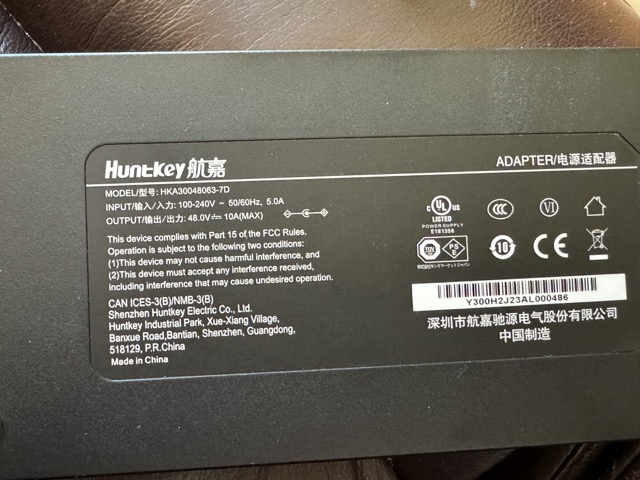
I believe some other people have also reported similar issues with this power splitter in their test units and Fosi Audio have already responded that they are fixing this so that the Kickstarter backers will not have this issue.
For example, the Fosi Audio ZA3 frequency could vary by up to 1DB in the upper frequencies though with a complex
speaker load. Here are some measurement from ErinAudioCorner :
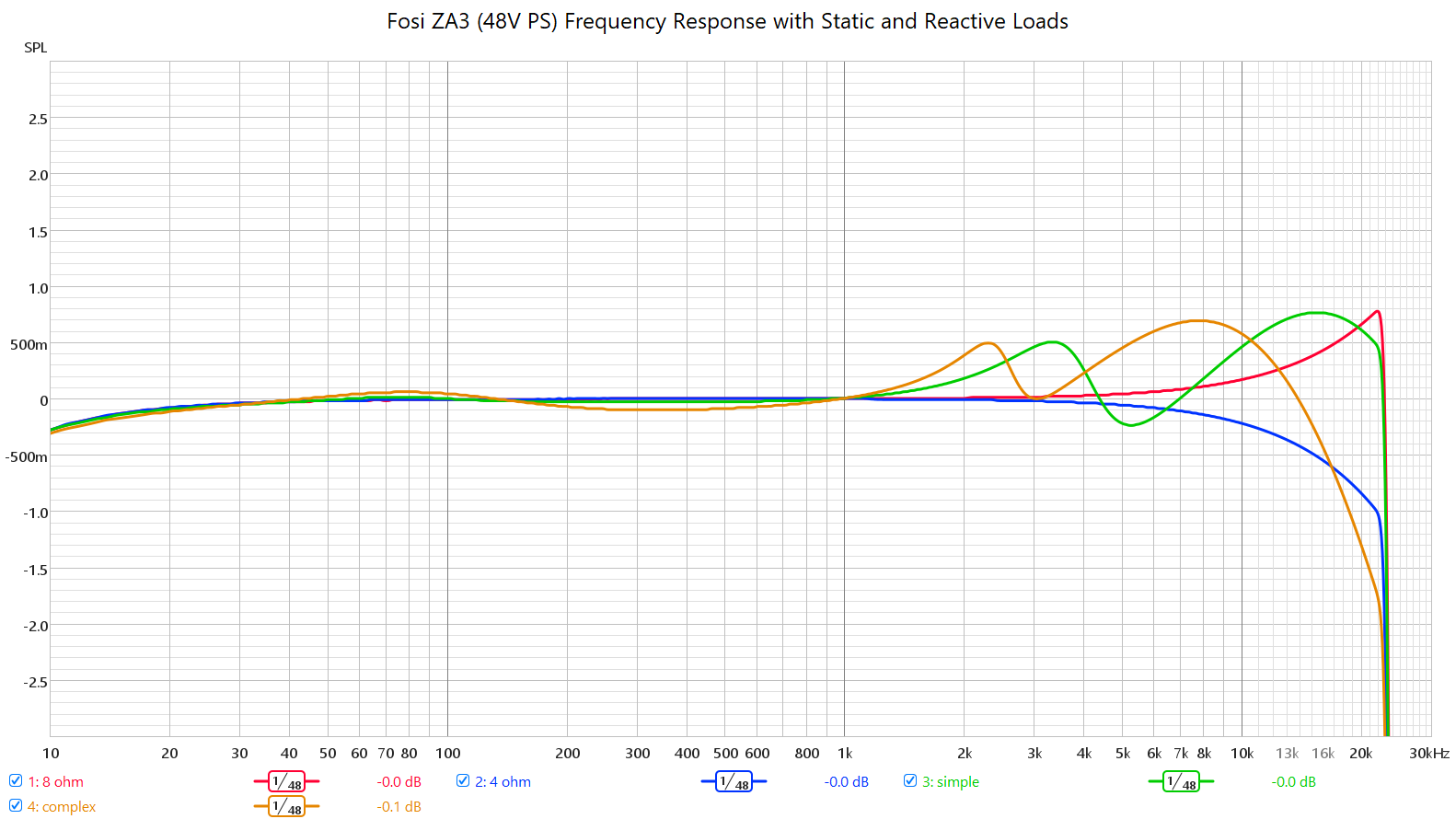
Those changes even as low as 0.5 db around the 7K area would possibly be audible and as the graph above shows it gets wider as we move into the upper treble region.
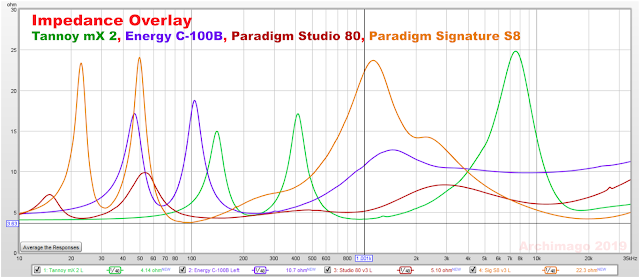
But this is very dependent on the speaker paired with the amplifier. For example, here is a graph of the impendance curves from a few speakers:
Erin also provided a nice graph showing how the speaker impedance ‘swings’ cause this ‘pull’ on the flat frequency response:
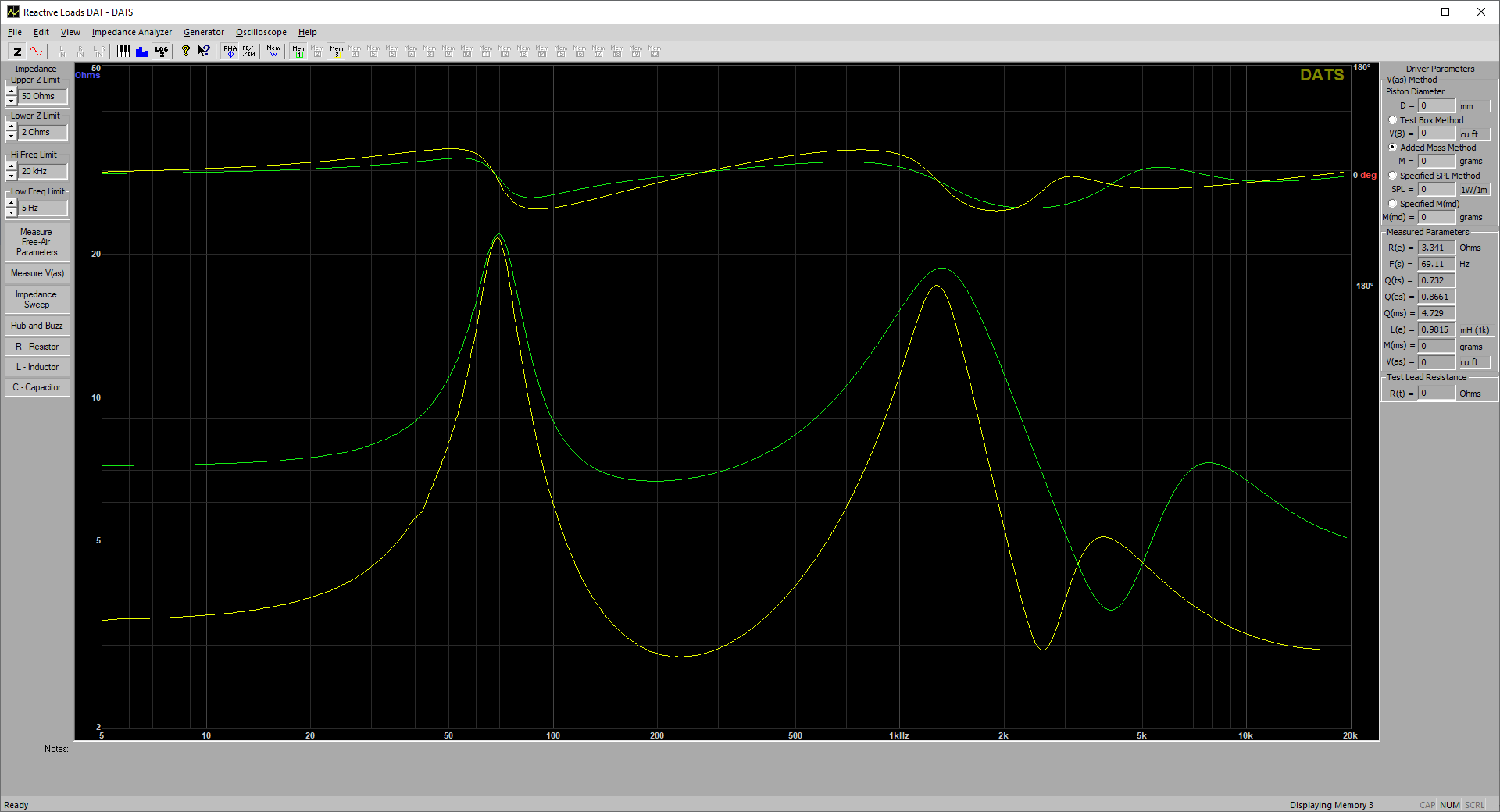
So these ‘swings’ in the impedance effectively pull the shape of the Frequency response from the amplifier out of shape. The solution to this problem is to be load ‘independent’ (like Class A or AB amplifiers ) and the way to do that with class D is to implement ‘Post Filter Feedback’ or PFFB for short.
This is where PFFB comes in - it is a feedback mechanism designed to cancel out this change. PFFB is not new technology, but it was previously only implemented in much more expensive class D amplifiers from the likes of Purifi or custom ‘kits’ from companies like 3e-audio. But there was a reference design already from Texas Instruments for implementing PFFB with the TPA5255 but from what I gather it is still a complex implementation but now with the V3 Mono, Fosi Audio can pass on the benefits to their customers providing a predictable flat frequency response.
I actually thought Fosi Audio could have possibly reduced this 10 Watts draw on power when in standby but in general this is a good feature to have.
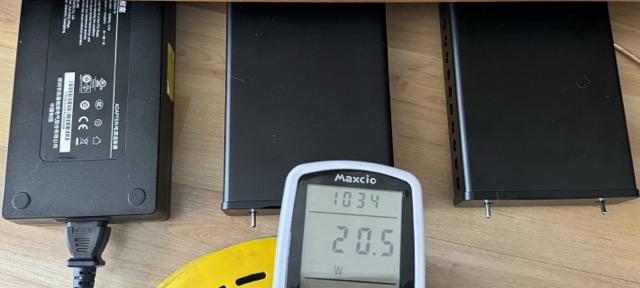
When both V3 mono’s where ‘on’ but not playing anything I was getting 20.5 Watts:
I used both in my testing from a mixture of Streamers and DAC, though I mainly used the XLR input from my SMSL D-6S:
I took a quick measurement of the effect of switching this gain switch, and it works perfectly giving a 6db gain:
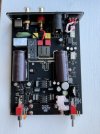
Then you finally see is the board in all its glory:
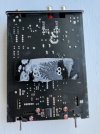
And the back:
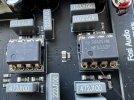
Zooming into the swappable op-amps:
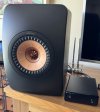
I also did some listening tests with a Polk ES20 and Micca RB42 which of course are even easier to drive than the KEF but both sounded excellent with no issues with the Polk especially reaching deep down into its bass capabilities to sound as ‘full’ as I have heard it without a subwoofer.
I believe the V3 Mono can also drive 2-Ohm speakers to impressive levels of output, but I do not have any 2 Ohms speakers currently to test with.
In general, as you will see in the measurement section below, the frequency response is effectively ‘flat’ across the audible range so this is a very neutral amplifier and should pair with any decent pre-amp or streamer.
Fosi audio also provided a chart of the output you might expect depending on the power supply used:
So, the V3 Mono has already been measured by Amir over on AudioScienceReview - here is the link I suggest checking out this review, Amir has done an excellent job as usual.
But I thought I would borrow a few of his key findings from that review:
First with XLR inputs:
This ‘score’ put the V3 Mono into the top category and close to some of the top class D amplifiers regardless of price.
Similarly, the RCA was excellent:
So being distortion free up to 18bits means you get high-res content ( i.e. > 16 bits ) without distortion, the Fosi Audio ZA3, for comparison, got to 17bits in this test so another incremental improvement with the V3 Mono.
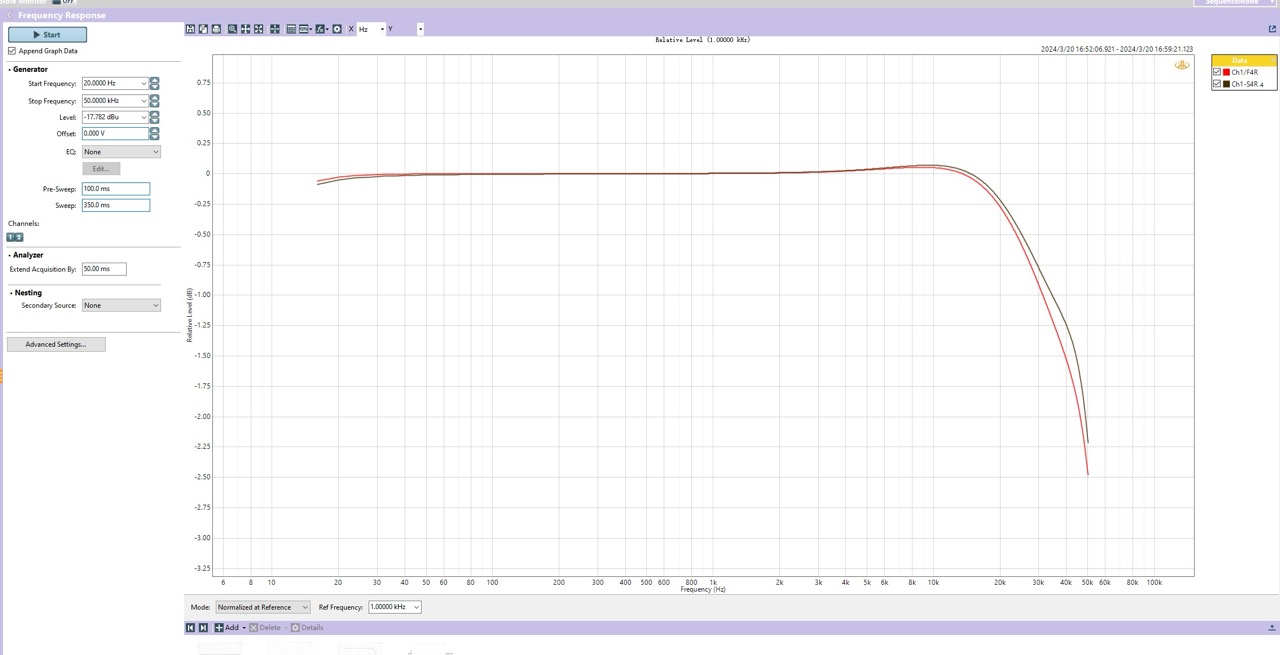
As I mentioned earlier previous Class D amplifiers without PFFB would have wildly different Frequency ranges when paired with Speakers which had high load dependencies in the upper treble regions. Since Amir published his review Fosi Audio have published updated as they said they have further refined the PFFB solution. Here is their graph which of course needs to be independently verified once the latest batch of V3 Mono’s are released to the Kickstarter backers:
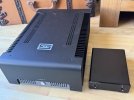
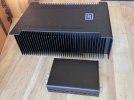
For a bit of fun, I decided to start comparing the V3 mono with my ‘Class A’ Schiit Aegir 2 Monoblock and all I will say at the moment is, it is incredible close. But the Aegir definition ‘beats’ the V3 Mono in the size of a single Mono block, here is a comparison:
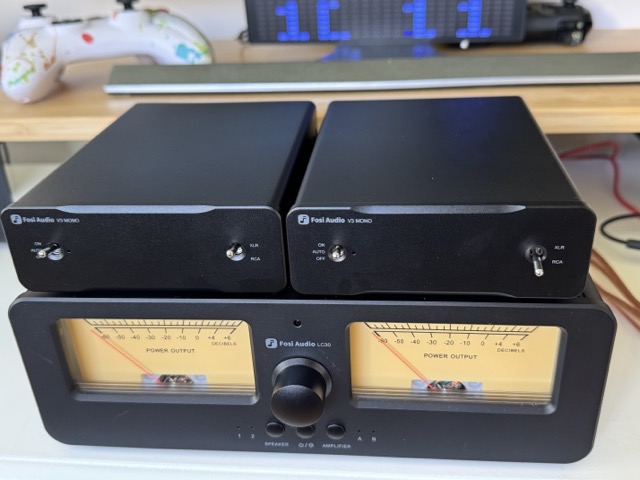
For this test, I am using the Fosi Audio LC30 Amplifier ‘Switcher’ to do a set of A/B blind tests.
I will publish the results of this long-running A/B test with my upcoming review of the Schiit Aegir 3.
With the V3 Mono, Fosi Audio have a product that would not feel out of place at this year’s ‘Munich Highend’ Audio Show sitting next to Monoblocks costing 5 or 10 times the cost.
V3 Mono - Stunning Monoblock from Fosi Audio
Lets get into the details of the new Fosi Audio V3 Monoblock Power AmplifierFosi Audio are one of a handful of Audio companies that rapidly iterate and most importantly take feedback from the audio community and then incorporate the best suggestions from that feedback into the next generation of their products.
The new Fosi Audio V3 mono is both a natural next step for Fosi Audio using that process, but I also feel that this Power Amplifier has moved Fosi Audio into the next tier of Audio products where people want a product with no limitations or restrictions and do not care how much something costs. The astonishing thing is Fosi Audio have delivered the V3 Mono in a similar price range as their previous outstanding Amplifier’s the V3 and the ZA3 yet, with the V3 Mono they have technology which ‘solves’ one of the key limitations of typical class D amplifiers, the ’load-dependency’ issue, I will explain this issue and Fosi Audio solution later in this review.
But the V3 Mono also includes some other very useful features which I will also discuss.
Note: I would like to thank Fosi Audio for providing a pre-release of V3 Mono for the purposes of this review - if you are interested it is currently available with significant discounts via Kickstarter
Alternative this is the product page on Fosi Audio website here
Unlike previous Fosi Audio Amplifiers that included ‘monoblock’ options like the Fosi Audio ZA3 (and the similar Aiyima A07 MAX) the V3 Mono is a pure monoblock, power amplifier. So, it requires a pre-amp for Volume control, and you need 2 x V3 Mono’s for stereo, one for each speaker. I believe Fosi Audio are preparing a separate Pre-amp product to go with the V3 Mono, but I will discuss the streamers and pre-amps I used later in the review.
So, lets get into the details of what you can expect from the V3 Mono:
What is in the box
My ‘pre-release’ test unit came in 2 separate boxes:
But I imagine the Kickstarter (and the initial retail units) will come in a single bigger box.
So this is the full contents:
I received one 48V 10A power supply, a UK power lead and a ‘splitter’ to allow this single power supply to provide power to both V3 Mono’s. I believe the Kickstarter includes separate options to either 2 x 48V 5A power suppliers or this 48V 10A power supply.
Power splitter ’noise’ Issue
I would actually recommend 2 separate power supplies, as I did notice if one V3 Mono was powered off there was a slight audible distortion heard from the speaker connected to the other one, but when both V3 Mono are powered up this distortion disappears. But because of this, I switched to using 2 48V 5A power supplies ( that I have from my 2 ZA3’s ).I believe some other people have also reported similar issues with this power splitter in their test units and Fosi Audio have already responded that they are fixing this so that the Kickstarter backers will not have this issue.
Features
Let’s concentrate on the specific unique featuresSolving ‘Load dependency’ with PFFB
For most audiophile’s the key feature (and what really moves Fosi Audio and this monoblock amplifier into the next level) is the ability to have a completely ‘flat’ frequency response independent of the ‘impedance’ load that the connected speaker might have. In simple terms, the amplifier will have a flat response no matter what speaker is connected, this was not the case with most class D amplifiers.For example, the Fosi Audio ZA3 frequency could vary by up to 1DB in the upper frequencies though with a complex
speaker load. Here are some measurement from ErinAudioCorner :
Those changes even as low as 0.5 db around the 7K area would possibly be audible and as the graph above shows it gets wider as we move into the upper treble region.
But this is very dependent on the speaker paired with the amplifier. For example, here is a graph of the impendance curves from a few speakers:
Erin also provided a nice graph showing how the speaker impedance ‘swings’ cause this ‘pull’ on the flat frequency response:
So these ‘swings’ in the impedance effectively pull the shape of the Frequency response from the amplifier out of shape. The solution to this problem is to be load ‘independent’ (like Class A or AB amplifiers ) and the way to do that with class D is to implement ‘Post Filter Feedback’ or PFFB for short.
This is where PFFB comes in - it is a feedback mechanism designed to cancel out this change. PFFB is not new technology, but it was previously only implemented in much more expensive class D amplifiers from the likes of Purifi or custom ‘kits’ from companies like 3e-audio. But there was a reference design already from Texas Instruments for implementing PFFB with the TPA5255 but from what I gather it is still a complex implementation but now with the V3 Mono, Fosi Audio can pass on the benefits to their customers providing a predictable flat frequency response.
‘Auto Off’
The Auto Off is a nice feature which both saves the Monoblocks from using too much power and being ‘on’ when they do not need to be on. After 10 minutes of no audio playing it will switch to a ‘standby’ mode. I measured watt power ‘draw’ from a single 48v 10a connected to 2 V3 Mono and I got the following results from my power meter:| Status | Power |
|---|---|
| On / Playing | 20 - 23 Watts |
| Standby | 10 Watts |
| Standby 1 On 1 Off | 5 Watts |
| Both Off | 0.1 |
When both V3 mono’s where ‘on’ but not playing anything I was getting 20.5 Watts:
Inputs
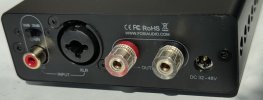
Having both RCA and XLR inputs with a switch on the front in an excellent option.I used both in my testing from a mixture of Streamers and DAC, though I mainly used the XLR input from my SMSL D-6S:
RCA ‘Gain’ switch
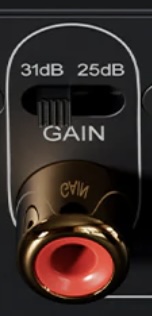
Those with keen eyes might have noticed the little switch just above the RCA to switch the gain:
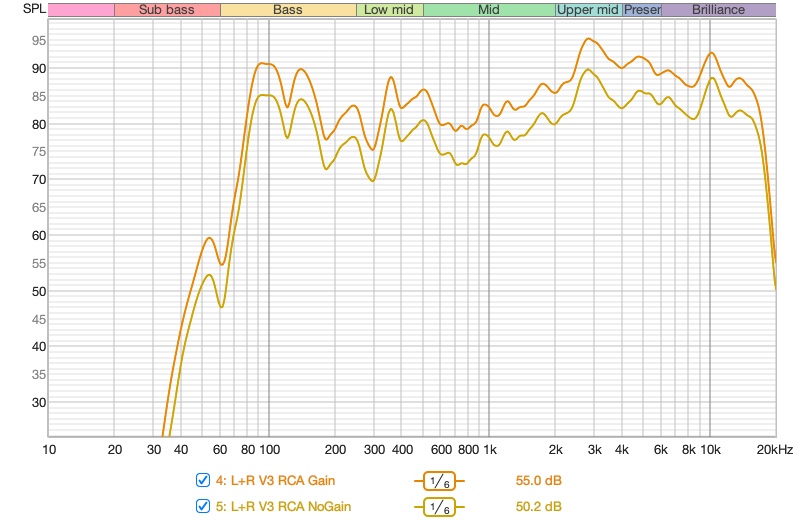
I took a quick measurement of the effect of switching this gain switch, and it works perfectly giving a 6db gain:
Internals and op-amp switching
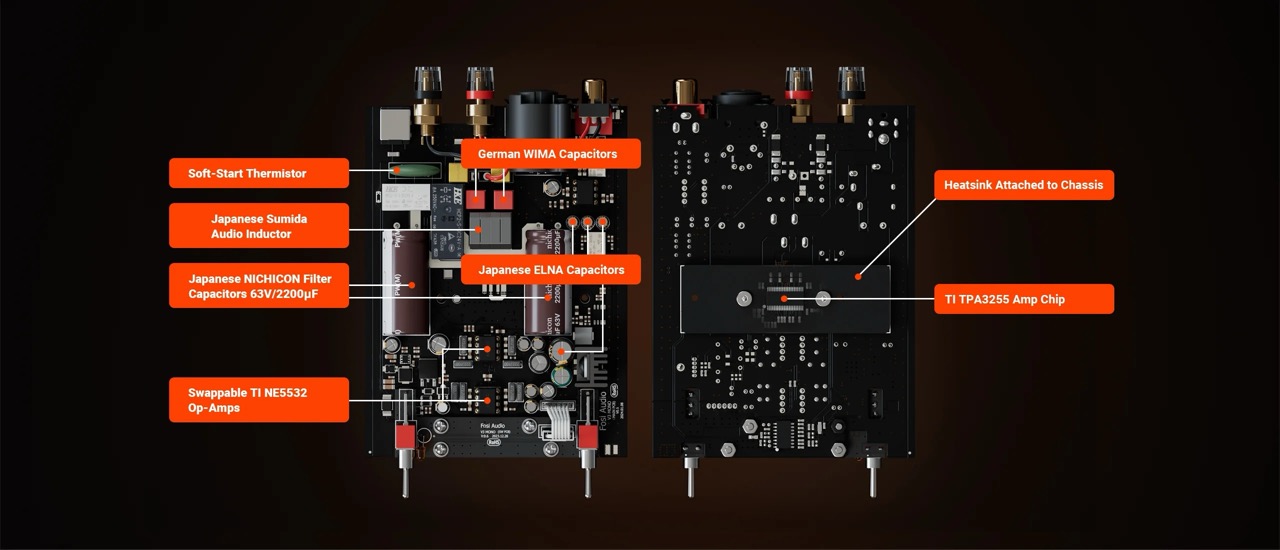
Fosi Audio provided a useful annotated picture of the internals of the V3 mono - including highlighting the Swappable TI NE5532 op-amps:
Opening up the V3 Mono
While I appreciate it might be fun I personally would not bother swapping the op-amps on my V3 Mono’s but its always fun to see the real insides of these devices so I decided to open up one of my V3 Mono’s- Remove the 4 screws 2 on the bottom and the 2 on the edge of the back of the V3 Mono:
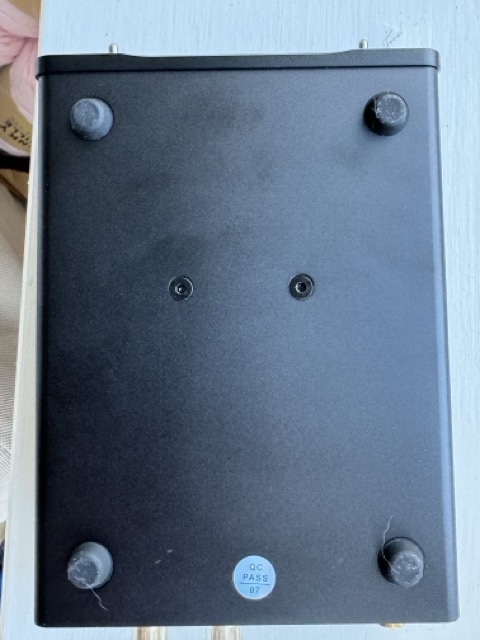
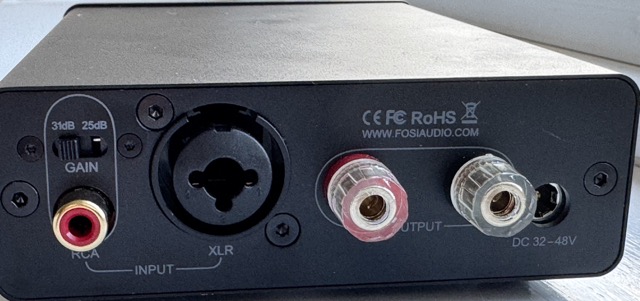
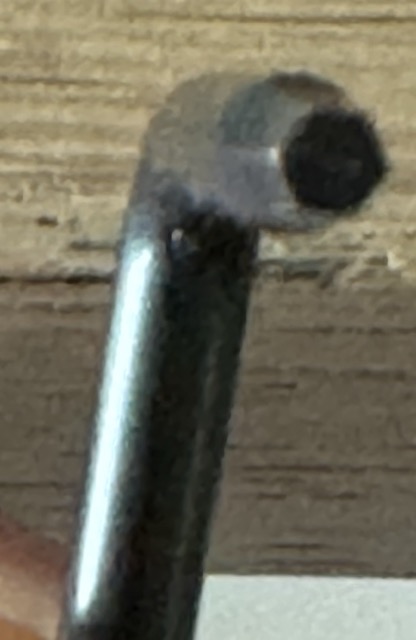
2. I used this shaped tool to remove these 4 screws
3. You then slide out the front
Then you finally see is the board in all its glory:
And the back:
Zooming into the swappable op-amps:
Sound impressions
Previously I would have listened to class D amplifiers using similar priced speakers like the Q Acoustics 3020i or my Polk ES20, both excellent speakers in the $200-$400 price range, but with V3 Mono I switch to more high end speakers and have been listening to the V3 Mono with my Kef LS50 Meta and they have been fantastic pairing - at no point did I feel that the LS50 Meta were lacking the power they need to perform to the fullest.I also did some listening tests with a Polk ES20 and Micca RB42 which of course are even easier to drive than the KEF but both sounded excellent with no issues with the Polk especially reaching deep down into its bass capabilities to sound as ‘full’ as I have heard it without a subwoofer.
I believe the V3 Mono can also drive 2-Ohm speakers to impressive levels of output, but I do not have any 2 Ohms speakers currently to test with.
Preamp source Pairing
For most of my testing I paired the V3 Mono with either a WiiM Pro connected into a SMSL D-6S feeding the XLR inputs but for a little comparison I also feed the pre-amp outputs from my Denon Receiver into the RCA inputs, I did not notice any issues with either option, XLR input did seem cleaner, though I think that is more to do with the Denon Receivers RCA pre-amp outputs as I did switch to feed the RCA input of the V3 Mono also from the same SMSL DAC, and it did sound cleaner.In general, as you will see in the measurement section below, the frequency response is effectively ‘flat’ across the audible range so this is a very neutral amplifier and should pair with any decent pre-amp or streamer.
Specifications and Measurements
The following are Fosi Audio published specifications but as you will see these have been independently verified.| Channel | 1.0 |
| Amplifier Chip | Texas Instruments TPA3255 |
| Input | RCA, XLR or TRS |
| Output | Speaker Output (supports banana plug or bare wire connection) |
| SINAD XLR | 101dB |
| SINAD RCA | 93dB |
| SNR | ≥123dB |
| Dynamic Range | ≥123dB |
| THD | <0.006% |
| Gain XLR/TRS | 20dB |
| Gain RCA | 25dB or 31dB |
| Terminal Impedance | 2-8Ω |
| Rated Power Output | 48V/5A – 240W@4Ω |
| 32V/5A – 100W@4Ω | |
| Frequency Response | 10Hz-30kHz(+/- 0.06dB) |
| Input Voltage Range | DC 32-48V |
Fosi audio also provided a chart of the output you might expect depending on the power supply used:
| PSU | Load Impedance | Rated Power (1kHz, THD 1%) | Max Power(1kHz, THD 10%) |
|---|---|---|---|
| 32V/5A | 4Ω | 100W | 130W |
| 32V/5A | 6Ω | 65W | 80W |
| 32V/5A | 8Ω | 55W | 65W |
| 48V/5A | 4Ω | 240W | 300W |
| 48V/5A | 6Ω | 160W | 200W |
| 48V/5A | 8Ω | 120W | 150W |
So, the V3 Mono has already been measured by Amir over on AudioScienceReview - here is the link I suggest checking out this review, Amir has done an excellent job as usual.
But I thought I would borrow a few of his key findings from that review:
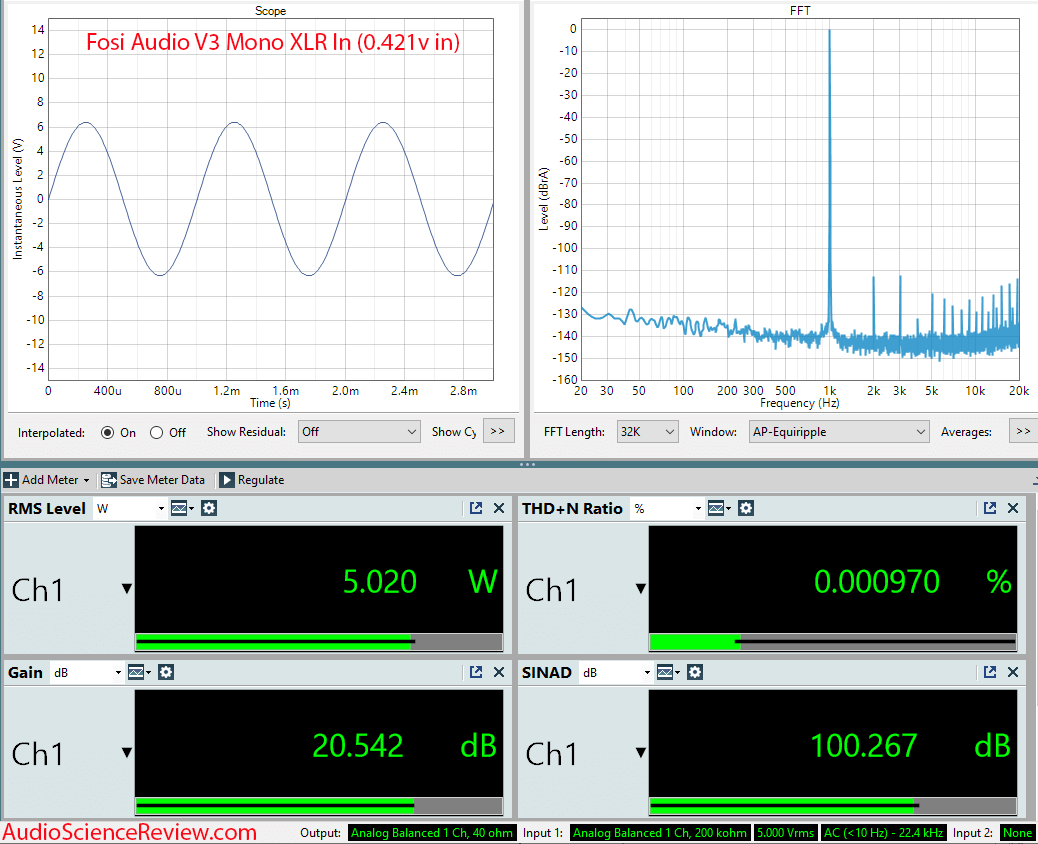
THD+N / SINAD
Whatever about SINAD ‘scores’ for other components like DAC’s - a good SINAD score for an amplifier (non tube) is excellent indication that you will not hear any ’noise’ from your speakers and the V3 Mono does not disappoint.First with XLR inputs:
This ‘score’ put the V3 Mono into the top category and close to some of the top class D amplifiers regardless of price.
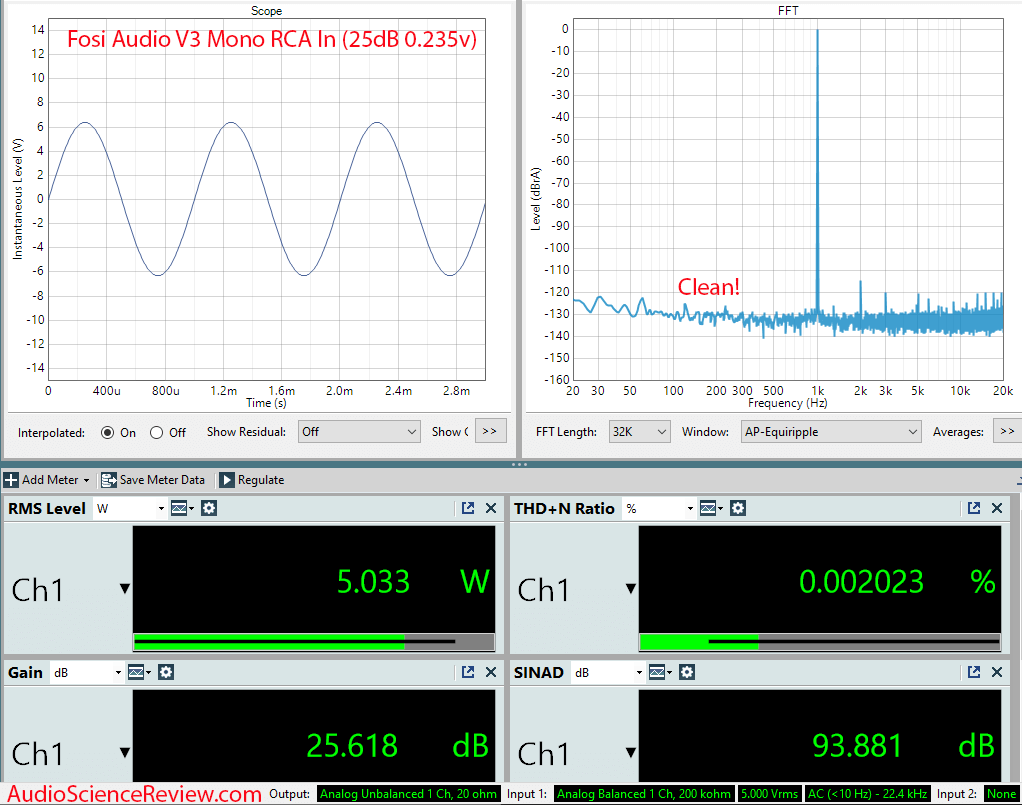
Similarly, the RCA was excellent:
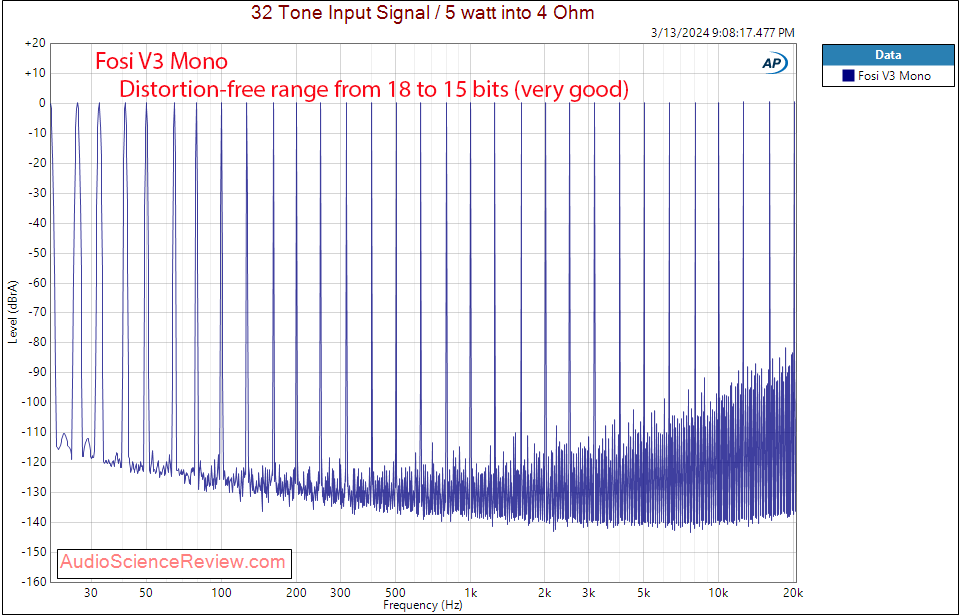
Multi-tone testing
One of the criticisms of SINAD is it is a measurement the noise using a single tone, hence why its also very important to see how well an amplifier does in multi-tone testing and again this level of performance is ‘up with the big boys’:
So being distortion free up to 18bits means you get high-res content ( i.e. > 16 bits ) without distortion, the Fosi Audio ZA3, for comparison, got to 17bits in this test so another incremental improvement with the V3 Mono.
Frequency Response:
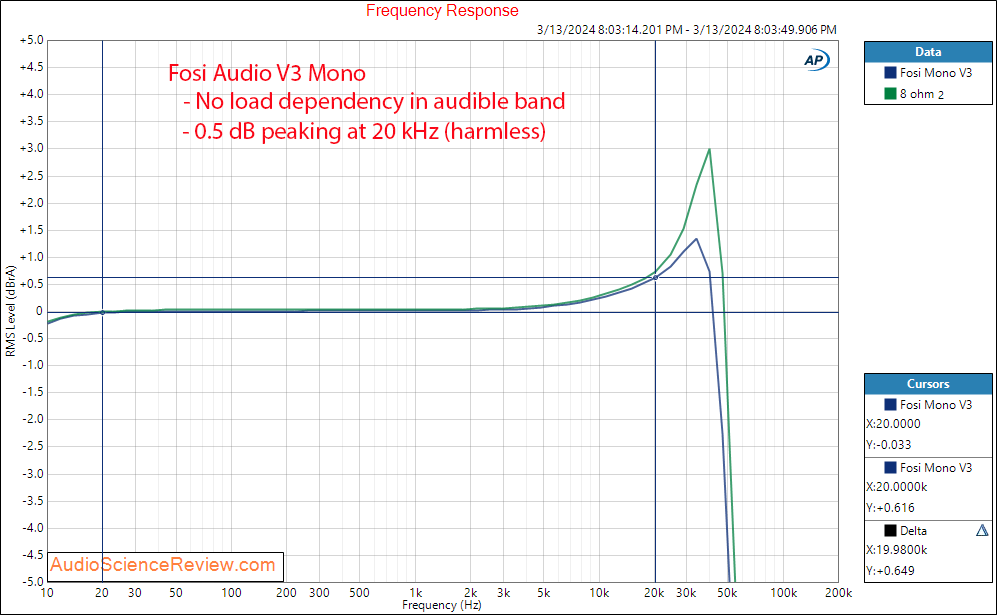
Finally, the key measurement to check if PFFB has been implemented correctly, a measurement of the Frequency Response with different ’loads’ - in Amir’s ‘simple’ test it uses a 4 Ohm and an 8 Ohm but the key thing is that both are essentially the same in the audible frequency range:
As I mentioned earlier previous Class D amplifiers without PFFB would have wildly different Frequency ranges when paired with Speakers which had high load dependencies in the upper treble regions. Since Amir published his review Fosi Audio have published updated as they said they have further refined the PFFB solution. Here is their graph which of course needs to be independently verified once the latest batch of V3 Mono’s are released to the Kickstarter backers:
Monoblock Comparisons
While it might be easy to compare to the V3 Mono with the previous V3 or the ZA3 (or other TPA3255 like Aiyima’s A07MAX ) the implementation of PFFB, the ’taming’ of the load dependency at audible frequencies and the Monoblock focused set of features means the V3 Mono should be compared with higher end Mono-blocks.For a bit of fun, I decided to start comparing the V3 mono with my ‘Class A’ Schiit Aegir 2 Monoblock and all I will say at the moment is, it is incredible close. But the Aegir definition ‘beats’ the V3 Mono in the size of a single Mono block, here is a comparison:
For this test, I am using the Fosi Audio LC30 Amplifier ‘Switcher’ to do a set of A/B blind tests.
I will publish the results of this long-running A/B test with my upcoming review of the Schiit Aegir 3.
Ratings
I have given the V3 Mono my highest recommendation, as it provides incredible value for money, great features (as long as you have the right matching equipment like a Preamp or Streamer ) and has excellent measurements. If Audio quality was a video game, Fosi Audio have succeeded with the ’load dependency’ level to move to the next level of audio products while also implementing exactly the right features needed for a power mono block amplifier, all at an incredible pragmatic price.Summary
The V3 Mono is an outstanding product, that really shows what can happen when an audio company takes feedback from the more pragmatic side of the audio community while also taking the time to make sure their product delivers on the promise of using PFFB circuitry to both enhances the subjective audio quality but also improves the objective measurements.With the V3 Mono, Fosi Audio have a product that would not feel out of place at this year’s ‘Munich Highend’ Audio Show sitting next to Monoblocks costing 5 or 10 times the cost.
Last edited: