Jeromeof
New Member
In my first review for AudioKarma (of many I hope), I will get into the details of the new Fosi Audio ZA3 Amplifier which has just been released. This is the latest TPA3255 amplifier from Fosi Audio and follows on from the amazing V3. I was lucky to receive my ZA3 early via their Kickstarter program with the 48V power supply and i thought it would be a good device for this forum.
Specifically I believe its launch price was $150 but with a discount (typically Fosi Audio usually have a 10% - 20% discount / coupon) so expect to pay say $125 and at either price this is a fantastic bargain and really builds upon the success of the V3 with some great new features specifically for audio nerds. Please read on for more details ...

Note: depending on your order you will also either get an orange or a black volume control, I picked the orange one.
Here is the excellent power supply:

Internally the ZA3 is as nicely built as it is externally with the opportunity to swap out the NE5532 op-amp’s for tweaking the sound.

The build quality is outstanding, basically using the lesson learned with the V3, Fosi Audio have gone up to the next level with this Amplifier. I love the little design touches for example the quality of the vent holes on the side have a certain class about them:

The ZA3 is a little bit bigger than the V3 and the also new Aiyima A07MAX:

This photo from above really shows how much larger the ZA3 is:

The extra size does allow more space for more connections (which I will get to in the Features section below) but also more space between the binding posts.

Though what really sets the ZA3 apart from these 2 other class D amplifiers is its feature, lets look at the features now in detail:
Here are the back of 2 ZA3 setup in Mono block mode, in this case one ZA3 is handling the Left and the other is handling the right:

I also subjectively thought this not only provided more power but a cleaner signal, where there is no chance of channel leakage within a ZA3.
Here is the back of a ‘fully loaded ZA3’ where both the balanced and RCA inputs are connected:

Simply using the RCA/BAL switch on the front will select the appropriate input. It should go without saying that a Balanced (XLR or TRS) input will potentially have less noise than an RCA but in practice the RCA will also be incredible clean sounding.
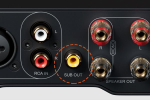
 I believe the sub-woofer output also has a fixed Low pass filter of 300Hz but there is no high pass filter on the speaker output when the sub-woofer is connected - something to work on in a future version in my opinion.

So one nice side effect of this feature is the Amp is only drawing power when its music. A quick comparison of the energy used when in Standby waiting for a trigger and being triggered and playing music is:
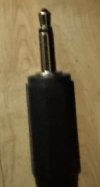
Here is a typical 3.5mm trigger needed for the ZA3 (to work with a WiiM Pro Plus I had to buy a 3.5mm to 2.5mm cable such is the inconsistencies with trigger cables):

Because the Amp is switching itself on there is no danger of a power on signal damaging your speakers.
I will update this review with independent measurements when they become available but currently the official measurements provided by the Fosi Audio for the ZA3 have a SINAD value of 88db which is exactly the same as the Fosi Audio V3 and I would imagine independent measurements will back up this value. The SNR of 106db is actually better than the V3 (but again would need to be verified independently).
Specifications - I have highlight the key measurements below:
Note: I will update this review when I get some independent measurements bu for now these are the measurements provided during the kickstarter program - they are very similar to independently verified measurements of the Fosi Audio V3 (so I would believe these are accurate):
The Fosi Audio ZA3 is an impressive amplifier, offering high-quality sound, versatile features, and efficient operation. Its ability to run cool, coupled with its mono block support and balanced input options, positions it as a competitive option in the audiophile market.
Specifically I believe its launch price was $150 but with a discount (typically Fosi Audio usually have a 10% - 20% discount / coupon) so expect to pay say $125 and at either price this is a fantastic bargain and really builds upon the success of the V3 with some great new features specifically for audio nerds. Please read on for more details ...
What is in the Box, internals and overall Build Quality
The ZA3 arrives in a larger package compared to other Fosi amplifiers. Contents include the ZA3 amplifier itself, a robust 48V 5A power supply unit (PSU) similar to the one that comes with the V3, and a comprehensive manual detailing connectivity options.Note: depending on your order you will also either get an orange or a black volume control, I picked the orange one.
Here is the excellent power supply:
Internally the ZA3 is as nicely built as it is externally with the opportunity to swap out the NE5532 op-amp’s for tweaking the sound.
The build quality is outstanding, basically using the lesson learned with the V3, Fosi Audio have gone up to the next level with this Amplifier. I love the little design touches for example the quality of the vent holes on the side have a certain class about them:
The ZA3 is a little bit bigger than the V3 and the also new Aiyima A07MAX:
This photo from above really shows how much larger the ZA3 is:
The extra size does allow more space for more connections (which I will get to in the Features section below) but also more space between the binding posts.
Though what really sets the ZA3 apart from these 2 other class D amplifiers is its feature, lets look at the features now in detail:
Features
Compared to the Class D amplifiers that Fosi Audio have previously released, the ZA3 has many new features specially designed to get the best sound quality out of your system. The features alone make it a significant device in the history of class D amplifier, this is the moment when Fosi Audio have upped their audiophile game and we the users who appreciate great sounding music benefit from the extra quality audio experience the ZA3 helps to provide.Volume Control / Power toggle
Some recent Class D amplifier can only be turned off my moving the volume back to 0 but for a Mono block especially this can be problematic, not so much with the ZA3. You can fix the volume and press and hold the Volume button to switch on the ZA3. Therefore, when you have matched the volume on 2 setup as monoblock it is key not to have to touch the volume again (typically you would control the volume to both ZA3’s via a pre-amp or in my case via the WiiM Pro Plus).Mono Switch
The Mono Mode switch on the front of Fosi Audio ZA3 is a probably its key new feature, enabling users to get the benefits of more power from 2 ZA3 acting in parallel, one ZA3 feeding the left speaker and the other feeding the right Speaker.Here are the back of 2 ZA3 setup in Mono block mode, in this case one ZA3 is handling the Left and the other is handling the right:
I also subjectively thought this not only provided more power but a cleaner signal, where there is no chance of channel leakage within a ZA3.
Balanced Inputs (as well as the usual RCA)
Another of ZA3’s standout features is including balanced RCA and XLR/TRS inputs, offering versatility and improved audio quality. Here is an example where I have feed a TRS input into 2 ZA3 to provide extra clean audio using the Mono block setup:Here is the back of a ‘fully loaded ZA3’ where both the balanced and RCA inputs are connected:
Simply using the RCA/BAL switch on the front will select the appropriate input. It should go without saying that a Balanced (XLR or TRS) input will potentially have less noise than an RCA but in practice the RCA will also be incredible clean sounding.
Subwoofer Output
It also features a proper subwoofer output, so unlike previous Class D Amplifier that had a ‘aux out / subwoofer out’ this is a dedicated subwoofer that is controlled by the volume so can be blended with your speakers to provide that extra sub-bass when required. For example, here is an example of a measurement I made with a subwoofer added to the ZA3 providing subbass down to 30Hz where my speakers were rolling off at 50hz:
12V Trigger input
The 12V trigger input for integrated system control, currently I am using a Wiim Pro Plus as a Streamer and DAC feeding the ZA3 and using the trigger to wake up the ZA3 whenever the music is about to start playing.
So one nice side effect of this feature is the Amp is only drawing power when its music. A quick comparison of the energy used when in Standby waiting for a trigger and being triggered and playing music is:
| Mode | Power used watts |
|---|---|
| Standby | 0.9w |
| Triggered | 7.0w |
Because the Amp is switching itself on there is no danger of a power on signal damaging your speakers.
Sound quality, Measurements and Specifications
The ZA3 exhibits clean, powerful sound with excellent stereo separation (especially when used as Mono blocks). The sound will be punchier compared to similar amplifiers due to its neutral frequency response (some similar priced Amplifiers will roll off before the sub bass and roll off the upper treble regions and therefore will not sound as rich and dynamic as the ZA3), When you then add a subwoofer to the ZA3 it is no competition at all with similar priced Class D amplifiers, the ZA3 has a unique set of features at this price point. The unit runs cool even at higher volumes, maintaining energy efficiency.I will update this review with independent measurements when they become available but currently the official measurements provided by the Fosi Audio for the ZA3 have a SINAD value of 88db which is exactly the same as the Fosi Audio V3 and I would imagine independent measurements will back up this value. The SNR of 106db is actually better than the V3 (but again would need to be verified independently).
Specifications - I have highlight the key measurements below:
Note: I will update this review when I get some independent measurements bu for now these are the measurements provided during the kickstarter program - they are very similar to independently verified measurements of the Fosi Audio V3 (so I would believe these are accurate):
- Amp Chip: Texas Instrument TPA3255
- SINAD: 88dB
- SNR: 106dB
- Dynamic Range: ≥106dB
- THD: <0.005%
- Terminating Impedance: 2-8 Ohm
- Rated Output Power:
- Stereo Mode: 180W*2 @ 4 Ohm
- Mono Mode: 240W @ 4 Ohm
- Frequency Response: 20Hz-20kHz (‡0.1dB)
- Power Input: DC 24V-48V
What could be improved
Very little at the price but possible the following could be implemented in a future ZA3 (maybe the ZA4):- Move mono switch to the back (or underneath as with the Aiyima A07MAX)
- Add a switch and implement a High pass filter on the outputs to further take advantage of the subwoofer output.
- An implementation with Post Filter Feedback (PFFB) - this is an extension of the TPA-3255 design to better handle distortion and provide a more linear frequency especially in the upper treble when connected to specific speakers with high variations in speaker impedance.
This will also improve the already impressive THD+N / SINAD of 88db - A trigger out to pass the trigger onto a second ZA3 - this would be useful when the ZA3 is set up as a Monoblock, but you still want triggered input to wake both ZA3’s.
- A remote to switch the inputs and control the volume
Summary
The ZA3 represents tremendous value for money and has some outstanding features like support for subwoofer, trigger input for the price, coupled with a really nice design and excellent measurements this is a top pragmatic choice.The Fosi Audio ZA3 is an impressive amplifier, offering high-quality sound, versatile features, and efficient operation. Its ability to run cool, coupled with its mono block support and balanced input options, positions it as a competitive option in the audiophile market.