• The move to the new server is done. There are some software and database maintenance updates in process. This has us passing the hat around to help out. We appreciate any donations. Seriously, even a dollar helps. The payment page may be found here - https://www.audiokarma.org/support.html

Frankentien LS3/5a's

Yamaguy

New Member
I've been curious and looking to add a pair of Rogers LS3/5a'2 to my collection of audio gear.One issue is the cost with a reasonable pair costing $2000 ~ $3000 CDN$

So, found and bought a pair of Falcon Acoustics F B110 drivers on a local site, ordered a pair of LS3/5a Rosewood boxes off E-Bay and the plan is to use the Morel tweeters and cross over from a pair of Morel MLP-202's I'll part out (it has a damaged woofer anyways) The tweeters are MDT29's I think (haven't pulled them out of the Morel's yet)

My thought is:
The bass driver/cabinet relationship is a given as they've been designed for each other. The Morel MDT-29 tweeter is a drop in replacement for the LS3/5a's Kef T27 tweeter,its the exact same size.

Using the original Morel crossover is a natural for the Morel MDT 29 tweeter and the bass component should drive the F B110 just as easily as it drove the Morel MW-160 driver, both have impedance of 8 ohms. the sensitivity of the F B110 is 86 dB, the Morels sensitivity is 88 dB

Question?

Is this going to work, does anyone foresee any problems?

Yamaguy in Canada
 
Register to hide this ad
Welcome Yamaguy!

Well, too late for our advise (for whatever that's worth)! But, that's not a bad thing. 'Cause, now I'm curious as to what the outcome will be? So, since you have all of the parts, why not pull a Victor Frankenstein, and finish the creature?

Also, do you have a frame of reference as to how the completed results will compare to the original LS3/5a's? I've only heard the KEF versions. A long time ago. I don't think my aural memory would be good enough to remember the qualities of old vs. new. Just curious if you'll know if the creation is a success or not. A true LS3/5a?

Keep us updated. :)
 
Hey StimpyWan

Thanks for the response. I'm in the process of assembling them. Waiting for the cabinets to arrive and I need to retrieve the donor Morel MLP-202's from the cottage. I'll be sure to post pictures and let you know the results. I was just fishing for input as to whether I'll run into any problems...No I don't have a pair of LS3/5A's to, but I excited to hear the outcome.

Yamaguy
 
One question: Why not source a pair of T27 from Falcon acoustics as well and have no worries?
 
I chose not to buy the T27's and crossovers from Falcon because I was controlling the cost of the build, the donor Morel parts cost me $100, the Falcon T27, crossovers, shipping and duty would have probably been more like $1000

Yamaguy
 
The LS3/5a was specified to very tight tolerances, and everything had to be exactly right or else they were rejected. Part of the reason why there were so many manufacturers was because they soon found out it wasn't at all easy to meet the BBC specification and make any money. Each one had to be measured and the crossover would be adjusted to compensate for the production spread of the drivers.
You're using a B110 in the correct sized box, but you're using a different tweeter and a different crossover. The speakers may end up sounding very nice, but they won't be LS3/5As.
 
I agree with Rothwell, and yes, you’ve already acknowledged you’re trying to build a low cost alternative or clone using non stock parts.

The KEF or Falcon B110 uses a front damped bextrene plastic cone. It was well known to have a resonance peak at around 1khz which the crossover must address. Also, after many hundreds if not thousands of man-hours of design, listening and tweaking, the original 1974 BBC design team developed an 18 element, very complicated crossover which tailors the B110 and T27 to the acoustically correct frequency response that was the LS3/5a spec, compensates for the peak, adds a mid bass hump to fool the ear into hearing more bass than could usually be had in a Speaker this small. And the crossover allowed micro adjustments and matching for normal driver variation, even the tightly specified units that KEF selected for other manufacturers.

Also, the cabinet needs to be built of 9 ply Baltic birch with beech battens (yes, they investigated many types of wood combinations for cabinets) with a screwed or glued back panel. The cabinet is lined with bitumen damping sheets on the walls and then acoustic foam to prevent internal reflections. The baffle seals with a thin foam gasket and 8 wood screws. The B110 frame edge is damped with a u-channel gasket to the baffle and the screws, fiber washers and nuts are torqued down to spec.

The crossover, assuming it fits, normally mounts on long screws, spacers, and a felt damping pad behind the tweeter. IIRC, the Morel tweeter, as good as it may be, is deeper than the T27. Simply matching a random impedance value doesn’t make it a correct crossover to use.

The grille is made from a Tygan weave and is available from Falcon and Stiing Broadcast IIRC. The T27 normally has a perforated brass cover which augments the drivers HF output plus provides protection. The tweeter is bordered by a four sided felt wall to suppress reflections from the grill frame and baffle.

The BBC has strict specifications for the BBC LS3/5a (and other LS series) speakers which the original makers had to not only adhere to, but prove by comparing production units with tweaked reference originals given to them and occasionally auditors as part of their license.

For LS3/5a enthusiasts, it’s been said that the LS3/5a was developed and refined so that it balances on the head of a pin - any deviation of materials, specs, adjustments changes degrades the speaker. That is one reason they were so hard to make, but why most originals remain so sought after.

IMO, and you know this, your Franken Speaker May sound ok, but it will be nowhere near a real LS3/5a. A box, a woofer, and a crossover and tweeter from another speaker will not in any way yield an LS3/5a.

OTOH, there are a few sources which can supply near LS3/5a kits or speakers which approximate the sound at less cost. Falcon and Stirling Broadcast do or did have kits which have been engineered and tested to sound very close - they should know, they both hold current LS3/5a BBC licenses.

I am not a fan of most any of the Far East clones, some of which coattail on the LS3/5a name and look superficially alike. Only the Rogers versions have any real credibility. Spendor and Harbeth do make similar style speakers but are evolutions of the LS3/5a design.

As a DIY exercise, you may have some fun building these and finding out what works and what doesn’t. But to get close to real LS3/5a performance, you’ll need to up the ante considerably. You get what you pay for.
 
If you want an in depth current take on building you own, Practical Electronics magazine had a series on it starting in September of 2019.

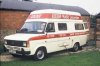
I totally agree with what my fellow posters have said. I would add that the LS3/5a was designed for a very specific situation. Specifically in a BBC van which is a tiny space with the speakers only about 2-3 feet away from your head.

IMHO back when I first heard them I didn't understand why everybody thought they were awesome. Years later I heard some in a tiny bedroom and went "OH!". I also found out about the time of my revelation what they were originally designed for. I still don't understand why people still put them in "normal" sized rooms and think they are awesome. The BBC made other speakers for bigger spaces that had that sound profile, get some of those.

Hear you go:

RV.jpg desk.jpg
 
Actually, the LS3/5a was not only designed for outside broadcast vans but also for small control rooms, used extensively for radio voice broadcast studios, smaller music control rooms and for general monitoring in rooms which did not permit larger speakers.

In a small to medium sized room, the LS3/5a has more room to work with and can exhibit its almost uncanny imaging ability and good phase coherence. If set up stringently and correctly, it creates a very good sound field with depth and reality to individual acoustic voices and instruments. Because of its small size, it cannot reproduce very loudly or for mass instruments like orchestras, or reach extreme crescendos.

The LS3/5a has proven to be difficult to pair with many subwoofers because of the way it’s crossover is designed. But properly done with an AB1 or other purpose designed subs and crossover (passive and active), sound levels can increase some and stress on the small B110 reduced significantly.

Look up the Groups.io LS3/5a newsgroup (I am co-moderator) and you’ll see some good setups.
 
If you want an in depth current take on building you own, Practical Electronics magazine had a series on it starting in September of 2019.
Is that series written by Jake Rothman? If so, he's a friend of mine :) I first met him at a hi-fi show many years ago. He's very knowledgeable on all things audio.
 
Actually, the LS3/5a was not only designed for outside broadcast vans but also for small control rooms, used extensively for radio voice broadcast studios, smaller music control rooms and for general monitoring in rooms which did not permit larger speakers.
Yes, the BBC has lots of local radio stations as well as the national stations and they usually have pretty small studios.
 
Actually, the LS3/5a was not only designed for outside broadcast vans but also for small control rooms, used extensively for radio voice broadcast studios, smaller music control rooms and for general monitoring in rooms which did not permit larger speakers.

What I was referring to was hearing the LS3s in a typical American living room. I am aware that they weren't JUST used in vans.

Because of its small size, it cannot reproduce very loudly or for mass instruments like orchestras, or reach extreme crescendos.

Part of why I never liked them in big rooms was the lack of dynamics. In a near field, smaller space this isn't an issue.
Horses for courses. As I said the Beeb had other designs for larger spaces.

If I had to vote, I would vote for dynamic range. I mostly listen to jazz, non-orchestral classics and more sophisticated rock.
I noticed you have a number of large JBLs. Nice.
 
I had a pair of LS3/5a's for about 20 years for nearfield critical listening. At the same time I had my Yamaha NS-1000Ms for general listening. I absolutely loved the clarity of the LS3/5a's, but the bass is what you would expect from a speaker this size. I eventually sold them because I just couldn't get over the missing lower frequencies.
 
I had a pair of LS3/5a's for about 20 years for nearfield critical listening. At the same time I had my Yamaha NS-1000Ms for general listening. I absolutely loved the clarity of the LS3/5a's, but the bass is what you would expect from a speaker this size. I eventually sold them because I just couldn't get over the missing lower frequencies.

Yep, that's what a well integrated sub was for. Even LS3/5a's must obey the laws of physics.
 
The "new" Chartwell LS3/5As are actually reported as "bass heavy" with respect to the older models. Birdonawire just got a pair of "new" ones and was suprised as to how bass-heavy they were. At some point we will compare them to my original Chartwells.
 
I've been curious and looking to add a pair of Rogers LS3/5a'2 to my collection of audio gear.One issue is the cost with a reasonable pair costing $2000 ~ $3000 CDN$

So, found and bought a pair of Falcon Acoustics F B110 drivers on a local site, ordered a pair of LS3/5a Rosewood boxes off E-Bay and the plan is to use the Morel tweeters and cross over from a pair of Morel MLP-202's I'll part out (it has a damaged woofer anyways) The tweeters are MDT29's I think (haven't pulled them out of the Morel's yet)

My thought is:
The bass driver/cabinet relationship is a given as they've been designed for each other. The Morel MDT-29 tweeter is a drop in replacement for the LS3/5a's Kef T27 tweeter,its the exact same size.

Using the original Morel crossover is a natural for the Morel MDT 29 tweeter and the bass component should drive the F B110 just as easily as it drove the Morel MW-160 driver, both have impedance of 8 ohms. the sensitivity of the F B110 is 86 dB, the Morels sensitivity is 88 dB

Question?

Is this going to work, does anyone foresee any problems?

Yamaguy in Canada

It is a pity that the OP has not been back to let us know how the experiment went with using another tweeter.

@rothwellaudio & @mech986

It seems to me that the BBC spend considerable time and money on the LS3/5 development and build around 20 prototypes. Unfortunately when this design went out for tender to produce in large numbers it was discovered that Kef had changed the drivers.

And then a long list of patching the job began:
- Woofer needed to be mounted with some PVC tubing between it and the baffle other wise it would set up a resonance
- Batten for fastening the baffle had to be beech, using pine ones was audible
- Woofer now had a peak just above the 1Khz that needed to be adressed
- the back was now to be beech ply too and was no longer screwed down
- The tweeter T27A (later version) has a Fr of 1100Hz +/- 15% (?) , the original T27 had a FR of 900Hz. Dome was now mounted on top of the faceplate.(cheaper to manufacture)
- dome could now be easily damaged so a grille from the Celestion HF2000 was placed on top tp protect and it slightly changed the top end
- Crossover was changed for the changed drivers
- Felt ring was added around the tweeter
The 15 ohm version was hard to build because of the B110 SP1003:
- The woofer was changed to a different model and the crossover was changed as a result, now it became the "11 Ohm version"
- drivers specs must have changed once again as later the crossover was finetuned at least twice
- Rogers used ferrite slug inductors, others used the laminated iron cores
- Falcon Acoustics has re-introduced the B110 SP1003 and the T27 SP1032 and were recreated by the original developper Malcolm Jones with the original materials (in sofar available). Hats off to Falcon Acoustics for this.
- The Q7 was re-introduced (renamed?) (originally saw the light as mini-monitor by Malcolm Jones) which is basically the LS3/5A in a slightly larger enclosure with the objective of improving bass performance.
- Falcon Acoustics have introduced a "gold badge" crossover with larger laminated iron core inductors and selected capacitors resulting in improved (changed?) bass performance and less crossover distortion.

The history of the LS3/5A sounds by now like my great grandfathers axe: The head has been replaced three times and the handle about five times but it is still my grandfathers axe.

Which leads me to ask: Which is the correct LS3/5A? And how much has has the sound changed from the original LS3/5 ?

More importantly: Would it be really that bad to replace the tweeter to something else?

FWIW The late Jeff Bagby set out a modern version of the LS3/5A with modern drivers and in the end came up with the Morel-Cat308 in the Continuum II: The tweeter was selected regardless of price.

If I understand correctly from some posts is that the Morel MDT29 (now replaced by the Morel CAT-298) was at one stage recommended as a replacement option when T27A were no longer available or repairable.

For full disclosure: I've had the Rogers L3/5A, a Korean LS5/12A, the Kef Constructor series CS1 and CS1A, the AVI Neutron III, ProAc Tablette 10 and now the Falcon Q7. (besides a collection of floorstanders).

 
Last edited:
Forgot to mention that in 2005 Stirling produced a LS3/5A with a pair of Seas and ScanSpeak drivers: A polypropylene mid/woofer and a doped textile dome tweeter while preserving the LS3/5A sound, "warts and all".

Both the cabinet and the crossover contribute a large part to the end-result.
 
Back
Top Bottom