• The move to the new server is done. There are some software and database maintenance updates in process. This has us passing the hat around to help out. We appreciate any donations. Seriously, even a dollar helps. The payment page may be found here - https://www.audiokarma.org/support.html

Free Speakers end up as a Very Nice Line Array

SanJoseMichael

Active Member
I'd been thinking about building a line array some day, and I spotted a posting on Craigslist for "free speakers" which are not always worth the price, but these were offered by a large local church that perhaps just upgraded their sound system. Estimated age was about 30 years old, and they had perhaps 20 of them. Cabinets 25 inches long, 8 inches high, 6 inches deep that were mounted on beams. Drivers unknown until I got them home.

Each contained a 6x9 woofer (I assume), 6x9 full range whizzer cone, and 3 inch tweeter. All 6x9 had the same stamped basket, most unmarked, but some full range stamped X3004 1056 8815, some woofers stamped X3004W (W for Woofer?) 1056 8815. EIA code 1056 is Fisher, 8815 is the fifteenth week of 1988. Fisher was started in 1945, sold to Emerson in 1969, sold to Sanyo in 1975 and sold to Panasonic in 2010. So, how do we see a Fisher EIA in a 1988 production piece?

I did visually match the full range whizzer to manufacturer MISCO, product is an Oaktron model JC69CD: 55-15K Hz, 92 dB, 1 inch voice coil and 10 ounce magnet, 8 ohms. I never did find a match to what I assumed to be the woofer.

Phenolic tweeters appear to be the very common CTS 2T8, 2" voice coil, 8 ounce magnet.

Original cabinets has all drivers in series, 16 ohm.

My build from the bottom up puts the tweeters at ear level: Woofer, Woofer, Woofer, Woofer, Full, 4 x Tweeters, Full, Full, Full. Woofers wired in series parallel. Full range wired in series parallel. Tweeters in parallel with original 2.2 uF cap on each tweeter. Final DCR about 3.2 ohms. (I believe 2.2 uF crosses the tweeters at 9,000 Hz. I will change out caps to 4.7 uF which I believe crosses at a more reasonable 5,000 Hz.)

Since I didn't want to invest too much time in the build, I used what I had, which was an old 4x8 sheet of 1/2 OSB, figuring I could wrap the columns in cloth if I decided they were keepers. Final build 11 1/2 wide, 6 1/2 deep, 71 1/2 tall, 64 pounds each.

I am impressed. Superb souldstage and very good sound quality even a low listening levels like 55 or 60 db. Excellent for accoustic music, jazz, female vocals, classical. It's only been 3 days since install, but I am liking these more every day. Using an old Fisher (imagine that) preamp with a TPA3116D2 chip amp, maybe 15 watts a channel, but it's all I need. Will swap in an old Magnavox SET tube amp for a listen later in the week.

Thought I'd share my story.

array1.jpg array3.jpg array2.jpg array7.jpg array5.jpg
 
Register to hide this ad
Much better than I could have accomplished. I'd have simply stacked 10 cabinets per side, in a tall MTM arrangement.

Well done! :beerchug:
 
I confess I wouldn't have thought these speakers would sound that good. You just never know do ya. No shortage of dynamics and sensitivity here I bet.

Nice!
 
I'd been thinking about building a line array some day, and I spotted a posting on Craigslist for "free speakers" which are not always worth the price, but these were offered by a large local church that perhaps just upgraded their sound system. Estimated age was about 30 years old, and they had perhaps 20 of them. Cabinets 25 inches long, 8 inches high, 6 inches deep that were mounted on beams. Drivers unknown until I got them home.

Each contained a 6x9 woofer (I assume), 6x9 full range whizzer cone, and 3 inch tweeter. All 6x9 had the same stamped basket, most unmarked, but some full range stamped X3004 1056 8815, some woofers stamped X3004W (W for Woofer?) 1056 8815. EIA code 1056 is Fisher, 8815 is the fifteenth week of 1988. Fisher was started in 1945, sold to Emerson in 1969, sold to Sanyo in 1975 and sold to Panasonic in 2010. So, how do we see a Fisher EIA in a 1988 production piece?

I did visually match the full range whizzer to manufacturer MISCO, product is an Oaktron model JC69CD: 55-15K Hz, 92 dB, 1 inch voice coil and 10 ounce magnet, 8 ohms. I never did find a match to what I assumed to be the woofer.

Phenolic tweeters appear to be the very common CTS 2T8, 2" voice coil, 8 ounce magnet.

Original cabinets has all drivers in series, 16 ohm.

My build from the bottom up puts the tweeters at ear level: Woofer, Woofer, Woofer, Woofer, Full, 4 x Tweeters, Full, Full, Full. Woofers wired in series parallel. Full range wired in series parallel. Tweeters in parallel with original 2.2 uF cap on each tweeter. Final DCR about 3.2 ohms. (I believe 2.2 uF crosses the tweeters at 9,000 Hz. I will change out caps to 4.7 uF which I believe crosses at a more reasonable 5,000 Hz.)

Since I didn't want to invest too much time in the build, I used what I had, which was an old 4x8 sheet of 1/2 OSB, figuring I could wrap the columns in cloth if I decided they were keepers. Final build 11 1/2 wide, 6 1/2 deep, 71 1/2 tall, 64 pounds each.

I am impressed. Superb souldstage and very good sound quality even a low listening levels like 55 or 60 db. Excellent for accoustic music, jazz, female vocals, classical. It's only been 3 days since install, but I am liking these more every day. Using an old Fisher (imagine that) preamp with a TPA3116D2 chip amp, maybe 15 watts a channel, but it's all I need. Will swap in an old Magnavox SET tube amp for a listen later in the week.

Thought I'd share my story.

View attachment 1689704 View attachment 1689705 View attachment 1689706 View attachment 1689707 View attachment 1689708

Beautiful build.
 
I am a member of a woodshop club, which gives me access to a table saw that can handle 4 x 8 sheets, mitre saw, chop saw, drill press, routers, sanders, hand tools, etc. And an assembly area with a giant table and the requisite dozens of clamps, glue and pneumatic nailers. Also, a room full of left over or unwanted odd and ends lumber and plywood, hence the oriented strand board. And brooms and shop vacs, because a good shop member always cleans up!

Front baffle for 6 x 9's was done by cutting the original baffle down to individual baffles and gluing/nailing them together into panels. Bottom panel holds 5 of the 6 x9's, custom tweeter panel, then top panel holds 3 of the 6 x 9's. Goal was to place the tweeter panel at ear height. Front baffle for tweeters done with medium density fibre board. Lacking a hole saw, I used a large Forstner drill bit the used a router for the roundover.

If it was just me in my garage, the results would have been much uglier. Woodshop used for very large Altec horn/woofer cabinets, open baffle tries, speaker stands, tube amp bases, chip amp enclosures and household stuff. Gimme sawdust and solder and some hands on and I'm a happy guy. It also helps being recently retired (though my ears were much better decades ago. Oh well, whaddya gonna do...)

Tweeter caps changed from 2.2 uF to 4.4 uF, top end much improved. Today, more Diana Krall, some Yo-Yo Ma Bach solo cello, some Dirty Dozen Brass Band and early John Hiatt.

Thanks for compliments!

baff21.jpg baff22.jpg
 
I'd been thinking about building a line array some day, and I spotted a posting on Craigslist for "free speakers" which are not always worth the price, but these were offered by a large local church that perhaps just upgraded their sound system. Estimated age was about 30 years old, and they had perhaps 20 of them. Cabinets 25 inches long, 8 inches high, 6 inches deep that were mounted on beams. Drivers unknown until I got them home.

Each contained a 6x9 woofer (I assume), 6x9 full range whizzer cone, and 3 inch tweeter. All 6x9 had the same stamped basket, most unmarked, but some full range stamped X3004 1056 8815, some woofers stamped X3004W (W for Woofer?) 1056 8815. EIA code 1056 is Fisher, 8815 is the fifteenth week of 1988. Fisher was started in 1945, sold to Emerson in 1969, sold to Sanyo in 1975 and sold to Panasonic in 2010. So, how do we see a Fisher EIA in a 1988 production piece?

I did visually match the full range whizzer to manufacturer MISCO, product is an Oaktron model JC69CD: 55-15K Hz, 92 dB, 1 inch voice coil and 10 ounce magnet, 8 ohms. I never did find a match to what I assumed to be the woofer.

Phenolic tweeters appear to be the very common CTS 2T8, 2" voice coil, 8 ounce magnet.

Original cabinets has all drivers in series, 16 ohm.

My build from the bottom up puts the tweeters at ear level: Woofer, Woofer, Woofer, Woofer, Full, 4 x Tweeters, Full, Full, Full. Woofers wired in series parallel. Full range wired in series parallel. Tweeters in parallel with original 2.2 uF cap on each tweeter. Final DCR about 3.2 ohms. (I believe 2.2 uF crosses the tweeters at 9,000 Hz. I will change out caps to 4.7 uF which I believe crosses at a more reasonable 5,000 Hz.)

Since I didn't want to invest too much time in the build, I used what I had, which was an old 4x8 sheet of 1/2 OSB, figuring I could wrap the columns in cloth if I decided they were keepers. Final build 11 1/2 wide, 6 1/2 deep, 71 1/2 tall, 64 pounds each.

I am impressed. Superb souldstage and very good sound quality even a low listening levels like 55 or 60 db. Excellent for accoustic music, jazz, female vocals, classical. It's only been 3 days since install, but I am liking these more every day. Using an old Fisher (imagine that) preamp with a TPA3116D2 chip amp, maybe 15 watts a channel, but it's all I need. Will swap in an old Magnavox SET tube amp for a listen later in the week.

Thought I'd share my story.

View attachment 1689704 View attachment 1689705 View attachment 1689706 View attachment 1689707 View attachment 1689708

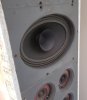
I brought these home yesterday made by Walker Tech Co. They are organ speakers from a church. Tweeters were unhooked for some reason. I emailed Walker tech and hopefully they can give me more info on them. Model number is WM 1206.

Same full range drivers as yours but has Audex tweeters. Following your info these drivers would have been made in 95.
 

Attachments

  • 20211211_092320.jpg
    20211211_092320.jpg
    135.5 KB · Views: 84
  • 20211211_092331.jpg
    20211211_092331.jpg
    125.5 KB · Views: 77
  • 20211211_093041.jpg
    20211211_093041.jpg
    98.5 KB · Views: 78
  • 20211211_093108.jpg
    20211211_093108.jpg
    93.9 KB · Views: 75
  • 20211211_095644.jpg
    20211211_095644.jpg
    106.3 KB · Views: 70
  • 20211211_095935.jpg
    20211211_095935.jpg
    96.2 KB · Views: 73
  • 20211211_105523.jpg
    20211211_105523.jpg
    129.9 KB · Views: 71
  • 20211211_105543.jpg
    20211211_105543.jpg
    96.4 KB · Views: 70
  • 20211211_105607.jpg
    20211211_105607.jpg
    145.8 KB · Views: 73
Reminds me of the popular Popular Electronics "Sweet Sixteen." What is the bass response like? It doesn't look like the cabinet volume per speaker is very big.
 
There's probably not much available beyond some biography information on Hal Gefvert who started the company in Grayslake, IL.

GEFCO was mainly an OEM supplier to the industry.

They made the drivers for many well respected speaker manufacturers.
 
Reminds me of the popular Popular Electronics "Sweet Sixteen." What is the bass response like? It doesn't look like the cabinet volume per speaker is very big.

Was able to listen to the ones I brought home and they do not go very low at all. They sound ok.

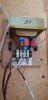
The crossover that is in them must be there to incorporate a separate sub designed to go with these speakers. All the 6x9s hook to the same spot on the crossover. The tweeter just taps off of one 6x9 driver and has just one cap for it. Going to bypass the crossover and see what they sound like. One other thing that might help a little is if I plug the eight small holes in the backs of the speakers from screws. Will probably also hook the dats to the drivers and see what specs I can get for the drivers.
 
Back
Top Bottom