• The move to the new server is done. There are some software and database maintenance updates in process. This has us passing the hat around to help out. We appreciate any donations. Seriously, even a dollar helps. The payment page may be found here - https://www.audiokarma.org/support.html

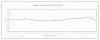
Frequency Response Curve: Early Shure models M3D, M7D

ear4audio

AK Subscriber
Subscriber
The M3D (1958) was the first MM Stereo Hi Fi cartridge (according to Shure).
The stylus is described as a 0.7mil “tubular” spherical tip with a compliance of 4 cu and a VTF of 3 to 6 grams
The specifications give a frequency response of 20 to 15k Hz. but no +/- variance is given.

The M7D (1959) was the budget version of the M3D. The model I have is supplied with the N21D stylus which was introduced in 1961.
It also has the “tubular” 0.7 mil tip with a compliance of 9 cu and a VTF of 1.5 to 2.5 grams.
The N21D stylus is an improved version of the N3D with a thinner cantilever and a higher compliance.
With the N21D stylus, the frequency response is given as 20 to 20k Hz. No +/- variance is given.

Both recommend a capacitance load of 450 pF. I’m using a load of 230 – 250 pF.

Yikes! I used a VTF of 5 grams for the M3D and a more comfortable VTF of 2 grams for the M7D.
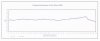
FR-M3D.jpg
FR-M7D.jpg
 
Register to hide this ad
Very interesting! Thank you for posting these.

I’ve never been tempted to buy one of those carts.

I do have the later Empire 880P cart, which I enjoy on occasion.

I’ve been very impressed with the GE VR22. But not with the stock stylus.
 
Great spectrum analysis !

These curves, like some others you posted, actually mimic the older magazines' freq. response plots. It is nice to see current confirmation...

In 1957-1958, stereo discs and carts were actually internationally developed. Every cart manufacturer participating in the soon to be blossomming, two channel, HiFi market claim to have developed the first stereo phono cartridge.

The genuine, "first" "45 degree by 45 degree groove" oriented stereo cart is actually from Western Electric. Two massive mono carts were mounted at 45 degrees to one another. Their two cantilevers (!) were v-looking "forked" into one, now long cantilever. This arrangement was quickly miniaturized in the Ortofon designed and made, first ESL branded stereo cart.

During the same development era, Pickering introduced their first 45x45 carts, as did Elac, Shure and other manufacturers. All of these companies claim to have the first stereophonic cart.

The actual "first" claim cannot be substantiated due to patent office delays, worldwide. As you research these innovative designs, you will also note the discrepancies with patent dates vs. initial commercial offerings and published data.

Most of the first generation stereo carts are still worthy of enjoyable listening sessions...
 
This brings back memories! It has been a long time since I have heard one, but the first stereo system my parents had when I was just a child had an M3D in a Collaro Conquest changer (together with Harman Kardon amp and tuner and Electro-Voice 7 speakers). That was later replaced by a Dual 1019, also with Shure cartridge. Even at the age of 10 or so I was interested in the equipment.
 
Last edited:
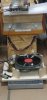
Hi! M3d/N3d is my favorite cart for many years. In my "setup" - with ESL gyro-balance tonearm and Lenco L75 drive.Screenshot_2020-11-23-22-36-21-974_com.miui.gallery.jpg
One of "research days", in my garage workshop. o_O During test of Revox-40 fine little integrated amp.
 
Last edited:
I've seen these carts praised for their low end and "fullness." Whatever that means. I was expecting a rising bass response but both look flat down low. Interesting.
 
Great equipment, great sound and great music.
Do you use it only for mono?

Thanks. I use it for both; for early 0.7mil grooved mono discs, I find the m3d/n3d to sound exceptionally good (I sum the stereo channels after riaa to phase out noise while maintaining proper input capacitance) even when compared to the DL102 and AT-mono cartridges.
 
I use a M3D with both an N3 and N21D presently on a AR TX(pre XA). I've also used it with my Empire 98 tonearm on a Fairchild 412 which is an excellent match as well. I track the N21 at about 2.35 and it sounds fabulous. The N3 I've used at about 3.5g and also very good. Very rich, warm sound but not at the expense of a very good high end and more then adequate separation. IMO there is no reason to limit the use of this or the M7D for just old records, mono or otherwise.
 
Back
Top Bottom