


MisterDK
Addicted Member
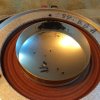
Hey folks, just thought I’d share some pictures of what happens to older Peavey Black Widow woofers and how the stuff is cleaned up. This one’s out of my left speaker which had been sounding a little weak on the bass, then a little distorted the past week or so. The foam that Peavey used to keep bugs (or whatever) out of the voice coil actually crumbles with age and does something worse than what any bug might do.. It glues the voice coil to the magnet, causing the woofer to quit barking! You can see the tar-like goo that the foam turned into in this first picture. The little chunks in the aluminum coil former are bits of the crumbled, 35 year-old foam, which when rubbed between the coil former and magnet, causes the two to rub together. The voice coil itself wasn’t damaged from the rubbing, thankfully.
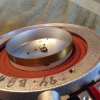
The magnet groove where the voice coil is supposed move freely, contains bits of the foam and more hardened goo, mostly at the bottom (6 o’clock). The foam that Peavey used was originally just inside the screen that covers the coil air hole in the magnet center. You can still see a little of it here, at the edge of the screen:
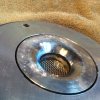
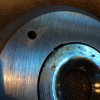
I started out using an exacto blade to scrape out the goo. When I got as much as I could with that, I used a thin piece of plastic, the thickness of a credit card, along with some paper towel and a little rubbing alcohol.
It took me about an hour, just cleaning out the goo and chunks of it which were down in the groove. When I got it as clean as possible, I blew the groove out with compressed air and inspected it closely with a small flashlight.
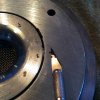
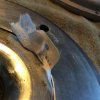
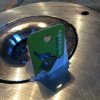
Here’s the area that was really bad with the goo, all cleaned up. It would have cleaned off more quickly if I’d used a solvent stronger than rubbing alcohol but I didn’t want the voice coil’s magnet wire insulation or the adhesive used to hold the magnet wire in place, dissolved by a stronger solvent. The alcohol was used along with an old toothbrush and eventually, the hardened goo came off. Pictures below show the cleaned up coil former inside (coil itself had very little goo on it), and the basket and magnet mated together after cleanup.
The 3 retaining bolts were torqued to 48 inch pounds, along with a wee bit of blue (medium strength) LocTite on the bolt ends.

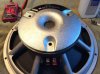
Though it’s sounding OK, tomorrow I’ll clean out the right side woofer. It probably has some old foam goo in it, too. Cleaning it out will give some peace of mind, anyway.
In case anyone’s wondering - this is a model 1504-4, 15”, 4 Ohm Black Widow.
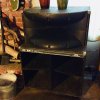
The cabinet it’s in is a Peavey SP-1 / Mark III, 2-way horn, which is just a little bigger in size, but similar in design to a Klipsch LaScala. This is actually an old pro PA speaker intended for use on stage. Yes, it’s ugly. The pair sounds pretty good in my living room but I’m working on getting the sound more “refined” for home audio.. After both woofers are barking properly I’ll probably re-cap the crossovers - they’re also from ‘84.
The upper horn drivers (compression drivers) are the original Peavey 22a and sound, surprisingly - great.
BTW - I got the pair of SP-1’s for free and all the drivers were good.. I had to try ‘em in the house.
The magnet groove where the voice coil is supposed move freely, contains bits of the foam and more hardened goo, mostly at the bottom (6 o’clock). The foam that Peavey used was originally just inside the screen that covers the coil air hole in the magnet center. You can still see a little of it here, at the edge of the screen:
I started out using an exacto blade to scrape out the goo. When I got as much as I could with that, I used a thin piece of plastic, the thickness of a credit card, along with some paper towel and a little rubbing alcohol.
It took me about an hour, just cleaning out the goo and chunks of it which were down in the groove. When I got it as clean as possible, I blew the groove out with compressed air and inspected it closely with a small flashlight.
Here’s the area that was really bad with the goo, all cleaned up. It would have cleaned off more quickly if I’d used a solvent stronger than rubbing alcohol but I didn’t want the voice coil’s magnet wire insulation or the adhesive used to hold the magnet wire in place, dissolved by a stronger solvent. The alcohol was used along with an old toothbrush and eventually, the hardened goo came off. Pictures below show the cleaned up coil former inside (coil itself had very little goo on it), and the basket and magnet mated together after cleanup.
The 3 retaining bolts were torqued to 48 inch pounds, along with a wee bit of blue (medium strength) LocTite on the bolt ends.
Though it’s sounding OK, tomorrow I’ll clean out the right side woofer. It probably has some old foam goo in it, too. Cleaning it out will give some peace of mind, anyway.
In case anyone’s wondering - this is a model 1504-4, 15”, 4 Ohm Black Widow.
The cabinet it’s in is a Peavey SP-1 / Mark III, 2-way horn, which is just a little bigger in size, but similar in design to a Klipsch LaScala. This is actually an old pro PA speaker intended for use on stage. Yes, it’s ugly. The pair sounds pretty good in my living room but I’m working on getting the sound more “refined” for home audio.. After both woofers are barking properly I’ll probably re-cap the crossovers - they’re also from ‘84.
The upper horn drivers (compression drivers) are the original Peavey 22a and sound, surprisingly - great.
BTW - I got the pair of SP-1’s for free and all the drivers were good.. I had to try ‘em in the house.


