• The move to the new server is done. There are some software and database maintenance updates in process. This has us passing the hat around to help out. We appreciate any donations. Seriously, even a dollar helps. The payment page may be found here - https://www.audiokarma.org/support.html

Garrard 4HF - idler wheel adjustment?

Markoneswift

Quartz locked n ready to rock
Hi all,

I had to strip down the speed change mechanism on my 4HF to clean out all the solidified grease. This meant I had to remove the idler wheel from the mechanism too. I have everything reassembled and powered up and, without the platter on, I can see the wheel engage with the motor pulley and revolve nicely. When I fit the platter, however, it does not rotate. I'm guessing that the platter must be pushing the idler back, away from the motor pulley perhaps.

Does anyone have any tips for how to assemble and adjust these things? It's super hard to know what's going on when the platter is blocking your view!

Regards,
 
Register to hide this ad
Are you sure you're seating the platter correctly? It can be finicky to get the brake in place. Which is the second part, is the brake disengaging?

There is nothing to adjust on the idler, maybe thy spring position? I haven't had mine out in a bit. Take a picture and we can compare. I didn't have to take mine apart to free up the speed selector (that garrard grease...).

lovely table. You'll soon hear why the reggae guys love em so much. Do you have the biscuit base?
 
Are you sure you're seating the platter correctly? It can be finicky to get the brake in place. Which is the second part, is the brake disengaging?

There is nothing to adjust on the idler, maybe thy spring position? I haven't had mine out in a bit. Take a picture and we can compare. I didn't have to take mine apart to free up the speed selector (that garrard grease...).

lovely table. You'll soon hear why the reggae guys love em so much. Do you have the biscuit base?
Hey thanks for the reply. Turns out it was my fault - I had not freed up the pivot post which the idler arm sits on. Once this pivot was freed up, the idler was able to turn the platter to (almost) full speed - I'm currently maxing out at 32.2 RPM with adjuster turned all the way up.
 
Interesting, I would expect you to be fast not slow. Be gentle with the rheostat, they are fragile at this point and the wires occasionally decide to dislodge. There are still a few 30w ohmite units on that site, in not aware of any other pots that will work without modifications.

What condition is your idler rubber? It should not be stiff and hard. The 4hf wheel should be flexible and has a fairly large lip compared to my 1219. If it's hard it might be slipping. I used a fine emery board to gently sand the outer edge on mine, immediately helped wheel noise and grip. Hold it square to the edge and light even pressure.

I believe it shares an idler with the 401? I was unable to get a new one without a core.
 
Interesting, I would expect you to be fast not slow. Be gentle with the rheostat, they are fragile at this point and the wires occasionally decide to dislodge. There are still a few 30w ohmite units on that site, in not aware of any other pots that will work without modifications.

What condition is your idler rubber? It should not be stiff and hard. The 4hf wheel should be flexible and has a fairly large lip compared to my 1219. If it's hard it might be slipping. I used a fine emery board to gently sand the outer edge on mine, immediately helped wheel noise and grip. Hold it square to the edge and light even pressure.

I believe it shares an idler with the 401? I was unable to get a new one without a core.
Thanks for that, I will inspect the rheostat and see what sort of shape it's in. Perhaps I'm barking up the wrong tree in terms of speed then, if issues with the rheostat would show as speed increase not decrease. The idler looks and feels good - the edge is not shiny and overall the disc is not hard or cracked. I do have some rubber rejuvenator-type stuff for printers - I'll hit it with that and also try and emery board (or maybe very fine grit wet and dry paper). Cheers.
 
Thanks for that, I will inspect the rheostat and see what sort of shape it's in. Perhaps I'm barking up the wrong tree in terms of speed then, if issues with the rheostat would show as speed increase not decrease. The idler looks and feels good - the edge is not shiny and overall the disc is not hard or cracked. I do have some rubber rejuvenator-type stuff for printers - I'll hit it with that and also try and emery board (or maybe very fine grit wet and dry paper). Cheers.
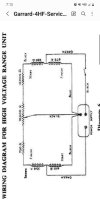
The rheostat could show either way, but generally fails catastrophically. my speed issue is voltage, my 123v vs the 115v intended. I expected yours to be high for the same reason. I'm curious what your rheostat and resistors measure.
 
The rheostat could show either way, but generally fails catastrophically. my speed issue is voltage, my 123v vs the 115v intended. I expected yours to be high for the same reason. I'm curious what your rheostat and resistors measure.
It seems to have a decent range of adjustment - ie from quite slow to almost correct speed. I'll measure it later and report back.
 
Oh it's clicking in now. You've got a 220v unit.
Screenshot_20240610_071311_Samsung Notes.jpg don't know if you've got the service manual, but these are the original values. Not the same as my 110v
 
Back
Top Bottom