


Riki
Active Member
Posting for anyone with a GE A1-400 and dreams. TL;DR it's worth a build!
I was at a thrift store earlier in the year and I found a big old speaker. The cabinet was heavy and made of solid hardwood (not veneer), and when shined my cell phone flashlight into the grill cloth I could see something shiny. And as any crow will tell you, shiny = good. Twenty dollars later and it was home with me.

To be honest, it sounded terrible when I first hooked it up. The cabinet is about 4.25 cubic feet sealed and the driver sat about a foot off of the ground. I was disappointed until I cracked it open and found a shiny GE A1-400. I had no idea what it was, but it looked cool. So, took it apart and stuck a new cap in and rewired it.
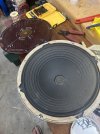
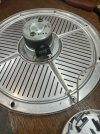
After some digging I found this article at JE Labs. It was a great article and shared more info on the speaker than I could find anywher else. It also had a link to a 1950's design for a corner horn by Raymond H. Bates.

 jelabs.blogspot.com
I had a driver, I had a design. It was time to get into the workshop. I recreated Mr. Bates design using 3/4 inch MDF, a biscuit joiner and a few swears.
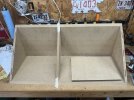
First Layup
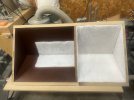
I added some damping to the speaker chamber and the first section of the horn


Here is the final product. The top and bottom plates are live edge white ash slabs, with white ash veneer on the MDF, and 6 inch white ash legs. The speaker sounds amazing in this cabinet (and the WAF is pretty decent too). The tweeter sits about 3 feet off the ground, which really helped brighten things up. The horn did wonders for the low end. I was so relieved, after all the work, that Mr. Bates design stood the test of time.
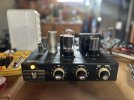
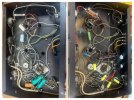
After putting all that work into a period driver, with a period cabinet, I needed some from the same era to drive it. I found a Stromberg Carlson Signet 10 that a CB collector I found on FB MP was willing to part with. I replaced all the capacitors and resistors and installed fresh NOS tubes (before and after in second pic). I have recapped some big solid state amps before, but I've never done something as simple as this. It was really, really fun to work on.
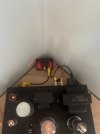
With the speaker and amp settled, I needed a source. I didn't want to have spaghetti wires everywhere (kids and dogs and stuff). So, I deiced to add something modern and turn it into a network streamer. I ordered a Raspberry Pi with DAC hat and it tucked perfectly behind the amp. I can not listen to Spotify lossless and control the volume from my phone. Sonos, eat your hear out.
Don't listen to anyone who tells you that these vintage speakers sound best with music from the period. Does Martin Denny sound great on this thing? Yes. But, Holly cook, Man Man, Tool, Led Zeplin, and The Clash all sound great to my ears too . I hope someone else scouring the internet for info on the GE A1-400 find this post and decides to knock the dust off it.
I was at a thrift store earlier in the year and I found a big old speaker. The cabinet was heavy and made of solid hardwood (not veneer), and when shined my cell phone flashlight into the grill cloth I could see something shiny. And as any crow will tell you, shiny = good. Twenty dollars later and it was home with me.
To be honest, it sounded terrible when I first hooked it up. The cabinet is about 4.25 cubic feet sealed and the driver sat about a foot off of the ground. I was disappointed until I cracked it open and found a shiny GE A1-400. I had no idea what it was, but it looked cool. So, took it apart and stuck a new cap in and rewired it.
After some digging I found this article at JE Labs. It was a great article and shared more info on the speaker than I could find anywher else. It also had a link to a 1950's design for a corner horn by Raymond H. Bates.
General Electric A1-400 Speaker
jelabs.blogspot.com
I had a driver, I had a design. It was time to get into the workshop. I recreated Mr. Bates design using 3/4 inch MDF, a biscuit joiner and a few swears.
First Layup
I added some damping to the speaker chamber and the first section of the horn
Here is the final product. The top and bottom plates are live edge white ash slabs, with white ash veneer on the MDF, and 6 inch white ash legs. The speaker sounds amazing in this cabinet (and the WAF is pretty decent too). The tweeter sits about 3 feet off the ground, which really helped brighten things up. The horn did wonders for the low end. I was so relieved, after all the work, that Mr. Bates design stood the test of time.
After putting all that work into a period driver, with a period cabinet, I needed some from the same era to drive it. I found a Stromberg Carlson Signet 10 that a CB collector I found on FB MP was willing to part with. I replaced all the capacitors and resistors and installed fresh NOS tubes (before and after in second pic). I have recapped some big solid state amps before, but I've never done something as simple as this. It was really, really fun to work on.
With the speaker and amp settled, I needed a source. I didn't want to have spaghetti wires everywhere (kids and dogs and stuff). So, I deiced to add something modern and turn it into a network streamer. I ordered a Raspberry Pi with DAC hat and it tucked perfectly behind the amp. I can not listen to Spotify lossless and control the volume from my phone. Sonos, eat your hear out.
Don't listen to anyone who tells you that these vintage speakers sound best with music from the period. Does Martin Denny sound great on this thing? Yes. But, Holly cook, Man Man, Tool, Led Zeplin, and The Clash all sound great to my ears too
. I hope someone else scouring the internet for info on the GE A1-400 find this post and decides to knock the dust off it.


