• The move to the new server is done. There are some software and database maintenance updates in process. This has us passing the hat around to help out. We appreciate any donations. Seriously, even a dollar helps. The payment page may be found here - https://www.audiokarma.org/support.html

Got a Spin Clean and an Ultrasonic- Do I need Vacuum Also or am I good? (Record Cleaning)

tlite

Active Member
Title says it . I have a Spin Clean, then I use Ultrasonic (Vevor) with distilled water. Will adding the vacuum step between the two yield noticeable improvements, or is it negligible (i.e. <5% further improvement or so)?

On some older records I still have get pops and clicks after cleaning per the above, and I can't quite tell if it's gunk that I need a vacuum step for or if these are mostly scratches that won't come out no matter what. My suspicion is they're scratches, so don't really want to go through the vacuum step if unnecessary but truth is I don't know for sure.

Thanks!
 
Register to hide this ad
…and I only use a vacuum. I have several Nitty Gritty machines. All but one I have are “fluid injection” models and one of those is a dual reservoir (XP) model. The XP has one reservoir filled with cleaner solution and second reservoir filled with distilled. Works nicely.
After cleaning, record goes into either a “rice paper” or new, plain paper sleeve.

BTW - nothing will remove scratches but the right stylus sure helps to minimize the pops & clicks.
 
Air Dry only. Rinse and Vac seemed like wasted steps for me. Didn't improve sound quality, for me.

What did take out a lot of surface noise was changing from an Ortofon 20 to a LP gear Shibata 40 stylus.
 
I do US cleaning then I polish(I wipe the record while wet in circular motions around the record with the cotton towel, and that is huge for sound quality) the record off using microfiber towel underneath, and the cotton towels included with the spin clean. This is a technique I developed with the spin clean, and continue because it helps with the US cleaner. Most of the time that is excellent. For really bad records, I run them through the US a second time and polish as above. I've been asked by a few record collectors how I get my records so clean.
 
So, decided to just bite the bullet. I had a VinylVac still in the package I was thinking about returning pending feedback, but curiosity got the best of me.

I took the three records in question that I'd already Spin Cleaned and Ultrasonic cleaned (distilled water with surfactant). I did notice a big improvement from where these records started up to this point, but as stated, still enough pops and clicks that I wanted to figure out if it could be improved further.

So I cleaned them again by hand with a DIY cleaning solution, vacuumed with the vinyl vac, then rinsed with distilled water and VinylVac'd again.

These particular records (Led Zep I, Herb Alpert Foursider, Art Blakey 3 Blind Mice--> all are heavily used copies from the 60's/70's).

I didn't notice an audible improvement after the Vac. I'm sure it helped, just not enough that I picked up on a major improvement vs. just Spin Clean and US, plus air dry.

Guessing that most of the remaining pops and clicks are scratches (and yes, there are visible scratches, but figured they might still play OK for living room listens).

A theory from this experiment is that a vacuum and an ultrasonic get pretty close to one another in cleaning ability. While doing both I'm sure is the more thorough way to do it, for my standards probably OK to just do one or the other. The US is less labor intensive (with the specific stuff I have) so will probably just do that and keep Spin Cleaning before and/or use it to rinse after.

FWIW on these old beater records I'm using an Audio Technica VM95E. I have an Ortofon Red as well, but didn't want to risk damaging it with these tests.

Thanks for the posts- more ideas are welcome as well. I know there's probably lots of room for improvement over what I'm doing...
 
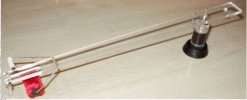
The problem with all these pre-spin cleaning regimens is that dust settles on the surface while playing. Nothing can be done beforehand to prevent this, other than perhaps moving the TT to a clean room. If you don't clean an album while it's playing, the damage from this is unavoidable. I've been using a Watts Dust Bug since the late '60s, and I still have well-used albums from that era with almost no clicks or pops. This is the reason turntables like the Michell Transcriptor (which I bought new around 1976) had a separate brusher arm. In the case of the Michell, its dry brush wasn't quite as effective as the Dust Bug, but better than nothing. The only time I've experienced popping albums was during a few years when I attempted to avoid the inconvenience of the Dust Bug through the use of Discwasher and other pre-play methods consisting of wet cleaning brushes and various anti-static treatments. Unfortunately, once a particle settles on the disc and is "run over" by the stylus, it creates permanent damage. The LPs I played during that time are now a reminder of my foolishness, and I'll never again attempt any form of pre-spin cleaning.

I'll just add that albums also get damaged (scratched) sliding them in and out of the sleeves, and it doesn't matter if it's paper or plastic. All my sleeves are cut open on two sides so the disc can be set inside without sliding. This is what it takes to extract the maximum number of clean plays from an album.

Jack

Watts Dust Bug.jpg
 
The problem with all these pre-spin cleaning regimens is that dust settles on the surface while playing. Nothing can be done beforehand to prevent this, other than perhaps moving the TT to a clean room. If you don't clean an album while it's playing, the damage from this is unavoidable. I've been using a Watts Dust Bug since the late '60s, and I still have well-used albums from that era with almost no clicks or pops. This is the reason turntables like the Michell Transcriptor (which I bought new around 1976) had a separate brusher arm. In the case of the Michell, its dry brush wasn't quite as effective as the Dust Bug, but better than nothing. The only time I've experienced popping albums was during a few years when I attempted to avoid the inconvenience of the Dust Bug through the use of Discwasher and other pre-play methods consisting of wet cleaning brushes and various anti-static treatments. Unfortunately, once a particle settles on the disc and is "run over" by the stylus, it creates permanent damage. The LPs I played during that time are now a reminder of my foolishness, and I'll never again attempt any form of pre-spin cleaning.

I'll just add that albums also get damaged (scratched) sliding them in and out of the sleeves, and it doesn't matter if it's paper or plastic. All my sleeves are cut open on two sides so the disc can be set inside without sliding. This is what it takes to extract the maximum number of clean plays from an album.

Jack

View attachment 3080133
A little ethyl alcohol in the rinse helps prevent static electricity & minimizes dust sticking to an LP.
 
I have a Isonic ultrasonic cleaner, then I rise with a spin clean and vacuum off with a vpi. Only because it was the way I progressed in cleaning records and kept them all. If I was to do it over. I’d get a ultrasonic with drying.
 
I have a Isonic ultrasonic cleaner, then I rise with a spin clean and vacuum off with a vpi. Only because it was the way I progressed in cleaning records and kept them all. If I was to do it over. I’d get a ultrasonic with drying.
This is pretty similar to my path except you have a fancy VPI and I have the VinylVac. Out of curiosity do you ever skip the vac step, or check results air dry vs. vac?
 
I avoid using distilled in my US rig as majority of it is acidic in nature. ie the bottled stuff I pick up at my local grocer typically ranges between 5.5 and 5.9 ph. Neutral = 7, less then 7 is acidic. So I use tap water instead. Once they come out of the US rig then they go on a vacuum rcm. Here though I use distilled with a little IPA mixed in as a final rinse step. Also to suck out anything that the US may have softened, but not completely eliminated. Totally transforms a lot of the older used albums I own.
 
Will adding the vacuum step between the two yield noticeable improvements, or is it negligible (i.e. <5% further improvement or so)?

To the OP, it may not make much difference but if you were to want to try it, I would highly recommend changing the order in which you are doing things. First, put the record in your US cleaner, then move it to the spin clean loaded with distilled water only and rinse, then vacuum dry. Your ears might tell you what works best and that is the case with all of us. You can also do a little search here and discover all the different ways members have arranged their US cleaning regimens.....might give you further food for thought amigo.

Alternatively, to get the loose, big dirt off the record and keep your cleaning solution cleaner longer, vacuum the record. Then, into the US tank, then into the spin clean for the rinse, then the final vacuum.....

PS - most here have come to the conclusion that simply vacuuming or even using something like a spin clean or other brush-based cleaning system will not typically get deep into the grooves and remove what has been deposited there and hardened over the decades, and that is the stuff that your stylus will encounter resulting in "noise."
 
Last edited:
Back
Top Bottom